25 Apr - 02 May 2026
7 Nights onboard Emerald Kaia
Full Board Drinks (with meals)*
Complimentary Dining*
Gratuities*
Shore Excursions*
Entertainment*
Wi-Fi*
Not Available
Not Available
Not Available
from
£6,845
per person
Our experts are here to help
Call us today on 0203 930 4640 or enquire online.


*Select voyages. T's and C's apply
Day 1
Your Mediterranean cruise begins in the ancient Greek capital, Athens, where you’ll be transferred to your Emerald Cruises luxury yacht to embark on a tour of fascinating cities and extraordinary coastlines.
Please book your flight to arrive into Athens prior to 06:00 PM.
Docked: 19:30
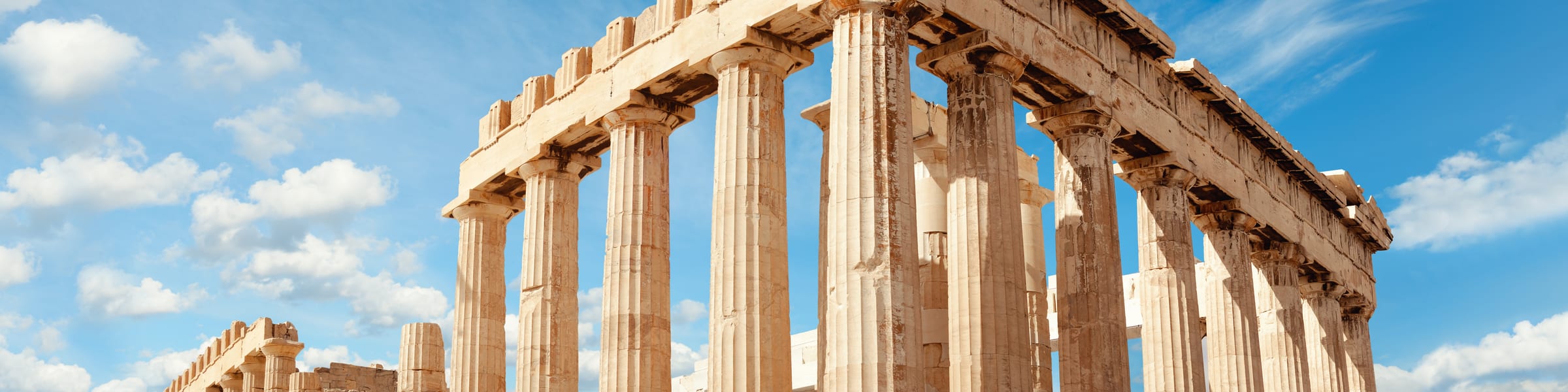
It's no wonder that all roads lead to the fascinating and maddening metropolis of Athens. Lift your eyes 200 feet above the city to the Parthenon, its honey-color marble columns rising from a massive limestone base, and you behold architectural perfection that has not been surpassed in 2,500 years. But, today, this shrine of classical form dominates a 21st-century boomtown. To experience Athens—Athína in Greek—fully is to understand the essence of Greece: ancient monuments surviving in a sea of cement, startling beauty amid the squalor, tradition juxtaposed with modernity. Locals depend on humor and flexibility to deal with the chaos; you should do the same. The rewards are immense. Although Athens covers a huge area, the major landmarks of the ancient Greek, Roman, and Byzantine periods are close to the modern city center. You can easily walk from the Acropolis to many other key sites, taking time to browse in shops and relax in cafés and tavernas along the way. From many quarters of the city you can glimpse "the glory that was Greece" in the form of the Acropolis looming above the horizon, but only by actually climbing that rocky precipice can you feel the impact of the ancient settlement. The Acropolis and Filopappou, two craggy hills sitting side by side; the ancient Agora (marketplace); and Kerameikos, the first cemetery, form the core of ancient and Roman Athens. Along the Unification of Archaeological Sites promenade, you can follow stone-paved, tree-lined walkways from site to site, undisturbed by traffic. Cars have also been banned or reduced in other streets in the historical center. In the National Archaeological Museum, vast numbers of artifacts illustrate the many millennia of Greek civilization; smaller museums such as the Goulandris Museum of Cycladic Art Museum and the Byzantine and Christian Museum illuminate the history of particular regions or periods. Athens may seem like one huge city, but it is really a conglomeration of neighborhoods with distinctive characters. The Eastern influences that prevailed during the 400-year rule of the Ottoman Empire are still evident in Monastiraki, the bazaar area near the foot of the Acropolis. On the northern slope of the Acropolis, stroll through Plaka (if possible by moonlight), an area of tranquil streets lined with renovated mansions, to get the flavor of the 19th-century's gracious lifestyle. The narrow lanes of Anafiotika, a section of Plaka, thread past tiny churches and small, color-washed houses with wooden upper stories, recalling a Cycladic island village. In this maze of winding streets, vestiges of the older city are everywhere: crumbling stairways lined with festive tavernas; dank cellars filled with wine vats; occasionally a court or diminutive garden, enclosed within high walls and filled with magnolia trees and the flaming trumpet-shaped flowers of hibiscus bushes. Formerly run-down old quarters, such as Thission, Gazi and Psirri, popular nightlife areas filled with bars and mezedopoleia (similar to tapas bars), are now in the process of gentrification, although they still retain much of their original charm, as does the colorful produce and meat market on Athinas. The area around Syntagma Square, the tourist hub, and Omonia Square, the commercial heart of the city about 1 km (½ mi) northwest, is distinctly European, having been designed by the court architects of King Otho, a Bavarian, in the 19th century. The chic shops and bistros of ritzy Kolonaki nestle at the foot of Mt. Lycabettus, Athens's highest hill (909 feet). Each of Athens's outlying suburbs has a distinctive character: in the north is wealthy, tree-lined Kifissia, once a summer resort for aristocratic Athenians, and in the south and southeast lie Glyfada, Voula, and Vouliagmeni, with their sandy beaches, seaside bars, and lively summer nightlife. Just beyond the city's southern fringes is Piraeus, a bustling port city of waterside fish tavernas and Saronic Gulf views.
Day 2
Gythio is a picturesque fishing port on the southeastern coast of the Peloponnese, once the ancient harbor of Sparta and today a relaxed gateway to the wild Mani Peninsula. Stroll its seafront lined with neoclassical houses and seafood tavernas, wander across to tiny Marathonisi (Kranai) Island with its lighthouse and historic tower, or simply enjoy nearby beaches and views over the Laconian Gulf.
DiscoverMORE
Guided tour Mystras and Sparta (must be pre-booked, extra expense)
Travel to the lower slopes of Mount Taygetos, where the evocative ruins of ancient Mystras, a UNESCO World Heritage Site, stand as a powerful reminder of Byzantium’s former glory. Once the capital of the Byzantine Despotate of the Morea, Mystras flourished as a center of art, culture, and scholarship. Enjoy a guided exploration of this remarkable archaeological site, where medieval churches, frescoed chapels, and the remains of grand palaces overlook the fertile plain below. Afterward, take some free time to wander through its narrow paths and absorb the serene atmosphere of this once-mighty fortress town. Continue to the modern village of Sparta, built near the site of the ancient city-state. Though little remains of classical Sparta, its legacy of courage and discipline endures. Pause for photos at the imposing statue of King Leonidas, the legendary warrior who led 300 Spartans at the Battle of Thermopylae.
Activity Level: Moderate, Duration: 4 hours
Docked: 08:00 - 13:00
Day 3
Known as the ‘Caribbean of Greece’, Lefkada is connected to the mainland by a narrow bridge, making it one of the few islands here accessible by car. One of the most fascinating places in Lefkada is the Castle of Agia Mavra, dating back to the 14th century and built to protect Lefkada from invasions.
DiscoverMORE
Lefkada tour with Faneromeni Monastery (extra expense)
Kick off your journey at Nidri Port, where our friendly guides will greet you. Get ready to visit the tranquil Monastery of Faneromeni, a peaceful haven surrounded by lush landscapes. From the monastery, your adventure continues to the lively centre of Lefkada Town, where a gastronomic journey awaits. After your flavourful experience, enjoy some free time to stroll through the picturesque streets of Lefkada Town.
Activity Level: Moderate, Duration: 4 hours
DiscoverMORE
Flavors of Lefkada (extra expense)
Escape the coast and discover the authentic countryside of Lefkada on an immersive farm-to-table journey. Departing from Nydri Port, enjoy a scenic drive to the island’s only regenerative organic farm, a proud member of the Slow Food International network. Explore the fields on a guided tour, meet the passionate farmers, and learn how traditional methods blend with sustainable practices. Enjoy a guided tasting of award-winning Extra Virgin Olive Oil and gain expert insight into selecting and using premium olive oil. Take part in a hands-on cooking class, preparing classic Greek dishes such as tzatziki and dakos, before sitting down to a fresh farm-to-table lunch with sourdough bread and a glass of local wine. Afterward, enjoy free time to explore the farm or relax in the peaceful surroundings before returning to Nydri Port. A perfect blend of nature, flavor, and tradition—an authentic taste of Lefkada’s soul.
Activity Level: Moderate, Duration: 3.25 hours
Offshore 08:00 - 19:00
Day 4
On mainland Greece, Parga offers a carefree holiday atmosphere. Enjoy the sunshine on one of the many beaches, explore traditional Greek villages and marvel at the 11th century Parga Castle, which offers an incredible bird’s eye view of the resort town and coastline.
DiscoverMORE
Sightseeing tour of Meteora monasteries including a Greek lunch (extra expense)
Enjoy the scenic drive to Meteora, where the landscape transforms into a breathtaking display of gigantic rocks etched by centuries of wind and weather. Explore two of these remarkable monasteries, each perched atop towering rocks, offering panoramic views of the surrounding landscape. After exploring the Meteora Monasteries, journey to the charming Kalambaka Village and treat your taste buds to a traditional Greek meal.
Activity Level: Strenuous, Duration: 10.5 hours
DiscoverMORE
Kayaking Adventure (extra expense)
Our journey commences at the serene Ai Giannakis beach, where we embark on a scenic kayaking route that unveils breathtaking landscapes and enchanting bays. As we navigate the turquoise waters, the captivating natural beauty of the surroundings comes to life, especially as we pass by the striking vertical cliffs. Highlights of the excursion include a visit to Aphrodite’s Sea Cave and a leisurely entry into the picturesque harbour of Parga, where we can admire the verdant isle of Panagia. We will take a brief intermission to enjoy a snack and recharge before continuing our adventure. We will paddle through the area's captivating islets before making our way back to our original departure point at Ai Giannakis beach.
Activity Level: Strenuous, Duration: 3.5 hours
Offshore 08:00 - 19:00
Day 5
This ruggedly beautiful Greek island is dotted with whitewashed houses and olive trees and is edged with shimmering turquoise waters. The UNESCO World Heritage-listed Old Town of Corfu has a rich history and magnificent architecture displaying Renaissance and Baroque influences. Explore quaint fishing villages, relax on the many idyllic beaches and coves and stroll through the largest square in Greece, the Spianada.
DiscoverMORE
Guided walking tour of Corfu town (extra expense)
Commence your adventure by passing through the historic Bonati Arch, an entryway to Corfu's Old Town that sets the stage for a captivating exploration. Discover the Jewish Quarter, where a 300-year-old synagogue bears witness to the rich tapestry of Corfu's past.
Marvel at the Venetian stylings of the Town Hall, a masterpiece from the late 1600s that stands as a testament to the island's historical significance. Behold the iconic view of the red-domed bell tower of St. Spyridon Church, a religious landmark dating back to the 16th century.
Activity Level: Moderate, Duration: 2 hours
DiscoverMORE
4x4 adventure of the Corfiot countryside (self-driving tour, extra expense)
Journey through charming seaside resorts such as Alykes, Kontokali, and Gouvia, where the beauty of the coastal landscape will captivate you. Continue your exploration to the village of Troubetta, where a mountain ridge provides a stunning backdrop showcasing the islands of Mathraki and Othoni. Indulge in the flavours of Greece with a typical Greek meze at Castellino restaurant in Lakones. Your journey culminates at the bay of Paleokastritsa.
Note: A valid driving license is required and must be over the age of 23 years old. For non EU guests an international driving license is required. Jeeps are equipped with manual gearboxes, not automatic.
Activity Level: Moderate, Duration: 4.5 hours
Docked: 23:30 (day prior) - overnight
Corfu town today is a vivid tapestry of cultures—a sophisticated weave, where charm, history, and natural beauty blend. Located about midway along the island's east coast, this spectacularly lively capital is the cultural heart of Corfu and has a remarkable historic center that UNESCO designated as a World Heritage Site in 2007. All ships and planes dock or land near Corfu town, which occupies a small peninsula jutting into the Ionian Sea.Whether arriving by ferry from mainland Greece or Italy, from another island, or directly by plane, catch your breath by first relaxing with a coffee or a gelato in Corfu town's shaded Liston Arcade, then stroll the narrow lanes of its pedestrians-only quarter. For an overview of the immediate area, and a quick tour of Mon Repos palace, hop on the little tourist train that runs from May to September. Corfu town has a different feel at night, so book a table at one of its famed tavernas to savor the island's unique cuisine.The best way to get around Corfu town is on foot. The town is small enough so that you can easily walk to every sight. There are local buses, but they do not thread their way into the streets (many now car-free) of the historic center. If you are arriving by ferry or plane, it's best to take a taxi to your hotel. Expect to pay about €10 from the airport or ferry terminal to a hotel in Corfu town. If there are no taxis waiting, you can call for one.
Day 6
Today, it’s time to rise early in the morning and leave Corfu, setting sail for Sarandë, a popular coastal town perched on a crescent-shaped bay in Albania. The once sleepy fishing village presents a bustling seaside promenade, pebbled beaches and ancient ruins adorned with intricate mosaics and historical artefacts.
Included Excursion
Butrint UNESCO Ruins & Lekursi Castle Views
Departing from Saranda, journey through southern Albania’s stunning landscapes, from the River Bistrica and rocky Cuka channel to the tranquil marshes of Lake Butrint. Visit Butrint, a UNESCO World Heritage Site, where history and nature intertwine. Wander among Greek, Roman, Byzantine, Venetian, and Ottoman ruins set within lush forests teeming with birdlife and butterflies, while learning the fascinating story of this ancient city. Next, head to Lekursi Castle, a 16th-century Ottoman fortress perched above Saranda. Enjoy panoramic views of the Ionian Sea, the city, and Corfu, especially at sunset, and relax with a refreshing drink at the castle bar before returning to the pier. A seamless blend of history, nature, and breathtaking vistas—experience the very best of southern Albania.
Activity Level: Easy, Duration: 3.75 hours
Docked: 09:00 - 13:30
Sarandë is a city in southern Albania on the coast of the Ionian Sea. Sarandë can be reached easily from the Greek island of Corfu by ferry. An early Christian monastery dedicated to 40 saints (Santi Quaranta) gave Sarandë its name. The city center of Sarandë has been scarred by communist architecture but since the fall of communism many small shops and bars have sprung up which give it a Mediterranean feel. This southernmost harbour of Albania was once the ancient port of Onchesmos. Today, Sarandë’s main attractions are its sunny climate and the nearby ruins of Butrint. Please Note: For your convenience, shore excursions offered for this port of call are available to reserve in advance at www.silversea.com, unless otherwise noted in the description. The deadline to reserve these tours is August 19, after which they will be available for purchase on board, unless otherwise noted in the description. Pier Information The ship is scheduled to anchor at Main Pier. The town center is 875 yards from the pier. Taxis are generally available at the pier. Shopping Typical souvenirs include t-shirts, postcards, wood carvings and dolls in national costume. Cuisine Albanian cuisine has been strongly influenced by Turkey. Grilled meats like shisqubap (shish kebab), romstek (minced meat patties) and gofte (meat balls) are served all across the Balkans. Some local dishes include comlek (meat and onion stew), fërges (a rich beef stew), rosto me salcë kosi (roast beef with sour cream) and tavë kosi (mutton with yoghurt. Lake Shkodra carp and Lake Ohrid trout are the most common fish dishes. Try the ice cream (akullore), which is popular everywhere. Other Sites Blue Eye Spring The iridescent blue water gushes from the depths of the earth and feeds the Bistrica River. Catacombs Recently discovered catacombs of the church of the Forty Saints can also be explored. Private arrangements for independent sightseeing may be requested through the Tour Office on board.
Day 7
Encircled by medieval walls, the fortified city of Kotor is an enthralling place of ancient history and modern culture. Nestled between imposing mountains and the Adriatic Sea, this UNESCO World Heritage-listed setting reveals Venetian palaces, cobblestone lanes and café-hemmed squares. As the sun is setting, you’ll set sail for Croatia and the stunning city of Dubrovnik. Today choose between our EmeraldACTIVE or DiscoverMORE option.
EmeraldACTIVE
Guided hike of Kotor’s city walls
Declared a UNESCO World Heritage Site in 1979, the City Walls of Kotor stretch for almost 5 kilometres, encompassing the city and offering those who embrace the challenge of climbing them, wonderful views of the bay of Kotor and the Old Town. Step back in time as your knowledgeable guide brings to life the history of the fortifications and the important part they played in the protection of the city. Climb to the highest point, where you’ll find the well-preserved fortress of St John and be rewarded with a magnificent view of the harbour and the red roofs of the Old Town.
Activity Level: Strenuous, Duration: 2.5 hours
EmeraldACTIVE
Panoramic Kotor Walk
Step back in time on a guided walking tour along the lower section of the city walls, where history comes alive at every turn. As you stroll through this atmospheric part of the old town, you’ll uncover the fascinating story of the city’s defensive architecture and its crucial role in shaping centuries of local life.
Activity Level: Easy, Duration: 2 hours
DiscoverMORE
Our Lady of the Rocks and walking tour of Kotor (extra expense)
Discover the magic of Montenegro with a scenic boat ride across the Bay of Kotor to the legendary Our Lady of the Rocks, a man-made island crowned by a centuries-old church and maritime museum. Continue to the elegant town of Perast, where baroque architecture and waterfront views set the scene for a visit to the Maritime Museum. Conclude your journey in Kotor’s Old Town, a UNESCO World Heritage Site, with a guided walking tour through its labyrinth of stone lanes, historic churches, and vibrant squares that reveal the city's rich and layered past.
Activity Level: Moderate, Duration: 5.5 hours
EmeraldPLUS
An exclusive concert on board featuring a guitar duo
Embark on a mesmerizing musical journey with two of Montenegro's most celebrated guitarists, Srdjan Bulatovic and Darko Nikcevic. Known for their extraordinary talent and captivating performances, this dynamic duo will treat you to an unforgettable experience filled with soul-stirring melodies and vibrant rhythms.
Duration: 1 hour
Docked: 09:00 - 16:00
Backed by imposing mountains, tiny Kotor lies hidden from the open sea, tucked into the deepest channel of the Bokor Kotorska (Kotor Bay), which is Europe's most southerly fjord. To many, this town is more charming than its sister UNESCO World Heritage Site, Dubrovnik, retaining more authenticity, but with fewer tourists and spared the war damage and subsequent rebuilding which has given Dubrovnik something of a Disney feel.Kotor's medieval Stari Grad (Old Town) is enclosed within well-preserved defensive walls built between the 9th and 18th centuries and is presided over by a proud hilltop fortress. Within the walls, a labyrinth of winding cobbled streets leads through a series of splendid paved piazzas, rimmed by centuries-old stone buildings. The squares are now haunted by strains from buskers but although many now house trendy cafés and chic boutiques, directions are still given medieval-style by reference to the town’s landmark churches.In the Middle Ages, as Serbia's chief port, Kotor was an important economic and cultural center with its own highly regarded schools of stonemasonry and iconography. From 1391 to 1420 it was an independent city-republic and later, it spent periods under Venetian, Austrian, and French rule, though it was undoubtedly the Venetians who left the strongest impression on the city's architecture. Since the breakup of Yugoslavia, some 70% of the stone buildings in the romantic Old Town have been snapped up by foreigners, mostly Brits and Russians. Porto Montenegro, a new marina designed to accommodate some of the world’s largest super yachts, opened in nearby Tivat in 2011, and along the bay are other charming seaside villages, all with better views of the bay than the vista from Kotor itself where the waterside is congested with cruise ships and yachts. Try sleepy Muo or the settlement of Prčanj in one direction around the bay, or Perast and the Roman mosaics of Risan in the other direction.
Day 8
Your time aboard comes to an end in the dazzling city of Dubrovnik, along Croatia’s stunning Dalmatian Coast. From your luxury yacht, you’ll be transferred to the airport for your journey home or to continue your holiday.
Please book your flight to depart out of Dubrovnik after 11:00 AM.
Docked: 23:00 (day prior)
*Please verify with the Shore Excursion Manager onboard whether a DiscoverMORE tour is available on disembarkation day.
The itinerary is a guide only and may be amended for operational reasons. As such Emerald Cruises cannot guarantee the cruise will operated unaltered from the itinerary states above. Please refer to our terms and conditions for further information.
Nothing can prepare you for your first sight of Dubrovnik. Lying 216 km (135 miles) southeast of Split and commanding a jaw-dropping coastal location, it is one of the world's most beautiful fortified cities. Its massive stone ramparts and fortress towers curve around a tiny harbor, enclosing graduated ridges of sun-bleached orange-tiled roofs, copper domes, and elegant bell towers. Your imagination will run wild picturing what it looked like seven centuries ago when the walls were built, without any suburbs or highways around it, just this magnificent stone city rising out of the sea.In the 7th century AD, residents of the Roman city Epidaurum (now Cavtat) fled the Avars and Slavs of the north and founded a new settlement on a small rocky island, which they named Laus, and later Ragusa. On the mainland hillside opposite the island, the Slav settlement called Dubrovnik grew up. In the 12th century the narrow channel separating the two settlements was filled in (now the main street through the Old Town, called Stradun), and Ragusa and Dubrovnik became one. The city was surrounded by defensive walls during the 13th century, and these were reinforced with towers and bastions in the late 15th century.From 1358 to 1808 the city thrived as a powerful and remarkably sophisticated independent republic, reaching its golden age during the 16th century. In 1667 many of its splendid Gothic and Renaissance buildings were destroyed by an earthquake. The defensive walls survived the disaster, and the city was rebuilt in baroque style.Dubrovnik lost its independence to Napoléon in 1808, and in 1815 passed to Austria-Hungary. During the 20th century, as part of Yugoslavia, the city became a popular tourist destination, and in 1979 it was listed as a UNESCO World Heritage Site. During the war for independence, it came under heavy siege. Thanks to careful restoration, few traces of damage remain; however, there are maps inside the Pile and Ploče Gates illustrating the points around the city where damage was done. It’s only when you experience Dubrovnik yourself that you can understand what a treasure the world nearly lost
from £0 per person
More information coming soon.
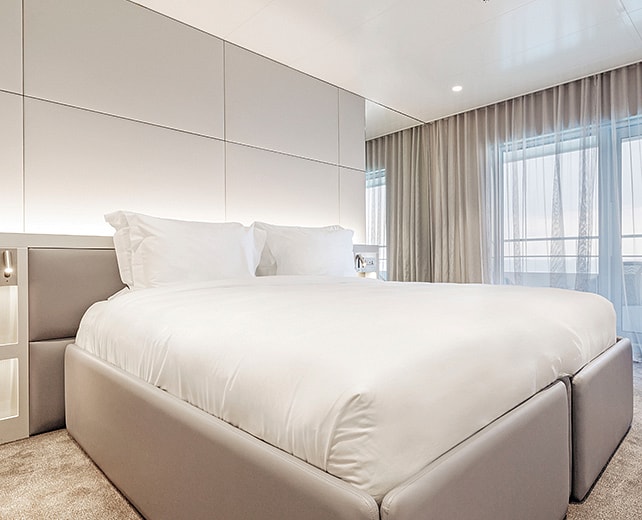
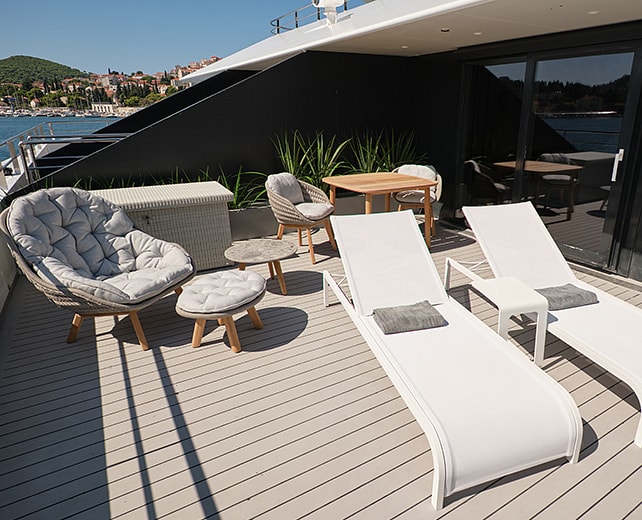
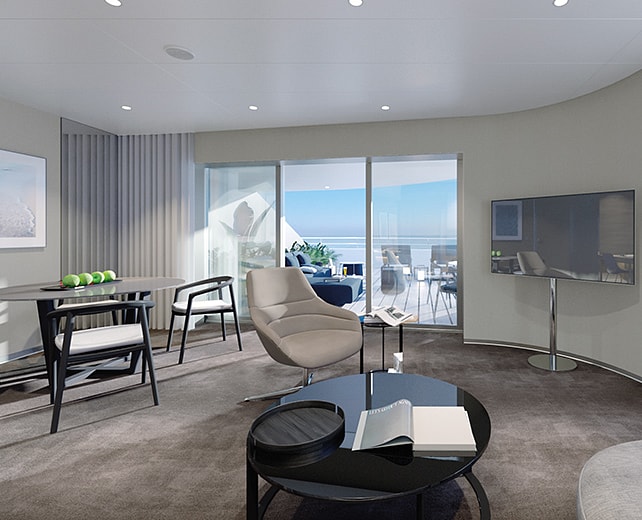
Now even more spacious, at 879 sq. ft, including a wraparound terrace.
The even larger Owner's Suites, at 1,407 sq. ft, now feature a Spa Pool a deux on the private terrace.
from £7,111 per person
from £0 per person
More information coming soon.
Now even more spacious, at 879 sq. ft, including a wraparound terrace.
The even larger Owner's Suites, at 1,407 sq. ft, now feature a Spa Pool a deux on the private terrace.
from £7,111 per person