Call
Call Enquire
 Search


Menu

Manage my booking

| Sales | |
| Monday - Friday | 09:00 - 20:00 |
| Saturday | 09:00 - 16:00 |
| Sunday | 10:00 - 17:00 |
| Bank Holiday | 10:00 - 16:00 |
| Aftersales | |
| Monday - Friday | 09:00 - 17:30 |
| Bank Holiday | 10:00 - 16:00 |



05 Oct - 18 Oct 2027

13 Nights onboard SH Diana

All Inclusive Drinks*

Thermal spa access*

Overseas Transfers

Expedition Jacket (on polar itineraries only)*

Water bottle*

Digital photo album*

Room Service*

Complimentary Dining*

Gratuities*

Shore Excursions*

Entertainment*

Wi-Fi*
Not Available
from
£10,300
per person
from
£10,300
per person
from
£17,175
per person
Our experts are here to help
Call us today on 0203 930 4640 or enquire online.




*Select voyages. T's and C's apply
Day 1
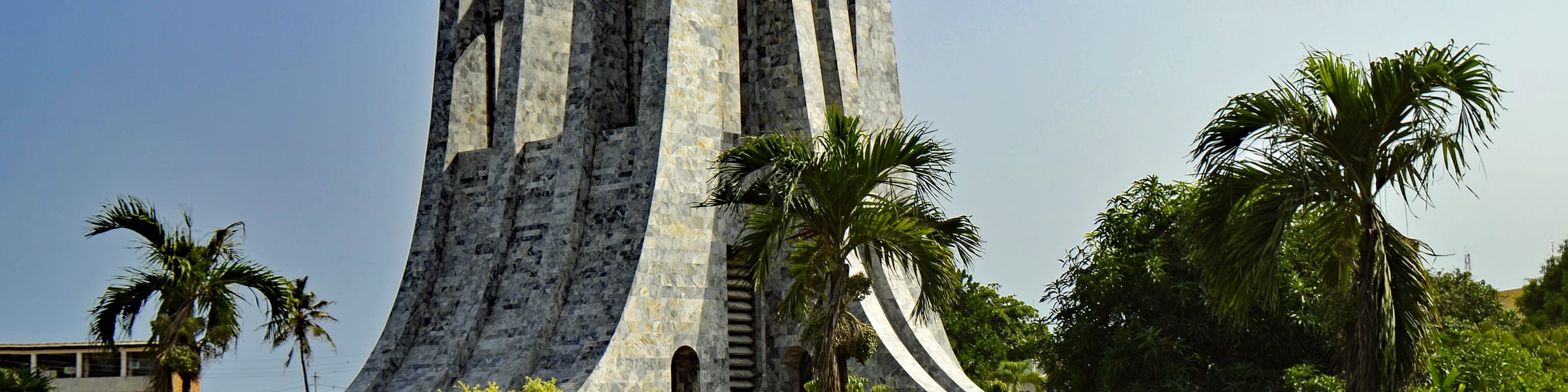
From a modest fishing port to the biggest in Ghana, Tema’s industrial activity has all but tarnished the charming, postcard scenery of the region. The neighbouring white-sanded beaches remain immaculate, still serving as a testimony of the rich variety of fishing birds that can be found in the area.In the way Mother Nature intended it, gannets, boobies and kingfishers amongst other species fish in and around the cerulean waters of the coast. A light breeze tickles the inflamed, iron-filled soil of the mainland on which the railway linking Tema to Accra lures hundreds of visitors each day. On board one of the carriages to Accra, distinctively noticeable by their painted coats of red, yellow and green that echo Ghana’s national flag, a peek out of the window will offer scenic views of the harbour and coast, as well as the large fields that separate Tema from the capital by 15 miles/25 kilometres of open space.Accra’s ambiance contrasts with the peaceful setting of Tema, but nevertheless has its own charm to be enjoyed. Through rich, contemporary monuments which recall Ghana’s 1957 independence, the Kwame Nkrumah Memorial Park is an architectural jewel which also narrates the life and exploits of the eponymous president who fought for his country’s freedom. A more casual but perhaps interesting approach to the City’s culture and history is the visit to an artisanal studio, where primary materials such as wood and metal are transformed into stunning carvings of all sorts, illustrating a traditional African belief of a new life beyond death. And for a relaxing yet enriching experience, the hospitable restaurants are always eager to share their Banku, a local dish made out of corn and served with fish or stew.Craft markets are also worth a detour and are great for cherry-picking souvenirs. Demonstrating other fine Ghanaian traditions such as leather crafting and weaving, a popular favourite is the country’s hand-made Black Soap, which is renowned for its soothing virtues.
Day 2
If you're sick of the usual beach resorts, then zesty Lomé will welcome you to a coastal destination that oozes with inimitable character. The former 'Jewel of West Africa' offers some wonderful beaches, and exports its delicious bounty of cocoa, coffee and pine kernels far and wide. A disorientating place, where stuttering engines and whizzing motorbikes add a chaotic essence to the city's streets, you’ll see vendors strolling with supplies balanced improbably on their heads, along with a healthy supply of intrigue, adventure and buzzing markets. Swarms of bikes and motorbikes dominate the coastal road, which borders the huge, palm tree lined Lomé beach – but the sand is wide enough for you to relax with the road merely a distant whisper. A treasure trove of traditional masks and statues wait for you to explore inside the National Museum, while the characterful Monument de l'Independance honours the country's sacrifices in its struggle for independence, and is a suitably defiant beacon of liberation.
Day 3
Tucked between Nigeria and Togo in Benin is the busy trading port of Cotonou. Named a “market town” for its coastal placement and lucrative palm oil and textile trades, Cotonou is a sprawling amorphous city, swaddled between the Atlantic coast and Lake Nakoué. Because of its especial geographical situation, Cotonou is bursting with life — visitors disembarking here will find a colourful port, alive with economic activity and very much the capital (although not in name, the official capital is Porto-Novo to the east) of the trading industry.
Day 4
Day 5
1.
Day 5
2.
Located in the Gulf of Guinea on the west coast of Africa, Principe island is twinned with Sao Tome and home to beautiful scenery and a rich culture. Enjoy the beautiful walks in Obo Natural Park, dive into the depths off the coasts of the many beaches and take a boat trip to see the whales and dolphins surrounding the islands.
Day 6
São Tomé seems to embody a kind of lush tropical paradise usually associated with the South Pacific. The atmosphere here is palpably luxury and it is an intoxicating blend of sunlight, sea, air and fantastically abundant vegetation. São Tomé and Príncipe is a Portuguese-speaking island nation in the Gulf of Guinea, off the western equatorial coast of Africa. It consists of two islands: São Tomé and Príncipe, located about 87 miles (140 kilometres) apart and about 155 and 140 miles (250 and 225 kilometres), respectively, off the northwestern coast of Gabon. Both islands are part of an extinct volcanic mountain range. São Tomé, the sizable southern island, is situated just north of the equator. It was named in honour of Saint Thomas by Portuguese explorers who happened to arrive at the island on his feast day. São Toméan culture is a mixture of African and Portuguese influences. São Toméans are known for ússua and socopé rhythms, while Principe is home to the dêxa beat. Portuguese ballroom dancing may have played an integral part in the development of these rhythms and their associated dances. Tchiloli is a musical dance performance that tells a dramatic story. The danço-congo is similarly a combination of music, dance and theatre.
Day 7
Day 8
Day 9
Day 10
Day 11
Day 12
To visit Luanda is to witness the inhabitants of Angola rebuild a great city with their newly-acquired wealth. The sense of pride and confidence is overwhelming, and is demonstrated by the city’s new highways and skyscrapers, and by the wildlife and habitat rehabilitation programmes being carried out by the conservation authorities. The modern city of Luanda was founded in 1575 by Portuguese explorer Paulo Dias de Novais, and soon became a centre for trade between Portugal’s African colonies and Brazil. Apart from a short period of Dutch occupation, Luanda was under Portuguese rule until 1974. In the four decades since independence, Angola has become a peaceful and increasingly prosperous country, rich in diamonds and Africa’s second largest oil producer: many international companies now have head offices in Luanda. Please note: Owing to the destruction caused to the country’s infrastructure during the civil war that ended in 2002, Angola lost much of its ability to produce and distribute food: the resulting heavy import duties and high taxes have driven up the cost of goods and services, making Luanda one of the world’s most expensive cities. The price of excursions in this port reflects the prevailing local conditions.
Day 13
To visit Luanda is to witness the inhabitants of Angola rebuild a great city with their newly-acquired wealth. The sense of pride and confidence is overwhelming, and is demonstrated by the city’s new highways and skyscrapers, and by the wildlife and habitat rehabilitation programmes being carried out by the conservation authorities. The modern city of Luanda was founded in 1575 by Portuguese explorer Paulo Dias de Novais, and soon became a centre for trade between Portugal’s African colonies and Brazil. Apart from a short period of Dutch occupation, Luanda was under Portuguese rule until 1974. In the four decades since independence, Angola has become a peaceful and increasingly prosperous country, rich in diamonds and Africa’s second largest oil producer: many international companies now have head offices in Luanda. Please note: Owing to the destruction caused to the country’s infrastructure during the civil war that ended in 2002, Angola lost much of its ability to produce and distribute food: the resulting heavy import duties and high taxes have driven up the cost of goods and services, making Luanda one of the world’s most expensive cities. The price of excursions in this port reflects the prevailing local conditions.
Day 14
To visit Luanda is to witness the inhabitants of Angola rebuild a great city with their newly-acquired wealth. The sense of pride and confidence is overwhelming, and is demonstrated by the city’s new highways and skyscrapers, and by the wildlife and habitat rehabilitation programmes being carried out by the conservation authorities. The modern city of Luanda was founded in 1575 by Portuguese explorer Paulo Dias de Novais, and soon became a centre for trade between Portugal’s African colonies and Brazil. Apart from a short period of Dutch occupation, Luanda was under Portuguese rule until 1974. In the four decades since independence, Angola has become a peaceful and increasingly prosperous country, rich in diamonds and Africa’s second largest oil producer: many international companies now have head offices in Luanda. Please note: Owing to the destruction caused to the country’s infrastructure during the civil war that ended in 2002, Angola lost much of its ability to produce and distribute food: the resulting heavy import duties and high taxes have driven up the cost of goods and services, making Luanda one of the world’s most expensive cities. The price of excursions in this port reflects the prevailing local conditions.

from £10,300 per person
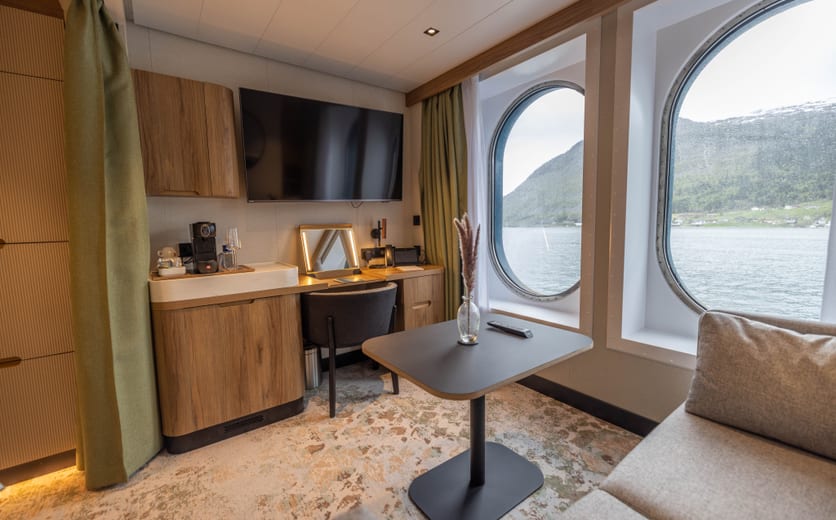
Oceanview Staterooms measure 20m2 (215ft2) and can accommodate two guests. They feature two single beds or a double bed, a bedroom with living room area, and a luxurious bathroom.
from £10,300 per person
from £17,175 per person
from £10,300 per person
Oceanview Staterooms measure 20m2 (215ft2) and can accommodate two guests. They feature two single beds or a double bed, a bedroom with living room area, and a luxurious bathroom.
from £10,300 per person
from £17,175 per person





 0203 930 4640