07 Jun - 23 Jun 2027
Return flights from the UK
16 Nights onboard Scenic Amber
All Inclusive Drinks*
Overseas Transfers
Butler*
Complimentary Dining*
Gratuities*
Shore Excursions*
Wi-Fi*
Not Available
from
£7,649
per person
from
£8,819
per person
from
£8,819
per person
Our experts are here to help
Call us today on 0203 930 4640 or enquire online.


*Select voyages. T's and C's apply
Day 1
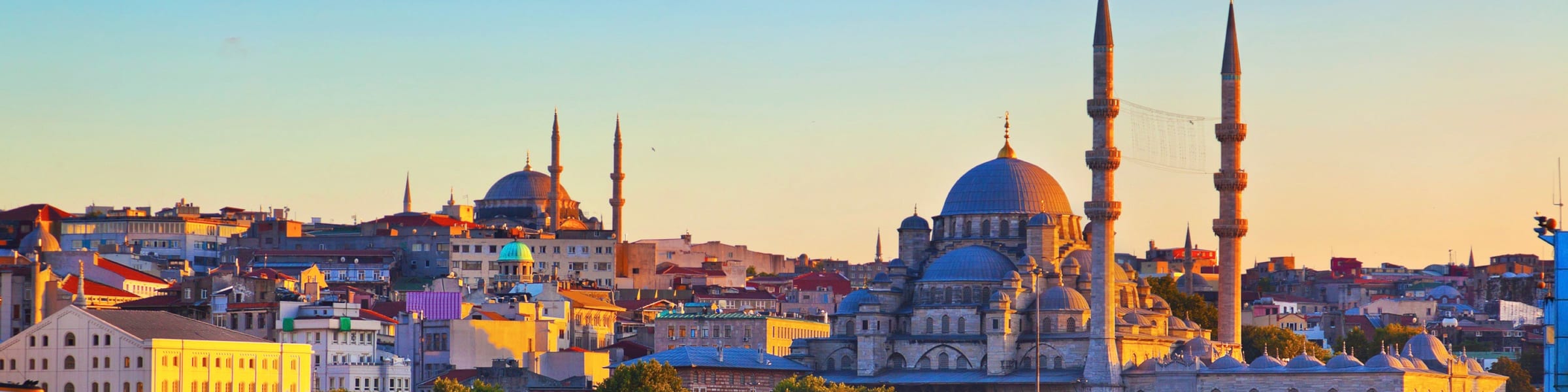
Welcome to Istanbul. Home to more than 15 million people, it’s the largest city in Turkey and one of the largest in the world. Istanbul will inspire all your senses. It’s an exhilarating blend of cultures, cuisines, architecture, history and style.
The only city in the world that can lay claim to straddling two continents, Istanbul—once known as Constantinople, capital of the Byzantine and then the Ottoman Empire—has for centuries been a bustling metropolis with one foot in Europe and the other in Asia. Istanbul embraces this enviable position with both a certain chaos and inventiveness, ever evolving as one of the world’s most cosmopolitan crossroads. It’s often said that Istanbul is the meeting point of East and West, but visitors to this city built over the former capital of two great empires are likely to be just as impressed by the juxtaposition of old and new. Office towers creep up behind historic palaces, women in chic designer outfits pass others wearing long skirts and head coverings, peddlers’ pushcarts vie with battered old Fiats and shiny BMWs for dominance of the noisy, narrow streets, and the Grand Bazaar competes with modern shopping malls. At dawn, when the muezzin's call to prayer resounds from ancient minarets, there are inevitably a few hearty revelers still making their way home from nightclubs and bars. Most visitors to this sprawling city of more than 14 million will first set foot in the relatively compact Old City, where the legacy of the Byzantine and Ottoman empires can be seen in monumental works of architecture like the brilliant Aya Sofya and the beautifully proportioned mosques built by the great architect Sinan. Though it would be easy to spend days, if not weeks, exploring the wealth of attractions in the historical peninsula, visitors should make sure also to venture elsewhere in order to experience the vibrancy of contemporary Istanbul. With a lively nightlife propelled by its young population and an exciting arts scene that’s increasingly on the international radar—thanks in part to its stint as the European Capital of Culture in 2010—Istanbul is truly a city that never sleeps. It’s also a place where visitors will feel welcome: Istanbul may be on the Bosphorus, but at heart it’s a Mediterranean city, whose friendly inhabitants are effusively social and eager to share what they love most about it.
Day 2
There have been settlements in what is now Istanbul, occupying both banks of the Bosphorus Strait, for thousands of years. The modern city began life as Constantinople in the 4th century, before changing its name to Istanbul in 1930. Wherever you go, you’re walking through history. On a guided tour today, you’ll see two of the city’s most famous landmarks, Hagia Sophia and the Blue Mosque, sitting on either side of the central Sultanahmet Park, and visit the city’s grandest royal residence, Topkapi Palace.
The only city in the world that can lay claim to straddling two continents, Istanbul—once known as Constantinople, capital of the Byzantine and then the Ottoman Empire—has for centuries been a bustling metropolis with one foot in Europe and the other in Asia. Istanbul embraces this enviable position with both a certain chaos and inventiveness, ever evolving as one of the world’s most cosmopolitan crossroads. It’s often said that Istanbul is the meeting point of East and West, but visitors to this city built over the former capital of two great empires are likely to be just as impressed by the juxtaposition of old and new. Office towers creep up behind historic palaces, women in chic designer outfits pass others wearing long skirts and head coverings, peddlers’ pushcarts vie with battered old Fiats and shiny BMWs for dominance of the noisy, narrow streets, and the Grand Bazaar competes with modern shopping malls. At dawn, when the muezzin's call to prayer resounds from ancient minarets, there are inevitably a few hearty revelers still making their way home from nightclubs and bars. Most visitors to this sprawling city of more than 14 million will first set foot in the relatively compact Old City, where the legacy of the Byzantine and Ottoman empires can be seen in monumental works of architecture like the brilliant Aya Sofya and the beautifully proportioned mosques built by the great architect Sinan. Though it would be easy to spend days, if not weeks, exploring the wealth of attractions in the historical peninsula, visitors should make sure also to venture elsewhere in order to experience the vibrancy of contemporary Istanbul. With a lively nightlife propelled by its young population and an exciting arts scene that’s increasingly on the international radar—thanks in part to its stint as the European Capital of Culture in 2010—Istanbul is truly a city that never sleeps. It’s also a place where visitors will feel welcome: Istanbul may be on the Bosphorus, but at heart it’s a Mediterranean city, whose friendly inhabitants are effusively social and eager to share what they love most about it.
Day 3
Today, you’ll leave Istanbul behind and visit the city of Çanakkale. Sitting on the edge of the Dardanelles Strait, Çanakkale has been at the forefront of history for centuries. It’s the gateway to the World War I battlefield of Gallipoli and the ancient city of Troy. Enjoy a ferry journey along this storied waterway.
Tonight, why not make the most of your evening at leisure and join the locals along the waterfront promenade to get a taste of modern Turkish culture.
The only city in the world that can lay claim to straddling two continents, Istanbul—once known as Constantinople, capital of the Byzantine and then the Ottoman Empire—has for centuries been a bustling metropolis with one foot in Europe and the other in Asia. Istanbul embraces this enviable position with both a certain chaos and inventiveness, ever evolving as one of the world’s most cosmopolitan crossroads. It’s often said that Istanbul is the meeting point of East and West, but visitors to this city built over the former capital of two great empires are likely to be just as impressed by the juxtaposition of old and new. Office towers creep up behind historic palaces, women in chic designer outfits pass others wearing long skirts and head coverings, peddlers’ pushcarts vie with battered old Fiats and shiny BMWs for dominance of the noisy, narrow streets, and the Grand Bazaar competes with modern shopping malls. At dawn, when the muezzin's call to prayer resounds from ancient minarets, there are inevitably a few hearty revelers still making their way home from nightclubs and bars. Most visitors to this sprawling city of more than 14 million will first set foot in the relatively compact Old City, where the legacy of the Byzantine and Ottoman empires can be seen in monumental works of architecture like the brilliant Aya Sofya and the beautifully proportioned mosques built by the great architect Sinan. Though it would be easy to spend days, if not weeks, exploring the wealth of attractions in the historical peninsula, visitors should make sure also to venture elsewhere in order to experience the vibrancy of contemporary Istanbul. With a lively nightlife propelled by its young population and an exciting arts scene that’s increasingly on the international radar—thanks in part to its stint as the European Capital of Culture in 2010—Istanbul is truly a city that never sleeps. It’s also a place where visitors will feel welcome: Istanbul may be on the Bosphorus, but at heart it’s a Mediterranean city, whose friendly inhabitants are effusively social and eager to share what they love most about it.
Day 3
Day 4
Today you are bound for Gallipoli. The Gallipoli peninsula where the eight-month WWI campaign took place is now a national park, and your guide will take you through the most significant sites. Stand on the beach at ANZAC Cove, where the soldiers first came to shore on 25 April 1915. Contemplate the courage and sacrifice that took place at Lone Pine, the Nek, and Shrapnel Valley.
Walk through some of the 31 cemeteries that dot the peninsula, including the Chanuk Bair Memorial dedicated to New Zealand troops, and see the Cape Helles Memorial, which stands as a monument to those whose remains still lie on the battlefield. You’ll also enjoy a picnic lunch at a picturesque spot. Visiting Gallipoli is a moving experience that will stay with you long after you leave.
Day 5
This morning you’ll be venturing to a place that is shrouded in mystery and legend, the ancient city of Troy. For more than 3,000 years, the tales of Troy and the Trojan War were thought to be mythical, made most famous by Homer’s Iliad. However, in the late 19th century, the ruins of Troy were discovered in modern day Turkey and centuries of history were instantly rewritten. Take a tour through the 4,000 year old ruins, see a giant replica of the famous Trojan Horse, and learn the true story behind this illustrious city.
Afterwards, return to Istanbul.
Day 5
The only city in the world that can lay claim to straddling two continents, Istanbul—once known as Constantinople, capital of the Byzantine and then the Ottoman Empire—has for centuries been a bustling metropolis with one foot in Europe and the other in Asia. Istanbul embraces this enviable position with both a certain chaos and inventiveness, ever evolving as one of the world’s most cosmopolitan crossroads. It’s often said that Istanbul is the meeting point of East and West, but visitors to this city built over the former capital of two great empires are likely to be just as impressed by the juxtaposition of old and new. Office towers creep up behind historic palaces, women in chic designer outfits pass others wearing long skirts and head coverings, peddlers’ pushcarts vie with battered old Fiats and shiny BMWs for dominance of the noisy, narrow streets, and the Grand Bazaar competes with modern shopping malls. At dawn, when the muezzin's call to prayer resounds from ancient minarets, there are inevitably a few hearty revelers still making their way home from nightclubs and bars. Most visitors to this sprawling city of more than 14 million will first set foot in the relatively compact Old City, where the legacy of the Byzantine and Ottoman empires can be seen in monumental works of architecture like the brilliant Aya Sofya and the beautifully proportioned mosques built by the great architect Sinan. Though it would be easy to spend days, if not weeks, exploring the wealth of attractions in the historical peninsula, visitors should make sure also to venture elsewhere in order to experience the vibrancy of contemporary Istanbul. With a lively nightlife propelled by its young population and an exciting arts scene that’s increasingly on the international radar—thanks in part to its stint as the European Capital of Culture in 2010—Istanbul is truly a city that never sleeps. It’s also a place where visitors will feel welcome: Istanbul may be on the Bosphorus, but at heart it’s a Mediterranean city, whose friendly inhabitants are effusively social and eager to share what they love most about it.
Day 6
Today, learn more about Turkish culture and traditions in bustling Istanbul.
Scenic Freechoice:
Choose how to spend your morning with today’s Scenic Freechoice experiences:
The tastes of Turkey: Turkish cuisine brings together Mediterranean, Middle Eastern, Central Asian and Eastern European flavours. Learn its secrets in a cooking class where you’ll learn to make delicious traditional dishes.
Grand Bazaar: Visit the colourful and chaotic Grand Bazaar, a vast undercover market made up of thousands of shops along wide plazas and tiny laneways. Peruse the stalls and afterwards join your local guide for a traditional Turkish coffee from a local vendor.
Scenic Enrich
Cruise on the Bosphorus & Farewell Dinner: Istanbul straddles the Bosphorus Strait. This strategic waterway has played a major role in world trade for centuries and is still one of the most important global shipping routes. This evening, you’ll cruise along the strait, winding between ferries and fishing boats and passing famous monuments and historic minarets. Then return to shore for a farewell dinner on exceptional Turkish cuisine as you raise a glass to an unforgettable journey.
The only city in the world that can lay claim to straddling two continents, Istanbul—once known as Constantinople, capital of the Byzantine and then the Ottoman Empire—has for centuries been a bustling metropolis with one foot in Europe and the other in Asia. Istanbul embraces this enviable position with both a certain chaos and inventiveness, ever evolving as one of the world’s most cosmopolitan crossroads. It’s often said that Istanbul is the meeting point of East and West, but visitors to this city built over the former capital of two great empires are likely to be just as impressed by the juxtaposition of old and new. Office towers creep up behind historic palaces, women in chic designer outfits pass others wearing long skirts and head coverings, peddlers’ pushcarts vie with battered old Fiats and shiny BMWs for dominance of the noisy, narrow streets, and the Grand Bazaar competes with modern shopping malls. At dawn, when the muezzin's call to prayer resounds from ancient minarets, there are inevitably a few hearty revelers still making their way home from nightclubs and bars. Most visitors to this sprawling city of more than 14 million will first set foot in the relatively compact Old City, where the legacy of the Byzantine and Ottoman empires can be seen in monumental works of architecture like the brilliant Aya Sofya and the beautifully proportioned mosques built by the great architect Sinan. Though it would be easy to spend days, if not weeks, exploring the wealth of attractions in the historical peninsula, visitors should make sure also to venture elsewhere in order to experience the vibrancy of contemporary Istanbul. With a lively nightlife propelled by its young population and an exciting arts scene that’s increasingly on the international radar—thanks in part to its stint as the European Capital of Culture in 2010—Istanbul is truly a city that never sleeps. It’s also a place where visitors will feel welcome: Istanbul may be on the Bosphorus, but at heart it’s a Mediterranean city, whose friendly inhabitants are effusively social and eager to share what they love most about it.
Day 7
After breakfast, you’ll be transferred to the airport for your flight to Bucharest.
The capital of Romania was once called the ‘Paris of the East’, however WWII changed the face of the city with much of its Art Nouveau and Art Deco architecture destroyed.
You will be staying in a luxury hotel tonight before boarding your 5-star Scenic Space-Ship tomorrow. This gives you the chance to explore Bucharest after dark.
The only city in the world that can lay claim to straddling two continents, Istanbul—once known as Constantinople, capital of the Byzantine and then the Ottoman Empire—has for centuries been a bustling metropolis with one foot in Europe and the other in Asia. Istanbul embraces this enviable position with both a certain chaos and inventiveness, ever evolving as one of the world’s most cosmopolitan crossroads. It’s often said that Istanbul is the meeting point of East and West, but visitors to this city built over the former capital of two great empires are likely to be just as impressed by the juxtaposition of old and new. Office towers creep up behind historic palaces, women in chic designer outfits pass others wearing long skirts and head coverings, peddlers’ pushcarts vie with battered old Fiats and shiny BMWs for dominance of the noisy, narrow streets, and the Grand Bazaar competes with modern shopping malls. At dawn, when the muezzin's call to prayer resounds from ancient minarets, there are inevitably a few hearty revelers still making their way home from nightclubs and bars. Most visitors to this sprawling city of more than 14 million will first set foot in the relatively compact Old City, where the legacy of the Byzantine and Ottoman empires can be seen in monumental works of architecture like the brilliant Aya Sofya and the beautifully proportioned mosques built by the great architect Sinan. Though it would be easy to spend days, if not weeks, exploring the wealth of attractions in the historical peninsula, visitors should make sure also to venture elsewhere in order to experience the vibrancy of contemporary Istanbul. With a lively nightlife propelled by its young population and an exciting arts scene that’s increasingly on the international radar—thanks in part to its stint as the European Capital of Culture in 2010—Istanbul is truly a city that never sleeps. It’s also a place where visitors will feel welcome: Istanbul may be on the Bosphorus, but at heart it’s a Mediterranean city, whose friendly inhabitants are effusively social and eager to share what they love most about it.
Day 7
Bucharest, in southern Romania, is the country's capital and commercial center. Its iconic landmark is the massive, communist-era Palatul Parlamentului government building, which has 1,100 rooms. Nearby, the historic Lipscani district is home to an energetic nightlife scene as well as tiny Eastern Orthodox Stavropoleos Church and 15th-century Curtea Veche Palace, where Prince Vlad III (“The Impaler”) once ruled.
Day 8
Wake in Bucharest. After a turbulent past, the city is now a unique mix of Art Nouveau remnants and Brutalist-era architecture sit alongside wide, tree lined boulevards and leafy squares, hidden street art and thriving nightlife.
Take an orientation tour of the city by coach, from the south of Bucharest to Primaverii Palace stopping to see its squares, including Union, University, Roman, Victoryand Charles de Gaulle squares.
Scenic Freechoice:
After the city tour, personalise the rest of your morning with the following Scenic Freechoice activities.
Ceausescu’s Spring Palace: Located in one of the wealthiest districts in Bucharest, this 1960s residence is made up of 80 distinctive and elegant rooms decorated with silk wallpaper, wood panels, paintings by famous Romanian painters, mosaics, marble, chandeliers and mirrors made of Murano glass.
Village Open Air Museum: Explore the ethnography exhibits depicting Romanian heritage and culture at the Village Open Air Museum. The museum depicts authentic houses, barns, churches and more, rebuilt by craftsmen using traditional techniques.
Afterwards, transfer to Giurgiu to board your luxurious Scenic Space-Ship.
Bucharest, in southern Romania, is the country's capital and commercial center. Its iconic landmark is the massive, communist-era Palatul Parlamentului government building, which has 1,100 rooms. Nearby, the historic Lipscani district is home to an energetic nightlife scene as well as tiny Eastern Orthodox Stavropoleos Church and 15th-century Curtea Veche Palace, where Prince Vlad III (“The Impaler”) once ruled.
Day 8
Day 9
Arrive in Silistra today. This Bulgarian town has changed hands many times over the centuries. A major Turkish fortress and trade centre in the 15th century, it played a significant role in the Russo-Turkish wars of the 1870s, briefly became part of Romania after the Second Balkan War and finally reverted to Bulgaria in 1940. The town is dotted with historic sites stretching back to late Roman times. To learn more about local culture, you can choose to visit a local village and school, an experience available only to Scenic guests.
Scenic Freechoice:
Choose from the following Scenic Freechoice activities:
Active walk to Silistra Fort: Take an active guided walking tour of the 19th century fort and learn about its history. It is the best preserved of the six points of the Turkish fortification system.
Visit Alfatar village: This exclusive excursion takes you to the small village of Alfatar, located just outside of Silistra. Visit the ethnographic museum featuring a typical country house, see customary attire and visit the Alfatar school to meet local children with a charming choir performance and learn about daily life for young Bulgarians.
Sveshtari Thracian secrets and local delights: Discover the rich heritage and flavours of Bulgaria on this unique guided tour. Explore the ancient Thracian Tomb of Sveshtari, a World Heritage site dating back to the 3rd century BC, then visit local producers of exquisite brandy for a tasting.
Day 10
Your Scenic Space-Ship will arrive in the Bulgarian town of Rousse today, which has been described as ‘Little Vienna’. Here you will have the choice to disembark and take a walking tour of the city. Alternatively, join a full-day excursion to Veliko Tarnovo, known as the ‘City of the Kings’
Scenic Freechoice:
Discover more on one of these Scenic Freechoice excursions:
Walking tour of Rousse: Join a local guide for a sightseeing tour of this opulent town where you will learn about traditional Bulgarian handicrafts, sample some delicious local wine and delight in a short piano recital.
Excursion to Veliko Tarnovo and Arbanassi: Take a full day excursion from Svishtov to Veliko Tarnovo, one of Bulgaria’s oldest towns. Enjoy the panoramic views of the old town and see the Asenevtsi Brothers Monument. You will then venture to the nearby leafy village of Arbanassi.
Day 10
Day 11
Day 12
The capital of Serbia, Belgrade is known as the ‘Door to Central Europe’ and lies at the confluence of the Sava and Danube rivers. This eclectic city is steeped in history, Brutalist and Art Nouveau buildings and a bohemian vibe. It’s one of the oldest capitals in Europe and has stood at the crossroads between the Austro-Hungarian and Ottoman empires for centuries. Thanks to these centuries of conflict, Belgrade has been rebuilt almost 40 times.
Scenic Freechoice:
Explore the city today one of these Scenic Freechoice excursions.
Tour of Belgrade: Explore the iconic sites of the city with a local guide. You will explore the city’s highlights such as cobbled streets of the Bohemian Quarter and Kalemegdan Fortress. Afterwards, enjoy free time to explore Belgrade on your own.
Panoramic tour of Belgrade with Tito’s Memorial: Join a panoramic tour of Belgrade with a local guide. See and learn about the major sites of the city including the Ottoman heritage of the Old Town and visit the memorial dedicated to Tito, the former ruler of Yugoslavia.
Cycling tour along the Danube: Choose this active excursion to trace the banks of the Danube on two wheels with a guided cycling tour. During the 16km ride, you’ll learn about the history of Yugoslavia and Belgrade, and see the Belgrade Waterfront, the fomer concentration camp Staro Sajmiste, and Ada Island.
Central Belgrade stroll with coffee and cake: Starting from the historic Kalemegdan Fortress, wander down Knez Mihailova Street, Belgrade's bustling pedestrian boulevard, lined with charming shops and cafes. Pause to enjoy a cup of expertly brewed coffee paired with a signature cake from one of the city's beloved bakeries.
This afternoon, you’re free to explore Belgrade further. You might like to soak up the bohemian culture with a wander along the cobblestoned Skardalija Street, a district once frequented by writers and artists and other creative souls, now home to traditional restaurants, local stores and galleries.
Scenic Enrich
Concert in the Crypt of St. Sava Church: Visit St. Sava Temple, the largest orthodox temple in the Balkans. Admire the fresco-lined walls of the cathedral’s crypt where the church choir will perform some of the most beautiful hymns just for you. The crypt’s remarkable acoustics make this a once-in-a-lifetime opportunity, as white marble adorns the remarkable ceilings.
Day 13
Cross the border into Croatia and dock in Vukovar, a historically significant city strategically positioned along the Danube River at the confluence with the Vuka River. Known as ‘The Hero Town’, it is famed for its historic resilience, especially its fierce defence during the Croatian War of Independence in the early 1990s, which left a lasting mark on its landscape and collective memory.
Scenic Freechoice:
Choose from the following Scenic Freechoice activities:
Walking tour of Osijek: Take a guided walking tour of nearby Osijek. This small city has a turbulent history and many of the grand Baroque buildings in the Old Town bear the scars of war. You’ll also have the opportunity to hear some traditional and classical music popular in the region.
Baranja wine region: In this picturesque region straddling Croatia and Hungary, explore a rich wine-making tradition and picturesque vineyards. Enjoy a tasting experience blending bold notes, local culture and breathtaking landscapes.
Vukovar chronicles - A river town’s tale of resilience: With roots dating back to medieval times, Vukovar was historically a vibrant trade and industrial centre. Though heavily damaged by war, the city has been rebuit. On this tour, discover Vukovar’s spirit of resilience and stories of bravery that remain central to the city’s character, with museums and monuments preserving its legacy of sacrifice and hope.
After this morning’s excursions, visit the home of a local Croatian family and have lunch. Immerse yourself in this cultural and culinary experience, and enjoy an authentic meal prepared with fresh vegetables from the host’s garden.
Day 14
Arrive in Mohács today. Straddling the Danube, this small Hungarian town holds an outsized position in Hungarian history. It was the site of the 16th century Battle of Mohács, which led to the destruction of the Hungarian monarchy and the rise of Ottoman and Habsburg rule.
Scenic Freechoice:
Explore your way with one of these excursions:
Guided tour of Pécs: Located close to the Croatian border, this guided tour will take you to the city’s first telephone exchange, which opened in 1885; the Turkish Bath of Pasha Memi, demolished in the late 19th century but unearthed in the 1970s, and more.
Wine tasting in Villány: The region of Villány is known for its big, bold red wines. Visit the charming village, where you will learn about everyday life in Hungary then explore the rows of historic wine cellars where you can sample local drops.
Mohács traditions and flavours: Experience Mohács, a town where Hungarians, Croats, and Serbs live in unity, sharing rich traditions and multicultural heritage. Visit the Busóudvar Museum to learn about the World Heritage-listed Busójárás festival and taste authentic halászlé, a flavourful stew made with fresh Danube River fish and Hungarian paprika.
Day 15
Welcome to Budapest, the Hungarian capital and one of Europe’s most diverse and vibrant cities. Divided by the Danube, with Buda on one side and Pest on the other, it was united in 1873 when a newly built bridge connected the two. The city is an architectural treasure trove comprising styles from Gothic to Art Nouveau and everything in between. It is also well known for its hot springs and thermal baths, housed in colourful, ornate buildings.
Enjoy some free time to explore the city on your own or explore further afield with two excursions that are exclusive to Scenic.
Scenic Freechoice:
Discover the region on one of these Scenic Freechoice excursions:
Beethoven’s favourite getaway – Brunszvik Castle: The snow white Brunsvik Castle is a stunning example of 18th century neo-Gothic architecture surrounded by a sprawling English style park. Famous composer Ludwig van Beethoven, was a frequent visitor and today the castle houses a Beethoven Memorial Museum.
Etyek region wineries & vineyards: Often called the ‘vineyard of Budapest’, Etyek is renowned for its crisp, aromatic white wines and sparkling wines. Take a tour of a vineyard, learn about the winemaking process and sample local vintages.
You will be staying in a luxury hotel for the next two nights. This gives you plenty of opportunities to discover Budapest’s legendary nightlife.
Budapest is the capital city of Hungary and is located over the River Danube. It is one of the largest cities in the European Union and much of its historical sites have been awarded UNESCO World Heritage Site status. Originally formed in 1873 by the joining of Buda, Pest and Old Buda, the city suffered heavy destruction during World War II and was rebuilt into the country's political, cultural and commercial hub it is now. Bridges and railways connect the city over the Danube, including the six small islands situated on the river themselves. Some of Budapest’s UNESCO World Heritage sites include Chain Bridge, Budapest Parliament, the striking Matthias church and the iconic Royal Palace visible from every location within Budapest City. The Castle Hills district architecture represents over a thousand years of the city's history with examples of Roman, Turkish, Gothic, Renaissance and Art Nouveau styles. Budapest also has a rich Jewish heritage and is home to the largest synagogue in Europe. The city has an abundance of restaurants offering international cuisines, as well as traditional Hungarian dishes ,including goulash soup, a very popular lunchtime dish. Hungarians enjoy their coffee so a traditional cafe is never hard to find.
Day 16
This morning, join a local guide to discover the flavours of Hungary on a Hungarian culinary market walk and tasting tour. This delicious food tasting tour of Budapest offers an unforgettable journey through the city’s culinary delights. Visit the Grand Central Market, a treasure trove of Hungarian flavours to sample local specialties and hear fascinating stories.
Enjoy free time this afternoon to explore the city at your leisure. You may like to bring your swimsuit and join the locals in one of the many thermal baths.
Budapest is the capital city of Hungary and is located over the River Danube. It is one of the largest cities in the European Union and much of its historical sites have been awarded UNESCO World Heritage Site status. Originally formed in 1873 by the joining of Buda, Pest and Old Buda, the city suffered heavy destruction during World War II and was rebuilt into the country's political, cultural and commercial hub it is now. Bridges and railways connect the city over the Danube, including the six small islands situated on the river themselves. Some of Budapest’s UNESCO World Heritage sites include Chain Bridge, Budapest Parliament, the striking Matthias church and the iconic Royal Palace visible from every location within Budapest City. The Castle Hills district architecture represents over a thousand years of the city's history with examples of Roman, Turkish, Gothic, Renaissance and Art Nouveau styles. Budapest also has a rich Jewish heritage and is home to the largest synagogue in Europe. The city has an abundance of restaurants offering international cuisines, as well as traditional Hungarian dishes ,including goulash soup, a very popular lunchtime dish. Hungarians enjoy their coffee so a traditional cafe is never hard to find.
Day 17
Your journey concludes today. After breakfast, transfer to Budapest airport for your onward journey, taking with you a treasure trove of wonderful memories from this undiscovered corner of Europe.
This itinerary is a guide only and may be amended for operational reasons such as high and low water. As such, the cruise may operate altered from that stated above. Please refer to our terms and conditions.
Budapest is the capital city of Hungary and is located over the River Danube. It is one of the largest cities in the European Union and much of its historical sites have been awarded UNESCO World Heritage Site status. Originally formed in 1873 by the joining of Buda, Pest and Old Buda, the city suffered heavy destruction during World War II and was rebuilt into the country's political, cultural and commercial hub it is now. Bridges and railways connect the city over the Danube, including the six small islands situated on the river themselves. Some of Budapest’s UNESCO World Heritage sites include Chain Bridge, Budapest Parliament, the striking Matthias church and the iconic Royal Palace visible from every location within Budapest City. The Castle Hills district architecture represents over a thousand years of the city's history with examples of Roman, Turkish, Gothic, Renaissance and Art Nouveau styles. Budapest also has a rich Jewish heritage and is home to the largest synagogue in Europe. The city has an abundance of restaurants offering international cuisines, as well as traditional Hungarian dishes ,including goulash soup, a very popular lunchtime dish. Hungarians enjoy their coffee so a traditional cafe is never hard to find.
from £7,649 per person
Our Jewel Deck Suites provide a lovely introduction to river cruising. Comfortable and luxurious with the finest in amenities.
from £8,819 per person
from £7,649 per person
Our Jewel Deck Suites provide a lovely introduction to river cruising. Comfortable and luxurious with the finest in amenities.
from £8,819 per person