17 Oct - 27 Oct 2026
10 Nights onboard Emerald Azzurra
Full Board Drinks (with meals)*
Complimentary Dining*
Gratuities*
Shore Excursions*
Entertainment*
Wi-Fi*
Not Available
Sold Out
Not Available
from
£10,218
per person
Our experts are here to help
Call us today on 0203 930 4640 or enquire online.


*Select voyages. T's and C's apply
Day 1
Your journey begins in Athens, where you’ll be transferred to your Emerald Cruises luxury yacht. The ancient capital city of Greece, Athens presents a remarkable blend of historical significance, vibrant culture, and lively atmosphere.
Please book your flight to arrive into Athens prior to 01:00 PM.
Docked: 18:00
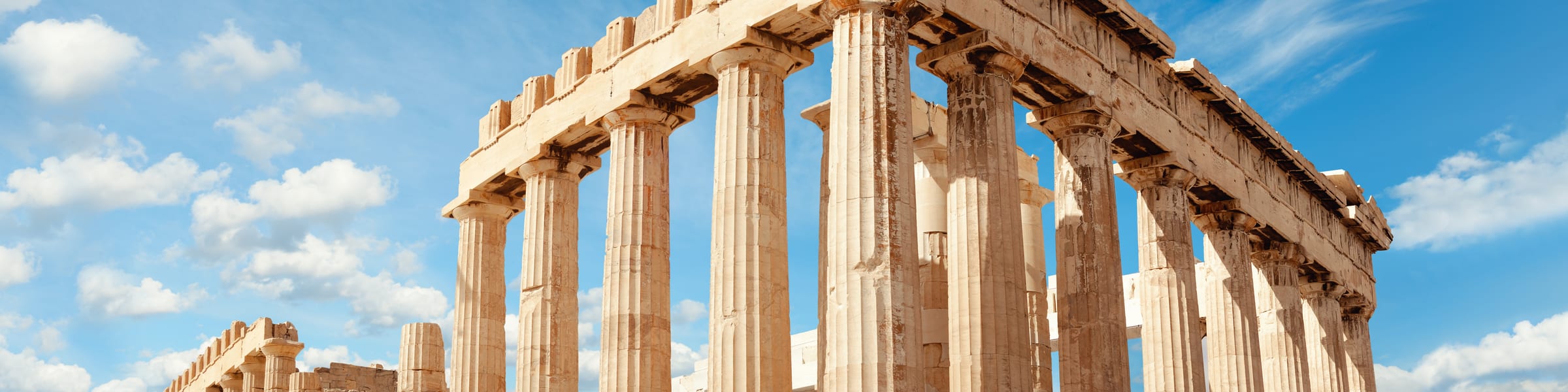
It's no wonder that all roads lead to the fascinating and maddening metropolis of Athens. Lift your eyes 200 feet above the city to the Parthenon, its honey-color marble columns rising from a massive limestone base, and you behold architectural perfection that has not been surpassed in 2,500 years. But, today, this shrine of classical form dominates a 21st-century boomtown. To experience Athens—Athína in Greek—fully is to understand the essence of Greece: ancient monuments surviving in a sea of cement, startling beauty amid the squalor, tradition juxtaposed with modernity. Locals depend on humor and flexibility to deal with the chaos; you should do the same. The rewards are immense. Although Athens covers a huge area, the major landmarks of the ancient Greek, Roman, and Byzantine periods are close to the modern city center. You can easily walk from the Acropolis to many other key sites, taking time to browse in shops and relax in cafés and tavernas along the way. From many quarters of the city you can glimpse "the glory that was Greece" in the form of the Acropolis looming above the horizon, but only by actually climbing that rocky precipice can you feel the impact of the ancient settlement. The Acropolis and Filopappou, two craggy hills sitting side by side; the ancient Agora (marketplace); and Kerameikos, the first cemetery, form the core of ancient and Roman Athens. Along the Unification of Archaeological Sites promenade, you can follow stone-paved, tree-lined walkways from site to site, undisturbed by traffic. Cars have also been banned or reduced in other streets in the historical center. In the National Archaeological Museum, vast numbers of artifacts illustrate the many millennia of Greek civilization; smaller museums such as the Goulandris Museum of Cycladic Art Museum and the Byzantine and Christian Museum illuminate the history of particular regions or periods. Athens may seem like one huge city, but it is really a conglomeration of neighborhoods with distinctive characters. The Eastern influences that prevailed during the 400-year rule of the Ottoman Empire are still evident in Monastiraki, the bazaar area near the foot of the Acropolis. On the northern slope of the Acropolis, stroll through Plaka (if possible by moonlight), an area of tranquil streets lined with renovated mansions, to get the flavor of the 19th-century's gracious lifestyle. The narrow lanes of Anafiotika, a section of Plaka, thread past tiny churches and small, color-washed houses with wooden upper stories, recalling a Cycladic island village. In this maze of winding streets, vestiges of the older city are everywhere: crumbling stairways lined with festive tavernas; dank cellars filled with wine vats; occasionally a court or diminutive garden, enclosed within high walls and filled with magnolia trees and the flaming trumpet-shaped flowers of hibiscus bushes. Formerly run-down old quarters, such as Thission, Gazi and Psirri, popular nightlife areas filled with bars and mezedopoleia (similar to tapas bars), are now in the process of gentrification, although they still retain much of their original charm, as does the colorful produce and meat market on Athinas. The area around Syntagma Square, the tourist hub, and Omonia Square, the commercial heart of the city about 1 km (½ mi) northwest, is distinctly European, having been designed by the court architects of King Otho, a Bavarian, in the 19th century. The chic shops and bistros of ritzy Kolonaki nestle at the foot of Mt. Lycabettus, Athens's highest hill (909 feet). Each of Athens's outlying suburbs has a distinctive character: in the north is wealthy, tree-lined Kifissia, once a summer resort for aristocratic Athenians, and in the south and southeast lie Glyfada, Voula, and Vouliagmeni, with their sandy beaches, seaside bars, and lively summer nightlife. Just beyond the city's southern fringes is Piraeus, a bustling port city of waterside fish tavernas and Saronic Gulf views.
Day 2
An island embedded in the Cyclades archipelago, Mykonos is well-known for its vibrant atmosphere and charming whitewashed buildings with vivid blue accents. Mykonos Town, the main town on the island, presents a delightful maze of narrow streets lined with fashionable boutiques, restaurants, and bars. The town is also home to iconic landmarks such as the historic windmills. Little Venice is another popular area, known for its colourful houses and waterfront cafés. Later, you’ll overnight in Paros.
DiscoverMORE
Mykonos Town & Mosaic Art Experience (extra expense, must be pre-booked)
Discover the creative soul of Mykonos on this immersive mosaic workshop led by celebrated local artist Irene Syrianou. Stroll through the winding lanes of Mykonos Town to the tranquil Cine Manto garden, where you’ll step into the timeless art of mosaic-making. Under Irene’s expert guidance, learn to hand-cut and shape tiles, crafting your own unique piece while exploring the fascinating history of mosaics—from ancient Greece to modern sustainability. Afterward, enjoy a relaxed walk-through town and free time to browse, photograph, or simply soak in the island’s vibrant charm.
Activity Level: Moderate, Duration: 3.5 hours
Offshore/Docked: 08:00 - 18:00 | 22:00 - 18:00 (next day)
Although the fishing boats still go out in good weather, Mykonos largely makes its living from tourism these days. The summer crowds have turned one of the poorest islands in Greece into one of the richest. Old Mykonians complain that their young, who have inherited stores where their grandfathers once sold eggs or wine, get so much rent that they have lost ambition, and in summer sit around pool bars at night with their friends, and hang out in Athens in winter when island life is less scintillating. Put firmly on the map by Jackie O in the 1960s, Mykonos town—called Hora by the locals—remains the Saint-Tropez of the Greek islands. The scenery is memorable, with its whitewashed streets, Little Venice, the Kato Myli ridge of windmills, and Kastro, the town's medieval quarter. Its cubical two- or three-story houses and churches, with their red or blue doors and domes and wooden balconies, have been long celebrated as some of the best examples of classic Cycladic architecture. Luckily, the Greek Archaeological Service decided to preserve the town, even when the Mykonians would have preferred to rebuild, and so the Old Town has been impressively preserved. Pink oleander, scarlet hibiscus, and trailing green pepper trees form a contrast amid the dazzling whiteness, whose frequent renewal with whitewash is required by law. Any visitor who has the pleasure of getting lost in its narrow streets (made all the narrower by the many outdoor stone staircases, which maximize housing space in the crowded village) will appreciate how its confusing layout was designed to foil pirates—if it was designed at all. After Mykonos fell under Turkish rule in 1537, the Ottomans allowed the islanders to arm their vessels against pirates, which had a contradictory effect: many of them found that raiding other islands was more profitable than tilling arid land. At the height of Aegean piracy, Mykonos was the principal headquarters of the corsair fleets—the place where pirates met their fellows, found willing women, and filled out their crews. Eventually the illicit activity evolved into a legitimate and thriving trade network. Morning on Mykonos town's main quay is busy with deliveries, visitors for the Delos boats, lazy breakfasters, and street cleaners dealing with the previous night's mess. In late morning the cruise-boat people arrive, and the shops are all open. In early afternoon, shaded outdoor tavernas are full of diners eating salads (Mykonos's produce is mostly imported); music is absent or kept low. In mid- and late afternoon, the town feels sleepy, since so many people are at the beach, on excursions, or sleeping in their air-conditioned rooms; even some tourist shops close for siesta. By sunset, people have come back from the beach, having taken their showers and rested. At night, the atmosphere in Mykonos ramps up. The cruise-boat people are mostly gone, coughing three-wheelers make no deliveries in the narrow streets, and everyone is dressed sexy for summer and starting to shimmy with the scene. Many shops stay open past midnight, the restaurants fill up, and the bars and discos make ice cubes as fast as they can. Ready to dive in? Begin your tour of Mykonos town (Hora) by starting out at its heart: Mando Mavrogenous Square.
Day 2
Day 3
Paros ranks as one of the prettiest Greek islands in the heart of the Aegean Sea, with its verdant green landscape brimming with vineyards and orchards laden with citrus fruits and pomegranates. Wander the winding streets of the capital Parikia, admiring the quintessential Cycladic architecture and quaint white houses adorned with bright blue doors and window boxes filled with blooming bougainvillea. Today choose between our EmeraldACTIVE or DiscoverMORE option.
EmeraldACTIVE
Lefkes valley hike
Experience the soul of Paros on a guided hike along the ancient Byzantine Road, a thousand-year-old marble path once travelled by islanders and traders. Begin in the serene mountain village of Lefkes, where whitewashed alleys and traditional charm set the tone. Then venture 3.5 kilometres through olive groves, wildflower-dotted meadows, and shaded valleys. Along the way, take in sweeping views from the windmills hill, overlooking the Paros-Naxos channel and neighbouring Cycladic islands. This immersive hike blends natural beauty, rich history, and cultural insight into one unforgettable Parian adventure.
Activity Level: Strenuous, Duration: 4 hours
DiscoverMORE
Lefkes and Naoussa with wine tasting (extra expense)
Our adventure begins in the picturesque village of Lefkes, a hidden gem nestled amidst the breathtaking beauty of Paros and once the island's vibrant capital. From there, make your way to the quaint fishing village of Naoussa, where you can meander through its inviting alleyways and lively harbour. The highlight of your journey awaits at a century-old winery, where you’ll embark on a guided tour that offers a behind-the-scenes glimpse into the art of winemaking on Paros. As the tour concludes, settle into the atmospheric surroundings of the underground cellars or on the terrace for a private tasting experience unlike any other.
Activity Level: Moderate, Duration: 4 hours
Offshore: Overnight - 18:00
Day 4
Built during the 19th century and a feat of engineering, the impressive Corinth Canal connects the Gulf of Corinth in the Ionian Sea with the Saronic Gulf in the Aegean Sea. Sail through this slenderest of canals to the waterfront town of Itea, where you’ll have an opportunity to explore the archaeological site of Delphi, regarded by the Ancient Greeks as the centre of the world.
Included Excursion
Guided tour of Delphi
Enjoy an extraordinary journey from the picturesque town of Itea to the legendary sanctuary of Apollo, where the renowned oracle once spoke. Step into the rich history of Delphi as you explore the ancient Sanctuary of Apollo and the Delphi Museum, a treasure trove of antiquities that transport you back in time.
Activity Level: Moderate, Duration: 4 hours
Docked: 13:00 - 18:00
Day 4
Day 5
Day 6
Welcome to the southeastern coast of Sicily and Syracuse, a historic Italian city renowned for its ancient ruins, picturesque architecture, and stunning waterfront views.
Syracuse's historical centre, Ortygia, is a charming island connected to the mainland by a series of bridges. Stroll through the narrow, winding streets lined with Baroque buildings, visit the striking Cathedral of Syracuse, and sample fresh seafood at charming waterfront restaurants.
DiscoverMORE
Noto, the Baroque Jewel of Sicily and cannoli tasting (extra expense)
Discover the grandeur of Sicilian Baroque in the charming town of Noto, a UNESCO World Heritage Site. After a scenic 45-minute drive, walk through the Porta Nazionale into a city of golden stone and ornate facades. Marvel at architectural gems like the 18th-century cathedral, the Archbishop’s Palace, and the elegant Villadorata Palace. Learn how the town rose from the rubble of a 1693 earthquake to become one of Sicily’s most beautiful destinations. Cap off your visit with a delicious tasting of a traditional Sicilian cannolo at the famed Caffè Sicilia before enjoying free time to explore or shop.
Activity Level: Moderate, Duration: 4 hours
DiscoverMORE
Ortigia and local produce tasting (extra expense)
Step into the heart of ancient Syracuse with a guided walking tour of Ortigia, the city’s picturesque island district. From the ruins of Apollo’s Temple in Pancali Square to the elegant Corso Matteotti and lively Archimede Square, discover centuries of history and charm. Stroll through Cathedral Square and admire the stunning Arethusa Fountain overlooking the bay. Your journey concludes with a visit to the vibrant local market, where you’ll sample regional specialties at a traditional dairy. After the tasting, return to the pier with your guide or continue exploring Ortigia at your leisure.
Activity Level: Moderate, Duration: 3 hours
Docked: 08:00 - 19:00
Siracusa, known to English speakers as Syracuse, is a wonder to behold. One of the great ancient capitals of Western civilization, the city was founded in 734 BC by Greek colonists from Corinth and soon grew to rival, and even surpass, Athens in splendor and power. It became the largest, wealthiest city-state in the West and a bulwark of Greek civilization. Although Siracusa lived under tyranny, rulers such as Dionysius filled their courts with Greeks of the highest cultural stature—among them the playwrights Aeschylus and Euripides, and the philosopher Plato. The Athenians, who didn't welcome Siracusa's rise, set out to conquer Sicily, but the natives outsmarted them in what was one of the greatest military campaigns in ancient history (413 BC). The city continued to prosper until it was conquered two centuries later by the Romans.Present-day Siracusa still has some of the finest examples of Baroque art and architecture; dramatic Greek and Roman ruins; and a Duomo that's the stuff of legend—a microcosm of the city's entire history in one building. The modern city also has a wonderful, lively, Baroque old town worthy of extensive exploration, as well as pleasant piazzas, outdoor cafés and bars, and a wide assortment of excellent seafood. There are essentially two areas to explore in Siracusa: the Parco Archeologico (Archaeological Zone), on the mainland; and the island of Ortygia, the ancient city first inhabited by the Greeks, which juts out into the Ionian Sea and is connected to the mainland by two small bridges. Ortygia is becoming increasingly popular with tourists, and is starting to lose its old-fashioned charm in favor of modern boutiques.Siracusa's old nucleus of Ortygia, a compact area, is a pleasure to amble around without getting unduly tired. In contrast, mainland Siracusa is a grid of wider avenues. At the northern end of Corso Gelone, above Viale Paolo Orsi, the orderly grid gives way to the ancient quarter of Neapolis, where the sprawling Parco Archeologico is accessible from Viale Teracati (an extension of Corso Gelone). East of Viale Teracati, about a 10-minute walk from the Parco Archeologico, the district of Tyche holds the archaeological museum and the church and catacombs of San Giovanni, both off Viale Teocrito (drive or take a taxi or city bus from Ortygia). Coming from the train station, it's a 15-minute trudge to Ortygia along Via Francesco Crispi and Corso Umberto. If you're not up for that, take one of the free electric buses leaving every 10 minutes from the bus station around the corner.
Day 7
The delightful capital of Malta, Valletta welcomes visitors with rich history, stunning architecture, and a vibrant cultural scene. The entire city is a UNESCO World Heritage Site and famed for its well-preserved 16th-century buildings, including the impressive St. John's Co-Cathedral and the Grandmaster's Palace.
Included Excursion
Guided tour of Mdina and Valletta
Begin with a scenic drive to Mdina, Malta’s ancient capital, perched on a hilltop with sweeping island views. Often called the "Silent City," Mdina is one of Europe’s best-preserved medieval towns. Stroll through its narrow, winding streets as your guide shares over 4,000 years of history. Enjoy free time to visit St. Paul’s Cathedral, Palazzo Falson, browse for local crafts, or relax at a charming café.Continue by coach to Valletta, Malta’s bustling present-day capital. Visit the stunning St. John’s Co-Cathedral (closed Sundays), then enjoy a guided walking tour passing notable landmarks such as the Grand Master’s Palace, Our Lady of Victories Church, and the Renzo Piano-designed Parliament. Conclude your visit at the Upper Barrakka Gardens, offering a peaceful setting and panoramic views of the Grand Harbour, the Three Cities, and Fort Ricasoli.
Activity Level: Strenuous, Duration: 4 hours
Docked: 08:00 - 14:00
Malta's capital, the minicity of Valletta, has ornate palaces and museums protected by massive fortifications of honey-color limestone. Houses along the narrow streets have overhanging wooden balconies for people-watching from indoors. Generations ago they gave housebound women a window on the world of the street. The main entrance to town is through the City Gate (where all bus routes end), which leads onto Triq Repubblika (Republic Street), the spine of the grid-pattern city and the main shopping street. Triq Mercante (Merchant Street) parallels Repubblika to the east and is also good for strolling. From these two streets, cross streets descend toward the water; some are stepped. Valletta's compactness makes it ideal to explore on foot. City Gate and the upper part of Valletta are experiencing vast redevelopment that includes a new Parliament Building and open-air performance venue. The complex, completed mid-2013, has numerous pedestrian detours in place along with building noise and dust. Before setting out along Republic Street, stop at the tourist information office on Merchant Street for maps and brochures.
Day 8
Trapani is a lively and charming port city located on the western shores of Sicily, surrounded by breathtaking natural scenery, which includes the stunning Mediterranean Sea, the rolling hills of Sicily, and the towering peaks of the Egadi Islands. This centuries-old city also boasts rich history and culture, reflected in its impressive architecture, museums, and vibrant street life.
DiscoverMORE
Marsala, salt panes and wine tasting and Punic Warship Museum (extra expense)
Experience a scenic journey along the 'Salt Road,' passing windmills and salt mounds on your way to Marsala. Your first stop will be at the remarkable Ettore Infersa salt flats, where a centuries-old mill, restored by Ettore and Infersa, stands as a testament to their passion for preservation. Continue your journey to downtown Marsala, a charming town situated on Cape Boeo, known as the ancient Lilybaeum. Rich in Carthaginian, Roman, Norman, Arab, and Spanish influences, Marsala offers a delightful walking tour where you can admire the exterior of the Cathedral, built upon a pre-existing Norman castle. Enjoy some leisure time in Marsala before proceeding to one of the world-renowned wineries. Here, indulge in a wine tasting experience.
Activity Level: Moderate, Duration: 5 hours
Docked: 09:00 - 15:00
Trapani, the most important town on Sicily’s west coast, lies below the headland of Mount Erice and offers stunning views of the Egadi Islands on a clear day. Trapani’s Old District occupies a scimitarshaped promontory between the open sea on the north and the salt marshes to the south. The ancient industry of extracting salt from the marshes has recently been revived, and it is documented in the Museo delle Saline. In addition to the salt marshes,Trapani’s other interesting environs include the beautiful little hill town of Erice, the promontory of Capo San Vito stretching north beyond the splendid headland of Monte Cofano, the lovely island of Motya and the town of Marsala. Trips farther afield will take you to the magnificent site of Segesta or the Egadi Islands, reached by boat or hydrofoil from Trapani Port.
Day 9
Along the legendary Amalfi Coast, Sorrento is a much-loved resort town, perched atop cliffs that overlook the Bay of Naples and boasting stunning views of Mount Vesuvius across the water.
EmeraldPLUS
Tarantella performance on board
Immerse yourself in the vibrant energy of Tarantella, a celebration of Sorrento’s rich culture and music from the late 19th century. Experience traditional dances and lively melodies that create unforgettable festivities. Watch mesmerizing footwork and engaging performers bring Tarantella to life on stage, while delightful musical interludes and strolling artists keep you entertained. Feel the rhythm and join in the dance, clapping along with the performers. Embrace the lively atmosphere and let Sorrento’s cultural heritage sweep you off your feet!
Event duration: 1.15 hours
Offshore: 12:00 - 14:00 (next day)
Sorrento may have become a jumping-off point for visitors to Pompeii, Capri, and Amalfi, but you can find countless reasons to love it for itself. The Sorrentine people are fair-minded and hardworking, bubbling with life and warmth. The tuff cliff on which the town rests is spread over the bay, absorbing sunlight, while orange and lemon trees waft their perfume in spring. Winding along a cliff above a small beach and two harbors, the town is split in two by a narrow ravine formed by a former mountain stream. To the east, dozens of hotels line busy Via Correale along the cliff—many have "grand" included in their names, and some indeed still are. To the west, however, is the historic sector, which still enchants. It's a relatively flat area, with winding, stone-paved lanes bordered by balconied buildings, some joined by medieval stone arches. The central piazza is named after the poet Torquato Tasso, born here in 1544. This part of town is a delightful place to walk through. Craftspeople are often at work in their stalls and shops and are happy to let you watch; in fact, that's the point. Music spots and bars cluster in the side streets near Piazza Tasso.
Day 10
Sorrento is also popular for its picturesque narrow streets lined with distinctive pastel-hued buildings, boutiques and vibrant cafés. Stroll through the historic centre, filled with beautiful architecture and historic sites such as the 14th-century Chiesa di San Francesco Church and Villa Comunale Park.
DiscoverMORE
Guided tour of Pompeii (extra expense)
Step back in time and explore the captivating ruins of Pompeii, frozen in history by the eruption of Mount Vesuvius in 79 A.D. This archaeological site showcases the resilience of an ancient Roman town, waiting to be rediscovered. After a scenic 45–60-minute drive, with glimpses of Mount Vesuvius, embark on a guided walking tour through ancient streets, seeing well-preserved mansions, frescoes, and mosaics that reveal the opulence of its 20,000 inhabitants. Enjoy a soft drink and a slice of Neapolitan pizza before returning to Sorrento, with options to explore or head directly to the harbour.
Activity Level: Moderate, Duration: 5.3 hours
Offshore: Overnight - 14:00
Sorrento may have become a jumping-off point for visitors to Pompeii, Capri, and Amalfi, but you can find countless reasons to love it for itself. The Sorrentine people are fair-minded and hardworking, bubbling with life and warmth. The tuff cliff on which the town rests is spread over the bay, absorbing sunlight, while orange and lemon trees waft their perfume in spring. Winding along a cliff above a small beach and two harbors, the town is split in two by a narrow ravine formed by a former mountain stream. To the east, dozens of hotels line busy Via Correale along the cliff—many have "grand" included in their names, and some indeed still are. To the west, however, is the historic sector, which still enchants. It's a relatively flat area, with winding, stone-paved lanes bordered by balconied buildings, some joined by medieval stone arches. The central piazza is named after the poet Torquato Tasso, born here in 1544. This part of town is a delightful place to walk through. Craftspeople are often at work in their stalls and shops and are happy to let you watch; in fact, that's the point. Music spots and bars cluster in the side streets near Piazza Tasso.
Day 11
Your luxurious yacht cruise concludes in Civitavecchia, an important seaport that traces its origins back to the 2nd century AD and gateway to Rome, the ancient Italian capital. Here, you’ll be transferred to the airport for your return flight home or to continue your holiday.
Please book your flight to depart out of Rome after 12:00 PM.
Docked: 08:00
*Please verify with the Shore Excursion Manager onboard whether a DiscoverMORE tour is available on disembarkation day.
The itinerary is a guide only and may be amended for operational reasons. As such Emerald Cruises cannot guarantee the cruise will operated unaltered from the itinerary states above. Please refer to our terms and conditions for further information.
Italy's vibrant capital lives in the present, but no other city on earth evokes its past so powerfully. For over 2,500 years, emperors, popes, artists, and common citizens have left their mark here. Archaeological remains from ancient Rome, art-stuffed churches, and the treasures of Vatican City vie for your attention, but Rome is also a wonderful place to practice the Italian-perfected il dolce far niente, the sweet art of idleness. Your most memorable experiences may include sitting at a caffè in the Campo de' Fiori or strolling in a beguiling piazza.
from £0 per person
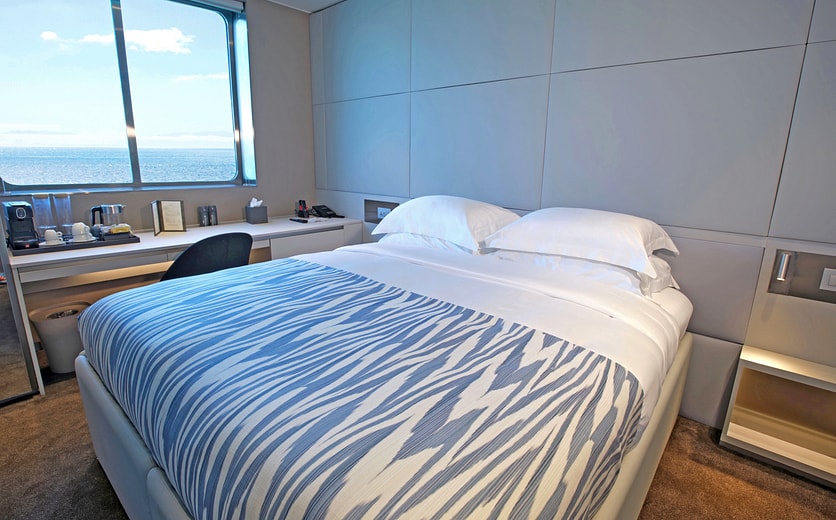
Situated on the Emerald Deck, towards the front of the yacht, our Oceanview Staterooms are bigger than the average standard, offering excellent value for money.
from £10,218 per person
from £0 per person
Situated on the Emerald Deck, towards the front of the yacht, our Oceanview Staterooms are bigger than the average standard, offering excellent value for money.
from £10,218 per person