Call
Call Enquire
 Search


Menu

Manage my booking

| Sales | |
| Monday - Friday | 09:00 - 20:00 |
| Saturday | 09:00 - 16:00 |
| Sunday | 10:00 - 17:00 |
| Bank Holiday | 10:00 - 16:00 |
| Aftersales | |
| Monday - Friday | 09:00 - 17:30 |
| Bank Holiday | 10:00 - 16:00 |

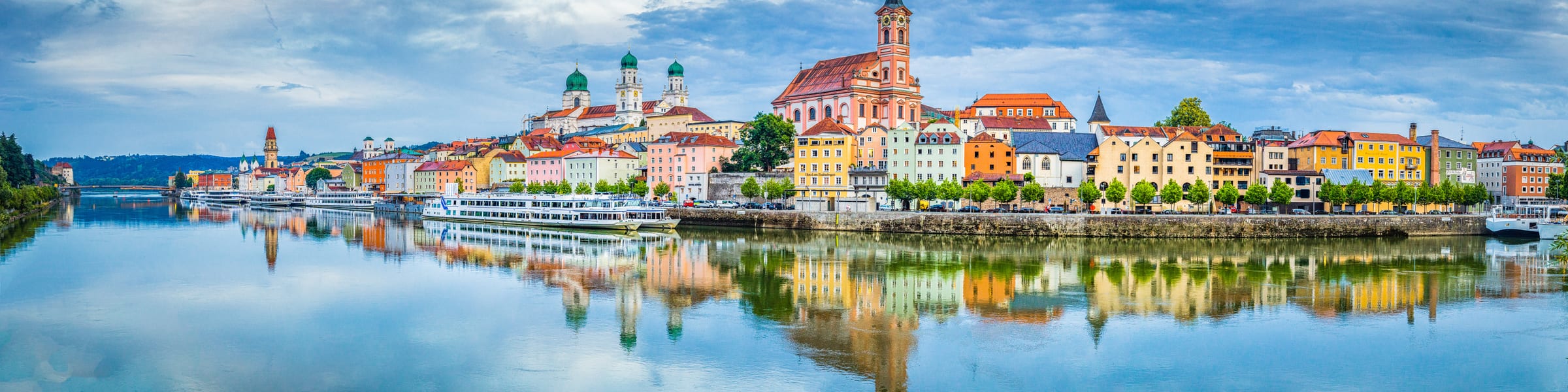

 23 Dec 2027 from £5,399
23 Dec - 05 Jan 2028

Return flights from the UK

10 Nights onboard S.S. Maria Theresa

All Inclusive Drinks*

Overseas Transfers

Complimentary Dining*

Gratuities*

Shore Excursions*

Entertainment*

Wi-Fi*
Not Available
from
£5,399
per person
from
£6,149
per person
from
£9,949
per person
Our experts are here to help
Call us today on 0203 930 4640 or enquire online.




 Save up to 50% on luxury travel*Save up to 20% on select 2027 sailings*2026 Solo Traveller Savings*
*Select voyages. T's and C's apply
Day 1
Arrive at Munich Airport. If you have arranged a Uniworld arrival transfer, you will be greeted by a Uniworld representative and transferred to the ship docked in Passau.
Passau is a German city located in the Southeast of Germany on the Austrian border. It is situated at the confluence of the rivers Danube, Inn and Ilz. The Three Rivers City, as it’s also known, is unique for its three contrasting currents of blue, green and black. Old Town of Passau is home to towering buildings of striking architecture: the majestic fortress Veste Oberhaus, the Pilgrimage Church Mariahilf and St Stephen's Cathedral. Many of Passau’s attractions can be found in this area, including the New Bishop’s Residence, the Gothic Town Hall, as well as many churches and museums. Visitors can stroll along the riverfront promenades and romantic lanes whilst enjoying the picturesque landscape. For modern art, The Museum of Modern Art and Glass Museum Passau are recommended as they offer something a bit different. Theatre and cabaret are a popular evening pastime, with performances at the former Prince Bishopric Theatre or some lively cabaret and Jazz at the Scharfrichterhaus. Visitors will also find many traditional local Bavarian and Austrian cafes and restaurants offering a cosy atmosphere with home cooked food from local produce.
Day 2
Old-town Passau is built on a spit of land that looks almost like a ship with its narrow prow jutting into the water, a fitting shape for a city that has been an important center of river trade since it was founded by the ancient Romans. Today a local expert shows you the highlights of this delightful and accessible town located at the confluence of three rivers— the Danube, Inn, and Ilz.
Passau is a German city located in the Southeast of Germany on the Austrian border. It is situated at the confluence of the rivers Danube, Inn and Ilz. The Three Rivers City, as it’s also known, is unique for its three contrasting currents of blue, green and black. Old Town of Passau is home to towering buildings of striking architecture: the majestic fortress Veste Oberhaus, the Pilgrimage Church Mariahilf and St Stephen's Cathedral. Many of Passau’s attractions can be found in this area, including the New Bishop’s Residence, the Gothic Town Hall, as well as many churches and museums. Visitors can stroll along the riverfront promenades and romantic lanes whilst enjoying the picturesque landscape. For modern art, The Museum of Modern Art and Glass Museum Passau are recommended as they offer something a bit different. Theatre and cabaret are a popular evening pastime, with performances at the former Prince Bishopric Theatre or some lively cabaret and Jazz at the Scharfrichterhaus. Visitors will also find many traditional local Bavarian and Austrian cafes and restaurants offering a cosy atmosphere with home cooked food from local produce.
Day 3
Your ship docks in Linz today. From there, you’ll travel to the alpine city of Salzburg for a delightful full-day excursion. Mozart’s birthplace, Salzburg, is nestled in a glorious alpine setting that sparkles like a winter wonderland. Fans of “The Sound of Music” may recognize locations from the Oscar-winning film in the city’s Old Town, the site of a grand cathedral and a wonderful Christmas Market..
Linz is a city in northern Austria located on both banks of the Danube River and is a short distance from Salzburg and Vienna. Linz has been awarded UNESCO City of Media Arts status and prides itself on offering a broad spectrum of events, activities and cultural institutions. Enjoy popular open air concert such as Klassik am Dom and extravagant street performances, which attract large crowds and popular international artists. Art galleries and centres are in abundance around the city as well as many museums housing international collections and depictions of the history and heritage of Linz. The architecture of the city also plays an important role in Linz’s cultural heritage with Main Square, Old Town and Mariendom Cathedral being some key attractions. Families will enjoy a trip to Postlingberg, located high up in the mountains and featuring a zoo, the Grottenbahn and spectacular views of the river and city below.
Day 4
On today's agenda—a walk through charming Grein and a peek inside Austria’s oldest theater.
Day 5
Melk Abbey has an unexpectedly opulent library filled not only with rare and precious books but also secret doors and optical illusions. After your visit, cruise the Wachau Valley to the tiny village of Dürnstein, where you can browse the shops selling apricot schnapps, hike up to the ruins of a castle, taste mulled wine, and attend an organ concert at a local church. Your river adventure today takes you through one of the most beautiful regions in Austria, bookended by two picturesque and historic towns, Melk and Dürnstein.
Melk is an Austrian town situated on the River Danube. Located west of Vienna, the town is mostly famous for its 11th Century Melk Abbey, a magnificent monastery built high above the town. Melk Abbey is the largest example of Baroque architecture in the Wachau Valley, with the valley itself awarded UNESCO World Heritage Site status in 2000. Its steep terraced vineyards mean vinters cultivate with traditional manual practices and the springtime sees this unique landscape covered in apricot tree blossoms. Strolling around the streets of Melk Old Town, visitors will find the Town Hall Square, the Main Square, the old Post Office, now a local museum, Old Abbey Tavern, and Kremser Strasse. River cruises, self-guided walking tours and cycle tours are also extremely popular around Melk, as the Wachau Valley offers unique landscape to be explored and enjoyed. Art festivals and Baroque music is celebrated each year with the Melk Baroque Days, an international festival.
Day 6
Renowned for its art and architecture, its classical music, its decadent pastries, and its lengthy list of famous former residents, the refined city of Vienna is a cultural treasure trove. Experience the city with your choice of tours, followed by an evening concert of Mozart and Strauss, performed at a 12th-century monastery.
Vienna is the capital and largest city of Austria. Located on the Danube River in the East of the country, the city is renowned for its strong music heritage and rich culture, and is the largest German speaking city in the world, outside of Berlin. In 2001, Vienna was designated a UNESCO World Heritage Site and boasts magnificent architecture. The city is home to over 27 castles and 150 palaces including the symbolic Gothic St Stephen’s Cathedral and the iconic Schönbrunn Palace. Art and music are in abundance and all tastes are catered for. Live music venues offer everything from Rock to Opera. Enjoy world class performances at Vienna State Opera and experience the epicentre of international concert life at Musikverein. Modern and historical art can be found in indoor and outdoor spaces around the city, and a visit to the famous Kunsthistorisches Museum (KHM) is highly recommended. Enjoy views of the city from the Danube Tower and the Giant Ferris Wheel, then relax in the ample cosy coffee houses, cafes, bars and restaurants where traditional and international cuisines are served, as well as the locally produced wines.
Day 7
A day of free time to explore Vienna at your leisure awaits. Maybe the Viennese love for music, food, drink, and stunning architecture will compel you to visit one of the many pubs, coffeehouses, wine taverns, art museums, and sprawling palaces.
Vienna is the capital and largest city of Austria. Located on the Danube River in the East of the country, the city is renowned for its strong music heritage and rich culture, and is the largest German speaking city in the world, outside of Berlin. In 2001, Vienna was designated a UNESCO World Heritage Site and boasts magnificent architecture. The city is home to over 27 castles and 150 palaces including the symbolic Gothic St Stephen’s Cathedral and the iconic Schönbrunn Palace. Art and music are in abundance and all tastes are catered for. Live music venues offer everything from Rock to Opera. Enjoy world class performances at Vienna State Opera and experience the epicentre of international concert life at Musikverein. Modern and historical art can be found in indoor and outdoor spaces around the city, and a visit to the famous Kunsthistorisches Museum (KHM) is highly recommended. Enjoy views of the city from the Danube Tower and the Giant Ferris Wheel, then relax in the ample cosy coffee houses, cafes, bars and restaurants where traditional and international cuisines are served, as well as the locally produced wines.
Day 8
Once hidden from the world behind the “Iron Curtain,” Slovakia retains an air of mystery and intrigue, and its small capital city has an unexpectedly colorful history. You’ll learn more about Bratislava’s past from a local expert, then have free time to check out the whimsical street art and sample delicious delicacies found only in Slovakia.
Bratislava is the capital city of Slovakia and is located along the Danube a river on the borders of Austria and Hungary. The city is surrounded by the Little Carpathians Mountains and vineyards as well as its iconic reconstructed Bratislava Castle overlooking Old Town. The castle offers a picturesque view of the city, the neighbouring countries and is home to the Museum of History. Bratislava offers a blend of historic and modern attractions including the Old Town Hall, now home to the Bratislava City Museum, the UFO Bridge, Martin’s Cathedral, Michael’s Gate and Blue Church St Elizabeth’s. Bratislava is home to one of the oldest city parks in Central Europe and is popular with walkers, runners and cyclists as is the city forest park and foothills of the Carpathian Mountains. The city is popular for its locally brewed beers and has many micro-breweries and underground beer cellars. The local cuisine of Bratislava is an eclectic influence of European cultures including Slovak, Hungarian, Austrian and German and serves as a reminder of the history of this cosmopolitan city. However, visitors will find an array of offerings to suit all tastes with lunch being the main meal of the day and roast goose with lokse considered a signature dish of the area.
Day 9
Located on opposite sides of the Danube, Buda and Pest each have their own distinctive character and allure. Get a taste of this dynamic capital city during today's tour. This evening, celebrate the new year with a special dinner, then join us in the lounge after for a festive night of music and dancing.
Budapest is the capital city of Hungary and is located over the River Danube. It is one of the largest cities in the European Union and much of its historical sites have been awarded UNESCO World Heritage Site status. Originally formed in 1873 by the joining of Buda, Pest and Old Buda, the city suffered heavy destruction during World War II and was rebuilt into the country's political, cultural and commercial hub it is now. Bridges and railways connect the city over the Danube, including the six small islands situated on the river themselves. Some of Budapest’s UNESCO World Heritage sites include Chain Bridge, Budapest Parliament, the striking Matthias church and the iconic Royal Palace visible from every location within Budapest City. The Castle Hills district architecture represents over a thousand years of the city's history with examples of Roman, Turkish, Gothic, Renaissance and Art Nouveau styles. Budapest also has a rich Jewish heritage and is home to the largest synagogue in Europe. The city has an abundance of restaurants offering international cuisines, as well as traditional Hungarian dishes ,including goulash soup, a very popular lunchtime dish. Hungarians enjoy their coffee so a traditional cafe is never hard to find.
Day 10
Start off the New Year on a high note with an excursion to a village of talented artisans and craftspeople who live and create beautiful things together. The village is also home to two museums you’re welcome to visit—one devoted to lovely ceramics and the other to the art of marzipan.
Budapest is the capital city of Hungary and is located over the River Danube. It is one of the largest cities in the European Union and much of its historical sites have been awarded UNESCO World Heritage Site status. Originally formed in 1873 by the joining of Buda, Pest and Old Buda, the city suffered heavy destruction during World War II and was rebuilt into the country's political, cultural and commercial hub it is now. Bridges and railways connect the city over the Danube, including the six small islands situated on the river themselves. Some of Budapest’s UNESCO World Heritage sites include Chain Bridge, Budapest Parliament, the striking Matthias church and the iconic Royal Palace visible from every location within Budapest City. The Castle Hills district architecture represents over a thousand years of the city's history with examples of Roman, Turkish, Gothic, Renaissance and Art Nouveau styles. Budapest also has a rich Jewish heritage and is home to the largest synagogue in Europe. The city has an abundance of restaurants offering international cuisines, as well as traditional Hungarian dishes ,including goulash soup, a very popular lunchtime dish. Hungarians enjoy their coffee so a traditional cafe is never hard to find.
Day 11
Disembark the ship. If you have arranged a Uniworld departure transfer, you will be transferred to the Budapest Ferenc Liszt International Airport for your flight home.
Budapest is the capital city of Hungary and is located over the River Danube. It is one of the largest cities in the European Union and much of its historical sites have been awarded UNESCO World Heritage Site status. Originally formed in 1873 by the joining of Buda, Pest and Old Buda, the city suffered heavy destruction during World War II and was rebuilt into the country's political, cultural and commercial hub it is now. Bridges and railways connect the city over the Danube, including the six small islands situated on the river themselves. Some of Budapest’s UNESCO World Heritage sites include Chain Bridge, Budapest Parliament, the striking Matthias church and the iconic Royal Palace visible from every location within Budapest City. The Castle Hills district architecture represents over a thousand years of the city's history with examples of Roman, Turkish, Gothic, Renaissance and Art Nouveau styles. Budapest also has a rich Jewish heritage and is home to the largest synagogue in Europe. The city has an abundance of restaurants offering international cuisines, as well as traditional Hungarian dishes ,including goulash soup, a very popular lunchtime dish. Hungarians enjoy their coffee so a traditional cafe is never hard to find.

from £5,249 per person
Lavishly appointed riverview stateroom (162 sq ft - 15 sq m)
Handcrafted Savoir® Beds of England, built-in closet, hair dryer, safe, individual thermostat, flat-screen TV with infotainment center and satellite
Marble bathroom with Asprey bath and body products, plush towels, towel warmer, comfortable bathrobes and slippers, heated mirror and backlit magnifying mirror
from £6,049 per person
from £10,249 per person
from £5,249 per person
Lavishly appointed riverview stateroom (162 sq ft - 15 sq m)
Handcrafted Savoir® Beds of England, built-in closet, hair dryer, safe, individual thermostat, flat-screen TV with infotainment center and satellite
Marble bathroom with Asprey bath and body products, plush towels, towel warmer, comfortable bathrobes and slippers, heated mirror and backlit magnifying mirror
from £6,049 per person
from £10,249 per person





 0203 930 4640