Call
Call Enquire
 Search


Menu

Manage my booking

| Sales | |
| Monday - Friday | 09:00 - 20:00 |
| Saturday | 09:00 - 16:00 |
| Sunday | 10:00 - 17:00 |
| Bank Holiday | 10:00 - 16:00 |
| Aftersales | |
| Monday - Friday | 09:00 - 17:30 |
| Bank Holiday | 10:00 - 16:00 |



04 Nov - 13 Nov 2026

9 Nights onboard Star Clipper

Water sports toys*

Complimentary Dining*

Entertainment*
from
£2,945
per person
from
£3,180
per person
Not Available
Not Available
Our experts are here to help
Call us today on 0203 930 4640 or enquire online.




Day 1
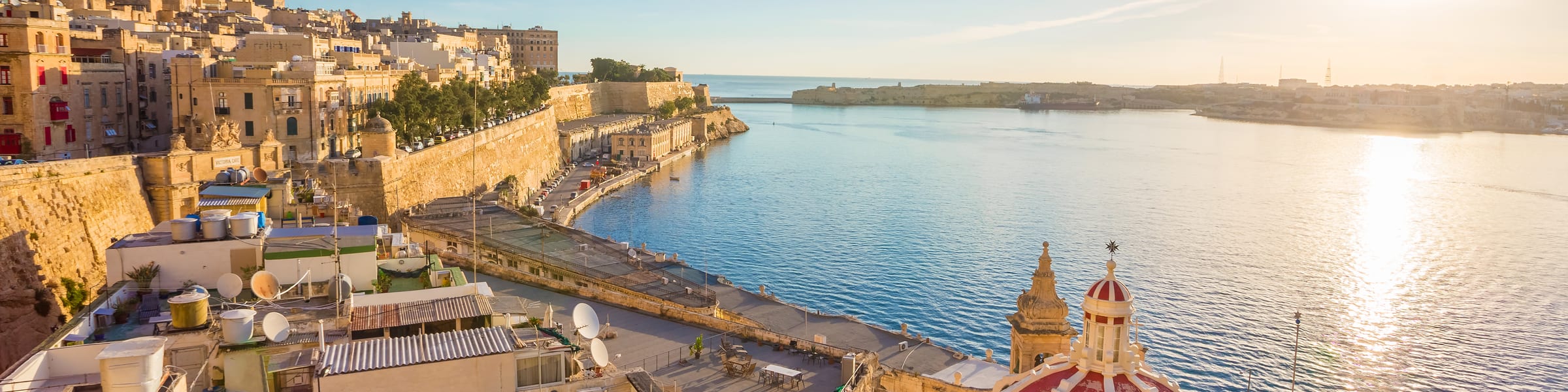
Malta's capital, the minicity of Valletta, has ornate palaces and museums protected by massive fortifications of honey-color limestone. Houses along the narrow streets have overhanging wooden balconies for people-watching from indoors. Generations ago they gave housebound women a window on the world of the street. The main entrance to town is through the City Gate (where all bus routes end), which leads onto Triq Repubblika (Republic Street), the spine of the grid-pattern city and the main shopping street. Triq Mercante (Merchant Street) parallels Repubblika to the east and is also good for strolling. From these two streets, cross streets descend toward the water; some are stepped. Valletta's compactness makes it ideal to explore on foot. City Gate and the upper part of Valletta are experiencing vast redevelopment that includes a new Parliament Building and open-air performance venue. The complex, completed mid-2013, has numerous pedestrian detours in place along with building noise and dust. Before setting out along Republic Street, stop at the tourist information office on Merchant Street for maps and brochures.
Day 2
Day 3
Day 4
Known in Sardinia as Casteddu, the island's capital has steep streets and impressive Italianate architecture, from modern to medieval. This city of nearly 160,000 people is characterized by a busy commercial center and waterfront with broad avenues and arched arcades, as well as by the typically narrow streets of the old hilltop citadel (called, simply, “Castello”). The Museo Archeologico makes a good starting point to a visit. The imposing Bastione di Saint Remy and Mercato di San Benedetto (one of the best fish markets in Italy) are both musts.
Day 5
Day 6
The capital of Menorca since 1721, Mahon has a impressive natural deep water harbour, which is one of the largest in the world. This, coupled with its strategic location, has made it a stronghold for many nations throughout history. Mahon has an abundance of historical buildings, the oldest being the Arch of Saint Roc which is all that remains of the wall that once encircled the whole town. The island was occupied by the British during the 18th century and Lord Nelson is thought to have stayed there. Indeed, San Antoni Mansion, located on the north side of the harbour, houses a collection of Nelson memorabilia. The legacy of colonial rule can be seen in the muted Georgian style of some of the buildings, but Mahon still boasts attractive examples of neo-Classical, Baroque and Romanesque architecture. With narrow streets to explore, pleasant shaded squares and welcoming pavement cafés, there is something for everyone to enjoy. Please be aware that most shops in town close for a siesta between 1330 and 1730.
Day 7
Hedonistic and historic, Eivissa (Ibiza, in Castilian) is a city jam-packed with cafés, nightspots, and trendy shops; looming over it are the massive stone walls of Dalt Vila —the medieval city declared a UNESCO World Heritage site in 1999—and its Gothic cathedral. Squeezed between the north walls of the old city and the harbor is Sa Penya, a long labyrinth of stone-paved streets that offer some of the city's best offbeat shopping, snacking, and exploring. The tourist information office on Vara de Rey has a useful map of walks through the old city.
Day 8
A Mediterranean city and naval station located in the Region of Murcia, southeastern Spain, Cartagena’s sheltered bay has attracted sailors for centuries. The Carthaginians founded the city in 223BC and named it Cartago Nova; it later became a prosperous Roman colony, and a Byzantine trading centre. The city has been the main Spanish Mediterranean naval base since the reign of King Philip II, and is still surrounded by walls built during this period. Cartagena’s importance grew with the arrival of the Spanish Bourbons in the 18th century, when the Navidad Fortress was constructed to protect the harbour. In recent years, traces of the city’s fascinating past have been brought to light: a well-preserved Roman Theatre was discovered in 1988, and this has now been restored and opened to the public. During your free time, you may like to take a mini-cruise around Cartagena's historic harbour: these operate several times a day, take approximately 40 minutes and do not need to be booked in advance. Full details will be available at the port.
Day 9
Day 10
As you sail into Malaga you will notice what an idyllic setting the city enjoys on the famous Costa del Sol. To the east of this provincial capital, the coast along the region of La Axarqua is scattered with villages, farmland and sleepy fishing hamlets - the epitome of traditional rural Spain. To the west stretches a continuous city where the razzmatazz and bustle creates a colourful contrast that is easily recognisable as the Costa del Sol. Surrounding the region, the Penibéetica Mountains provide an attractive backdrop overlooking the lower terraced slopes which yield olives and almonds. This spectacular mountain chain shelters the province from cold northerly winds, giving it a reputation as a therapeutic and exotic place in which to escape from cold northern climes. Malaga is also the gateway to many of Andalusia's enchanting historic villages, towns and cities.

from £2,945 per person
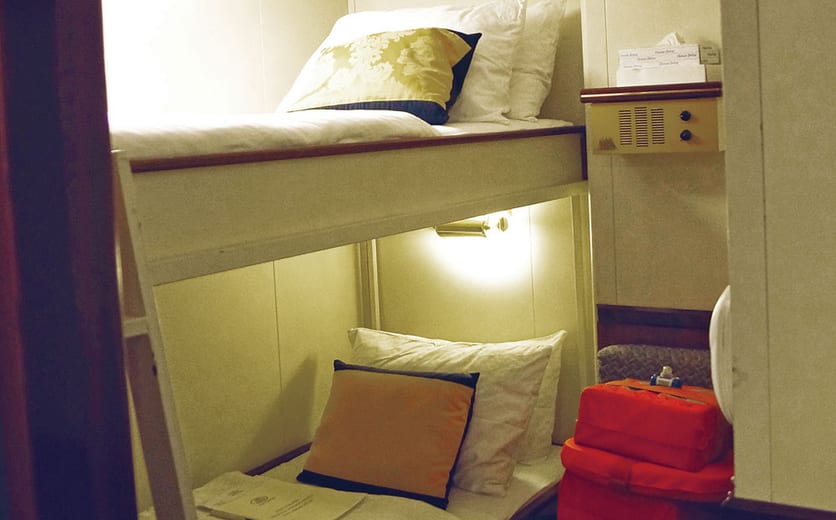
Category 6 cabins feature upper/lower beds and a bathroom with shower. Each cabins include air conditioning, hair dryers, private safe, television, DVD player, telephone and other amenities an experienced traveller has come to expect.
from £3,180 per person
from £2,945 per person
Category 6 cabins feature upper/lower beds and a bathroom with shower. Each cabins include air conditioning, hair dryers, private safe, television, DVD player, telephone and other amenities an experienced traveller has come to expect.
from £3,180 per person





 0203 930 4640