Call
Call Enquire
 Search


Menu

Manage my booking

| Sales | |
| Monday - Friday | 09:00 - 20:00 |
| Saturday | 09:00 - 16:00 |
| Sunday | 10:00 - 17:00 |
| Bank Holiday | 10:00 - 16:00 |
| Aftersales | |
| Monday - Friday | 09:00 - 17:30 |
| Bank Holiday | 10:00 - 16:00 |


 13 Oct 2026 from £2,995
13 Oct - 19 Oct 2026

Return flights from the UK

6 Nights onboard MV Lady Eleganza

Overseas Transfers

Full Board Drinks (with meals)*

Gratuities*

Shore Excursions*

Entertainment*
Not Available
from
£2,995
per person
Not Available
from
£2,995
per person
Our experts are here to help
Call us today on 0203 930 4640 or enquire online.





 Save up to £1,050pp on select small ship cruises
*Select voyages. T's and C's apply
Day 1
Fly from the UK and on arrival, be transferred to your luxury ship, the MV Lady Eleganza. Enjoy free time before settling into your cabin followed by dinner on board.
Nothing can prepare you for your first sight of Dubrovnik. Lying 216 km (135 miles) southeast of Split and commanding a jaw-dropping coastal location, it is one of the world's most beautiful fortified cities. Its massive stone ramparts and fortress towers curve around a tiny harbor, enclosing graduated ridges of sun-bleached orange-tiled roofs, copper domes, and elegant bell towers. Your imagination will run wild picturing what it looked like seven centuries ago when the walls were built, without any suburbs or highways around it, just this magnificent stone city rising out of the sea.In the 7th century AD, residents of the Roman city Epidaurum (now Cavtat) fled the Avars and Slavs of the north and founded a new settlement on a small rocky island, which they named Laus, and later Ragusa. On the mainland hillside opposite the island, the Slav settlement called Dubrovnik grew up. In the 12th century the narrow channel separating the two settlements was filled in (now the main street through the Old Town, called Stradun), and Ragusa and Dubrovnik became one. The city was surrounded by defensive walls during the 13th century, and these were reinforced with towers and bastions in the late 15th century.From 1358 to 1808 the city thrived as a powerful and remarkably sophisticated independent republic, reaching its golden age during the 16th century. In 1667 many of its splendid Gothic and Renaissance buildings were destroyed by an earthquake. The defensive walls survived the disaster, and the city was rebuilt in baroque style.Dubrovnik lost its independence to Napoléon in 1808, and in 1815 passed to Austria-Hungary. During the 20th century, as part of Yugoslavia, the city became a popular tourist destination, and in 1979 it was listed as a UNESCO World Heritage Site. During the war for independence, it came under heavy siege. Thanks to careful restoration, few traces of damage remain; however, there are maps inside the Pile and Ploče Gates illustrating the points around the city where damage was done. It’s only when you experience Dubrovnik yourself that you can understand what a treasure the world nearly lost
Day 2
Spend the morning on a guided tour of Dubrovnik’s World Heritage-listed Old Town, a fairytale world of palaces, monasteries and churches enclosed within the spectacular medieval city walls.
This afternoon, set sail for the Elaphiti Islands off the coast. This small cluster of islands offers respite from the hustle and bustle of the more popular destinations along the Croatian coast. En route to the islands, stop for a swim from the yacht's stern platform. You'll moor overnight in Šipan.
Nothing can prepare you for your first sight of Dubrovnik. Lying 216 km (135 miles) southeast of Split and commanding a jaw-dropping coastal location, it is one of the world's most beautiful fortified cities. Its massive stone ramparts and fortress towers curve around a tiny harbor, enclosing graduated ridges of sun-bleached orange-tiled roofs, copper domes, and elegant bell towers. Your imagination will run wild picturing what it looked like seven centuries ago when the walls were built, without any suburbs or highways around it, just this magnificent stone city rising out of the sea.In the 7th century AD, residents of the Roman city Epidaurum (now Cavtat) fled the Avars and Slavs of the north and founded a new settlement on a small rocky island, which they named Laus, and later Ragusa. On the mainland hillside opposite the island, the Slav settlement called Dubrovnik grew up. In the 12th century the narrow channel separating the two settlements was filled in (now the main street through the Old Town, called Stradun), and Ragusa and Dubrovnik became one. The city was surrounded by defensive walls during the 13th century, and these were reinforced with towers and bastions in the late 15th century.From 1358 to 1808 the city thrived as a powerful and remarkably sophisticated independent republic, reaching its golden age during the 16th century. In 1667 many of its splendid Gothic and Renaissance buildings were destroyed by an earthquake. The defensive walls survived the disaster, and the city was rebuilt in baroque style.Dubrovnik lost its independence to Napoléon in 1808, and in 1815 passed to Austria-Hungary. During the 20th century, as part of Yugoslavia, the city became a popular tourist destination, and in 1979 it was listed as a UNESCO World Heritage Site. During the war for independence, it came under heavy siege. Thanks to careful restoration, few traces of damage remain; however, there are maps inside the Pile and Ploče Gates illustrating the points around the city where damage was done. It’s only when you experience Dubrovnik yourself that you can understand what a treasure the world nearly lost
Day 3
Journey to Korčula, the birthplace of Marco Polo. This enchanting island is known for its lush pine forests, crystal-clear beaches, relaxing atmosphere and rich history. Stroll through the labyrinth of cobblestone streets flanked by palaces in the medieval Old Town, and delight in a memorable Signature Experience. Your yacht will dock here overnight.
Signature Experience – Traditional Moreška Performance
Witness an exclusive Moreška performance, a traditional sword dance and drama dating back centuries. A captivating tale of love and conflict, the dance depicts a battle between two kings and their armies over a captured princess.
Lush, relaxed island resort with beaches, water sports, wine-making, bike rentals & hotels.
Day 4
Arrive at the magnificent island of Hvar, characterised by its turquoise waters, impressive landmarks and vibrant nightlife. Take a short coach ride across the island to the picturesque Old Town and set off on a guided walk. Start in the sprawling main square, the largest piazza in Dalmatia, then visit the cathedral and 15th-century Franciscan Monastery. In the evening, experience life like the locals and visit a lively restaurant or tavern on shore for dinner.
The Croatian island of Hvar bills itself as the "sunniest island in the Adriatic." Not only does it have the figures to back up this claim—an annual average of 2,724 hours of sunshine—but it also makes visitors a sporting proposition, offering them a money-back guarantee if there are seven consecutive days of snow (snow has been known to fall here; the last time being February 2012).
Day 5
This morning, journey to the breathtaking island of Brač. Head to the coastal town of Bol, where a memorable Signature Experience awaits. Later, set sail for Makarska, where your yacht will dock overnight.
Signature Experience – Stina Winery
Immerse yourself in the charm of Dalmatia with a visit to Stina Winery. The award-winning winery carries a legacy that dates back to the early 1900s, when the First Dalmatian Wine Cooperative was established in Bol. Indulge your senses as expert staff guide you through a curated tasting of white and red wine varieties grown in the Dalmatia region. The wine tasting will be perfectly paired with local delicacies, including olives, artisanal cheeses and cured ham.
Day 6
Arrive in Split today and set out on a guided walk through the town, exploring the Palace of Diocletian located next to the picturesque Riva Promenade. Tonight, enjoy a farewell dinner on board the MV Lady Eleganza.
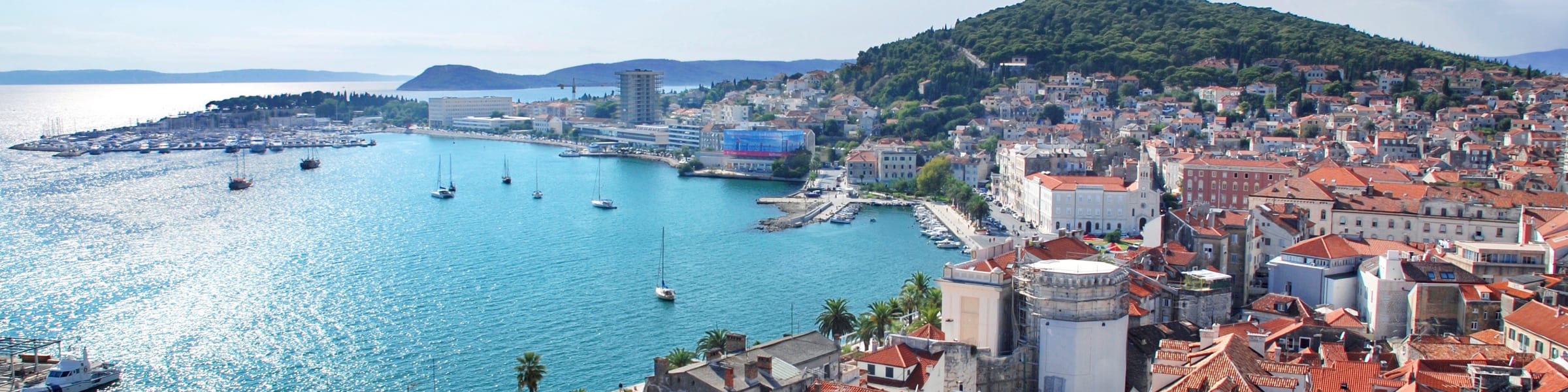
Split's ancient core is so spectacular and unusual that a visit is more than worth your time. The heart of the city lies within the walls of Roman emperor Diocletian's retirement palace, which was built in the 3rd century AD. Diocletian, born in the nearby Roman settlement of Salona in AD 245, achieved a brilliant career as a soldier and became emperor at the age of 40. In 295 he ordered this vast palace to be built in his native Dalmatia, and when it was completed he stepped down from the throne and retired to his beloved homeland. Upon his death, he was laid to rest in an octagonal mausoleum, around which Split's magnificent cathedral was built.In 615, when Salona was sacked by barbarian tribes, those fortunate enough to escape found refuge within the stout palace walls and divided up the vast imperial apartments into more modest living quarters. Thus, the palace developed into an urban center, and by the 11th century the settlement had expanded beyond the ancient walls.Under the rule of Venice (1420–1797), Split—as a gateway to the Balkan interior—became one of the Adriatic's main trading ports, and the city's splendid Renaissance palaces bear witness to the affluence of those times. When the Habsburgs took control during the 19th century, an overland connection to Central Europe was established by the construction of the Split–Zagreb–Vienna railway line.After World War II, the Tito years saw a period of rapid urban expansion: industrialization accelerated and the suburbs extended to accommodate high-rise apartment blocks. Today the historic center of Split is included on UNESCO's list of World Heritage Sites.
Day 7
Enjoy breakfast this morning before your journey draws to its conclusion with a transfer to the airport for your return flight to the UK.
Split's ancient core is so spectacular and unusual that a visit is more than worth your time. The heart of the city lies within the walls of Roman emperor Diocletian's retirement palace, which was built in the 3rd century AD. Diocletian, born in the nearby Roman settlement of Salona in AD 245, achieved a brilliant career as a soldier and became emperor at the age of 40. In 295 he ordered this vast palace to be built in his native Dalmatia, and when it was completed he stepped down from the throne and retired to his beloved homeland. Upon his death, he was laid to rest in an octagonal mausoleum, around which Split's magnificent cathedral was built.In 615, when Salona was sacked by barbarian tribes, those fortunate enough to escape found refuge within the stout palace walls and divided up the vast imperial apartments into more modest living quarters. Thus, the palace developed into an urban center, and by the 11th century the settlement had expanded beyond the ancient walls.Under the rule of Venice (1420–1797), Split—as a gateway to the Balkan interior—became one of the Adriatic's main trading ports, and the city's splendid Renaissance palaces bear witness to the affluence of those times. When the Habsburgs took control during the 19th century, an overland connection to Central Europe was established by the construction of the Split–Zagreb–Vienna railway line.After World War II, the Tito years saw a period of rapid urban expansion: industrialization accelerated and the suburbs extended to accommodate high-rise apartment blocks. Today the historic center of Split is included on UNESCO's list of World Heritage Sites.

from £4,495 per person
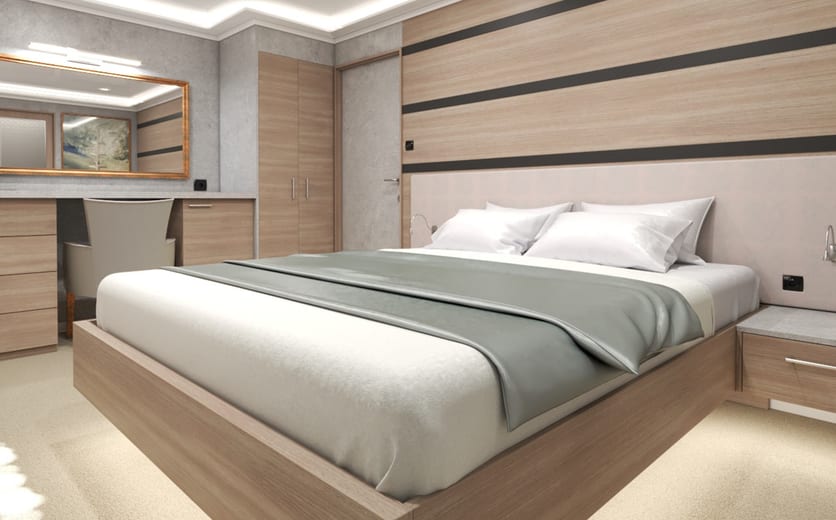
Cabins have either portholes or large windows.
For solo travellers, there are single porthole cabins available.
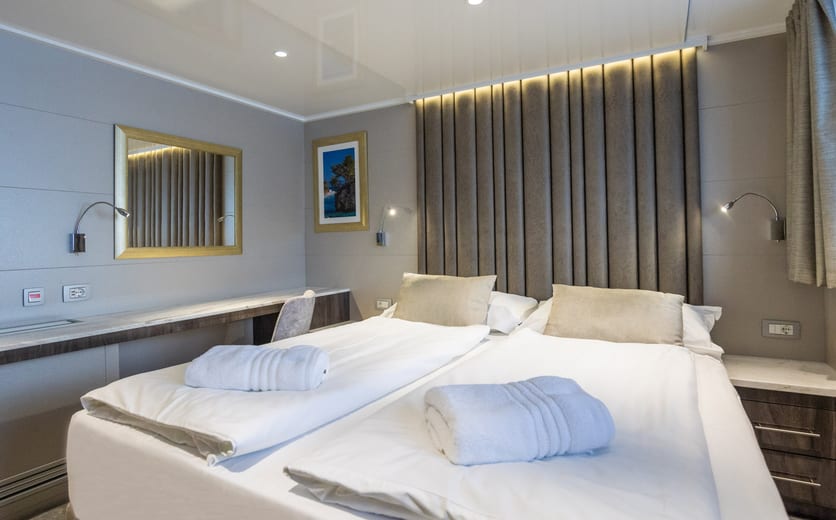
Cabin includes:
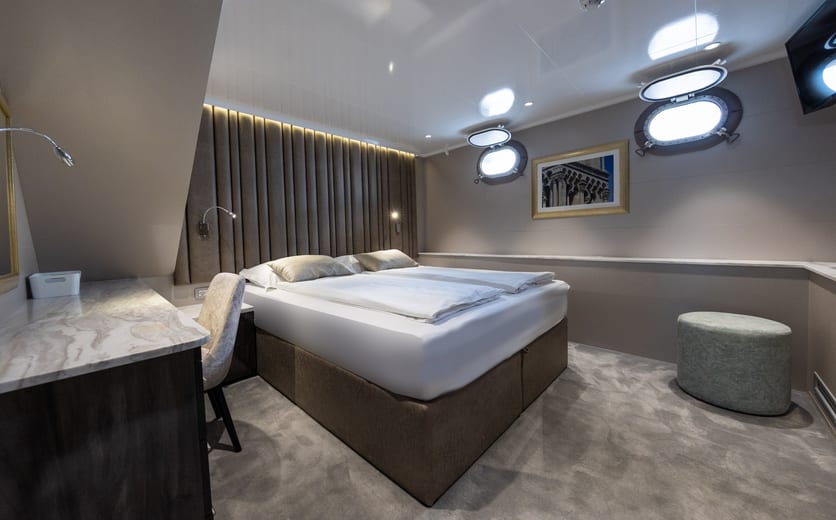
Cabin includes:
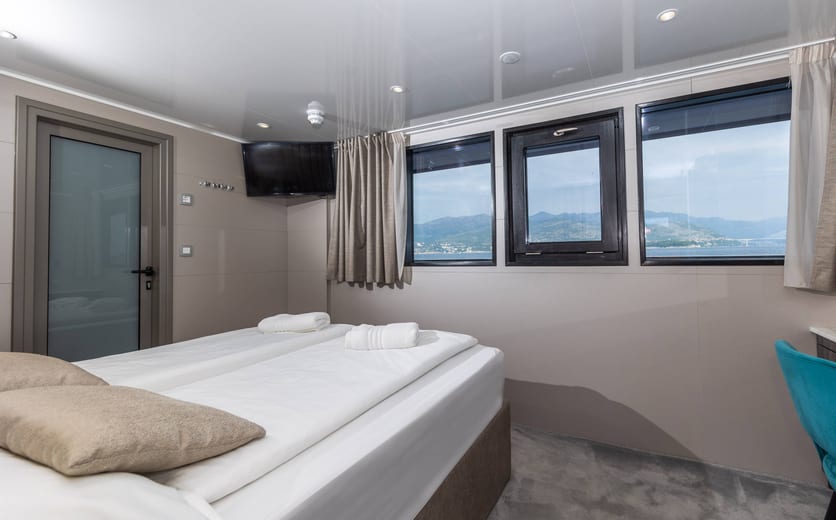
Cabin includes:
Cabin includes:
from £4,495 per person
from £4,495 per person
Cabins have either portholes or large windows.
For solo travellers, there are single porthole cabins available.
Cabin includes:
Cabin includes:
Cabin includes:
Cabin includes:
from £4,495 per person





 0203 930 4640