Call
 Enquire
 Search



Menu

Manage my booking

| Sales | |
| Monday - Friday | 09:00 - 19:00 |
| Saturday | 09:00 - 16:00 |
| Sunday | 10:00 - 17:00 |
| Bank Holiday | 10:00 - 16:00 |
| Aftersales | |
| Monday - Friday | 09:00 - 17:30 |
| Bank Holiday | 10:00 - 16:00 |

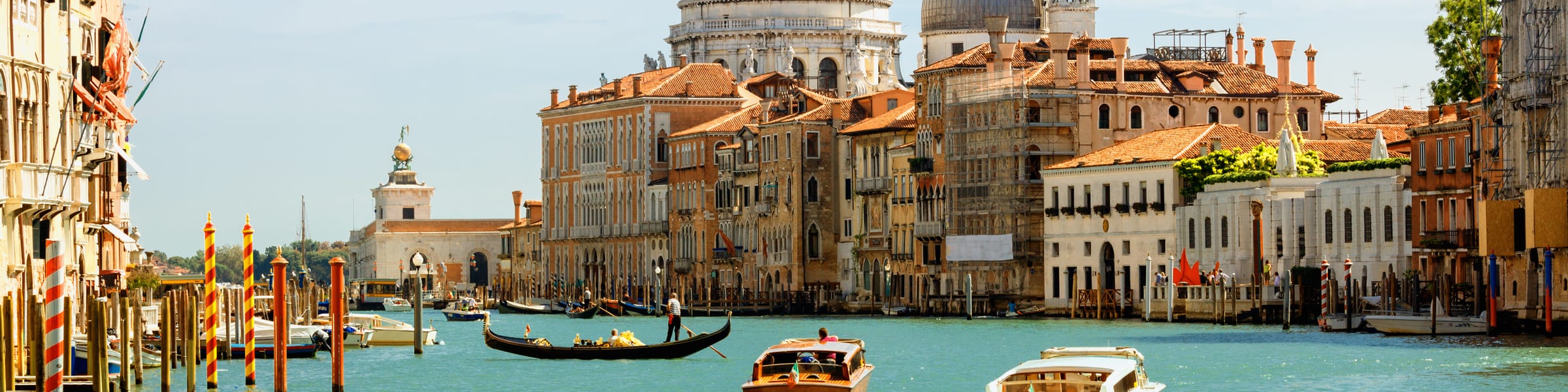

 16 Jul 2027 from £1,385

25 Jun - 09 Jul 2027

14 Nights onboard Queen Elizabeth

Inclusion package upgrades available on request*

Kids Club*

Room Service*

Complimentary Dining*

Entertainment*
from
£1,556
per person
from
£1,781
per person
from
£1,934
per person
from
£4,689
per person
Our experts are here to help
Call us today on 0203 930 4640 or enquire online.




 Save 10% on new 2028 &2029 Voyages*Low Deposits from £50pp*Cunard Signature Packages*
*Select voyages. T's and C's apply
Day 1
Up until the end of World War I, Trieste was the only port of the vast Austro-Hungarian Empire and therefore a major industrial and financial center. In the early years of the 20th century, Trieste and its surroundings also became famous by their association with some of the most important names of Italian literature, such as Italo Svevo, and English and German letters. James Joyce drew inspiration from the city's multiethnic population, and Rainer Maria Rilke was inspired by the seacoast west of the city. Although it has lost its importance as a port and a center of finance, it has never fully lost its roll as an intellectual center. The streets hold a mix of monumental, neoclassical, and art-nouveau architecture built by the Austrians during Trieste's days of glory, granting an air of melancholy stateliness to a city that lives as much in the past as the present.
Day 2
Day 3
Nothing can prepare you for your first sight of Dubrovnik. Lying 216 km (135 miles) southeast of Split and commanding a jaw-dropping coastal location, it is one of the world's most beautiful fortified cities. Its massive stone ramparts and fortress towers curve around a tiny harbor, enclosing graduated ridges of sun-bleached orange-tiled roofs, copper domes, and elegant bell towers. Your imagination will run wild picturing what it looked like seven centuries ago when the walls were built, without any suburbs or highways around it, just this magnificent stone city rising out of the sea.In the 7th century AD, residents of the Roman city Epidaurum (now Cavtat) fled the Avars and Slavs of the north and founded a new settlement on a small rocky island, which they named Laus, and later Ragusa. On the mainland hillside opposite the island, the Slav settlement called Dubrovnik grew up. In the 12th century the narrow channel separating the two settlements was filled in (now the main street through the Old Town, called Stradun), and Ragusa and Dubrovnik became one. The city was surrounded by defensive walls during the 13th century, and these were reinforced with towers and bastions in the late 15th century.From 1358 to 1808 the city thrived as a powerful and remarkably sophisticated independent republic, reaching its golden age during the 16th century. In 1667 many of its splendid Gothic and Renaissance buildings were destroyed by an earthquake. The defensive walls survived the disaster, and the city was rebuilt in baroque style.Dubrovnik lost its independence to Napoléon in 1808, and in 1815 passed to Austria-Hungary. During the 20th century, as part of Yugoslavia, the city became a popular tourist destination, and in 1979 it was listed as a UNESCO World Heritage Site. During the war for independence, it came under heavy siege. Thanks to careful restoration, few traces of damage remain; however, there are maps inside the Pile and Ploče Gates illustrating the points around the city where damage was done. It’s only when you experience Dubrovnik yourself that you can understand what a treasure the world nearly lost
Day 4
Corfu town today is a vivid tapestry of cultures—a sophisticated weave, where charm, history, and natural beauty blend. Located about midway along the island's east coast, this spectacularly lively capital is the cultural heart of Corfu and has a remarkable historic center that UNESCO designated as a World Heritage Site in 2007. All ships and planes dock or land near Corfu town, which occupies a small peninsula jutting into the Ionian Sea.Whether arriving by ferry from mainland Greece or Italy, from another island, or directly by plane, catch your breath by first relaxing with a coffee or a gelato in Corfu town's shaded Liston Arcade, then stroll the narrow lanes of its pedestrians-only quarter. For an overview of the immediate area, and a quick tour of Mon Repos palace, hop on the little tourist train that runs from May to September. Corfu town has a different feel at night, so book a table at one of its famed tavernas to savor the island's unique cuisine.The best way to get around Corfu town is on foot. The town is small enough so that you can easily walk to every sight. There are local buses, but they do not thread their way into the streets (many now car-free) of the historic center. If you are arriving by ferry or plane, it's best to take a taxi to your hotel. Expect to pay about €10 from the airport or ferry terminal to a hotel in Corfu town. If there are no taxis waiting, you can call for one.
Day 5
Day 6
Day 7
Naples, in the Campania region, is Italy's third largest city. Its claim to fame is the spectacular location along one of the world's most splendid bays, backed by the perfect cone of Mount Vesuvius. In addition to its beautiful setting, Naples' surprises with other outstanding attractions such as the Royal Palace, San Carlos Opera House, the impressive National Archaeological Museum and the Castel Nuovo, dating from the 13th-century. The city's central area is best explored on foot. Chaotic traffic conditions make driving around the city a very frustrating experience. Naples provides a convenient starting point for trips to such favored destinations as Pompeii, Herculaneum and Mount Vesuvius. The Isle of Capri can be reached via a 45-minute hydrofoil service. The region of Campania was home to Greeks settlers some 300 years before Rome was founded. Pompeii, too, was a Greek town before being conquered by the Romans during the 5th century BC. It was under the Romans that Pompeii flourished and grew prosperous. When Mount Vesuvius erupted in 79 AD, the population of 20,000 was wiped out, but dozens of buildings were preserved under layers of cinder more than 20 feet deep. The most important finds from Pompeii are displayed in Naples' National Archaeological Museum. A visit here will no doubt enhance a visit to ancient Pompeii.
Day 8
Italy's vibrant capital lives in the present, but no other city on earth evokes its past so powerfully. For over 2,500 years, emperors, popes, artists, and common citizens have left their mark here. Archaeological remains from ancient Rome, art-stuffed churches, and the treasures of Vatican City vie for your attention, but Rome is also a wonderful place to practice the Italian-perfected il dolce far niente, the sweet art of idleness. Your most memorable experiences may include sitting at a caffè in the Campo de' Fiori or strolling in a beguiling piazza.
Day 9
La Spezia is sometimes thought of as nothing but a large, industrialized naval port en route to the Cinque Terre and Portovenere, but it does possess some charm, and it gives you a look at a less tourist-focused part of the Riviera. Its palm-lined promenade, fertile citrus parks, renovated Liberty-style palazzos, and colorful balcony-lined streets make parts of La Spezia surprisingly beautiful. Monday through Saturday mornings, you can stroll through the fresh fish, produce, and local-cheese stalls at the outdoor market on Piazza Cavour, and on Friday take part in the busy flea market on Via Garibaldi. There's also Porto Mirabello, a newly built tourist port with a pool club, shops, and several restaurants that overlook the fleet of super-yachts.
Day 10
Day 11
The infinite variety of street life, the nooks and crannies of the medieval Barri Gòtic, the ceramic tile and stained glass of Art Nouveau facades, the art and music, the throb of street life, the food (ah, the food!)—one way or another, Barcelona will find a way to get your full attention. The capital of Catalonia is a banquet for the senses, with its beguiling mix of ancient and modern architecture, tempting cafés and markets, and sun-drenched Mediterranean beaches. A stroll along La Rambla and through waterfront Barceloneta, as well as a tour of Gaudí's majestic Sagrada Famíliaand his other unique creations, are part of a visit to Spain's second-largest city. Modern art museums and chic shops call for attention, too. Barcelona's vibe stays lively well into the night, when you can linger over regional wine and cuisine at buzzing tapas bars.
Day 12
Day 13
A tourist-friendly town of about 45,000 inhabitants with a distinctly Spanish flavor, Alghero is also known as "Barcelonetta" (little Barcelona). Rich wrought-iron scrollwork decorates balconies and screened windows; a Spanish motif appears in stone portals and bell towers. The town was built and inhabited in the 14th century by the Aragonese and Catalans, who constructed seaside ramparts and sturdy towers encompassing an inviting nucleus of narrow, winding streets with whitewashed palazzi. The native language spoken here is a version of Catalan, not Italian, although you probably have to attend one of the Masses conducted in Algherese (or listen in on stories swapped by older fishermen) to hear it. Besides its historic architectural gems such as the Alghero Cathedral and Palazzo d'Albis, the fortified city is well worth a visit to simply stroll and discover local culture on narrow cobblestone streets. The city also has a reputation to serve great food at reasonable prices.
Day 14
Considered Corsica’s primary commercial and cultural hub, the largest city and regional capital of Ajaccio is situated on the west coast of the island, approximately 644 km (400 miles) southeast of Marseille, France. Founded in 1492, vestiges of ancient Corsica in this ville impériale revolve around the city’s most famous son, Napoléon Bonaparte, whose family home—now the national museum Maison Bonaparte—pays tribute to the emperor’s historical influence.Remnants from what was originally a 12th-century Genoese colony are still visible around the Old Town near the imposing citadel and watchtower. Perfect for exploring, the luminous seaside city surrounded by snowcapped mountains and pretty beaches offers numerous sites, eateries, side streets, and a popular harbor, where sailboats and fishing vessels moor in the picturesque Tino Rossi port lined with well-established restaurants and cafés serving fresh local fare.
Day 15
Italy's vibrant capital lives in the present, but no other city on earth evokes its past so powerfully. For over 2,500 years, emperors, popes, artists, and common citizens have left their mark here. Archaeological remains from ancient Rome, art-stuffed churches, and the treasures of Vatican City vie for your attention, but Rome is also a wonderful place to practice the Italian-perfected il dolce far niente, the sweet art of idleness. Your most memorable experiences may include sitting at a caffè in the Campo de' Fiori or strolling in a beguiling piazza.

from £1,556 per person
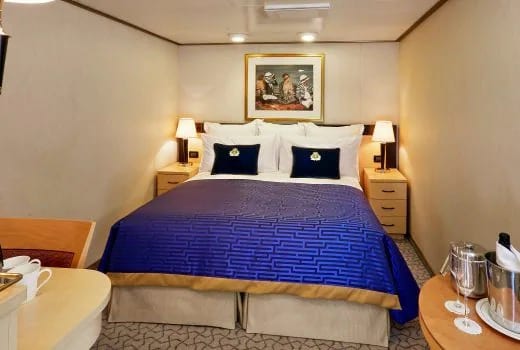
Approximately 152 sq. ft.
With a variety of locations to choose from on board, our well-appointed Britannia Standard Inside staterooms are a haven of comfort and style to enjoy during your voyage. You’ll find thoughtful features and luxurious amenities, all organised by your dedicated steward to ensure you are always attentively looked after.
Each Britannia Standard Inside stateroom includes:
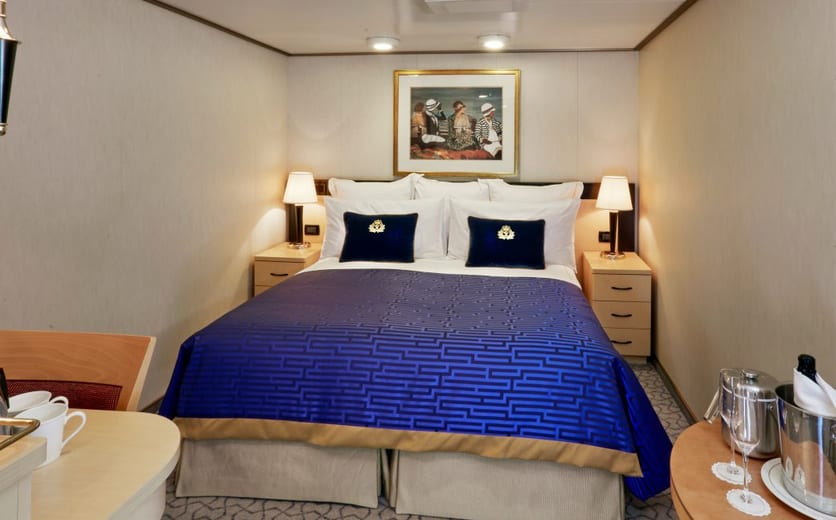
Approximately 157-194 sq. ft.
With a variety of locations to choose from on board, our well-appointed inside staterooms are a haven of comfort and style to enjoy during your voyage. You’ll find thoughtful features and luxurious amenities, all organised by your dedicated steward to ensure you are always attentively looked after.
Each Britannia Standard Inside stateroom includes:
Choice of Early, Late, and Open Dining in the Britannia Restaurant.
Cunarder bed configurable to king-size or two single beds.
Bathroom with a walk-in shower.
Satellite TV with movie and music channels.
Feature vanity and desk with hairdryer.
UK, USA, and European power sockets.
Penhaligon's toiletries.
Bathrobes and slippers.
Tea and coffee making facilities.
Welcome sparkling wine.
Complimentary room service menu.
Mini-bar packages available for purchase.
A dedicated steward to keep your stateroom in fine order day and night.
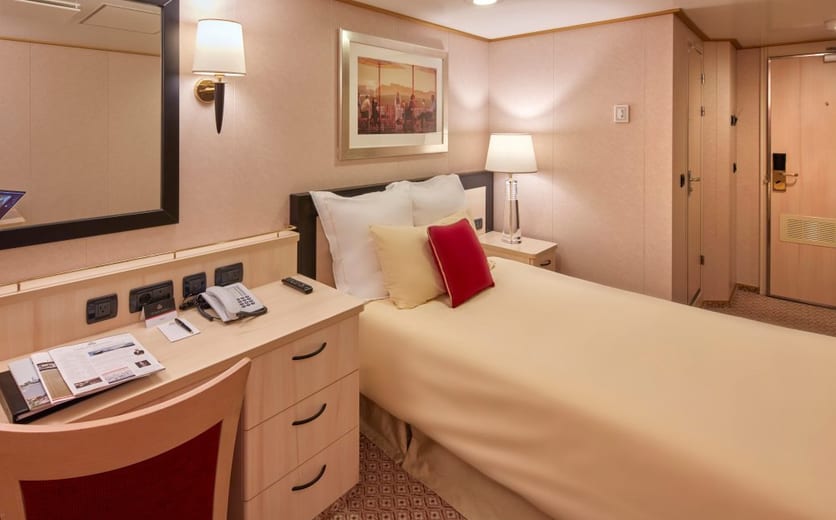
Approximately 159 sq. ft.
Our spacious Britannia Single Inside staterooms are a haven of comfort and style to enjoy during your voyage. You’ll find thoughtful features and luxurious amenities, all organised by your dedicated steward to ensure you are always attentively looked after.
Each Britannia Single Inside stateroom includes:
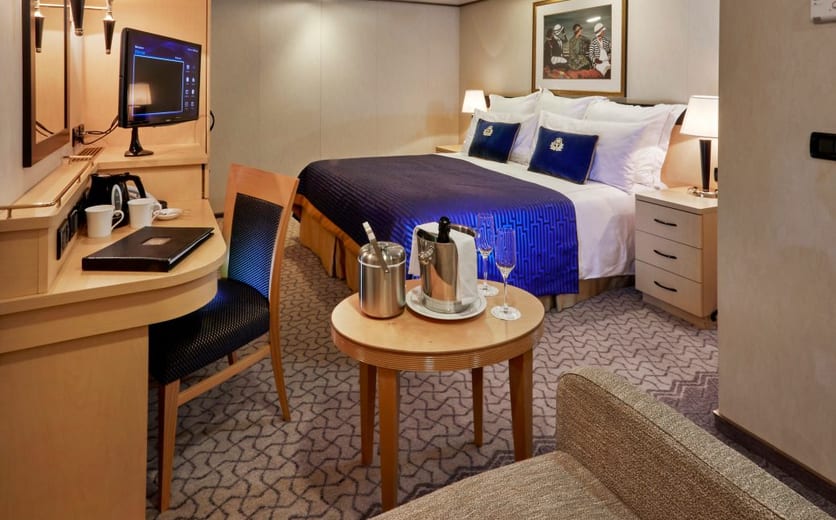
Approximately 200 sq. ft.
With a variety of locations to choose from on board, our spacious Britannia Deluxe Inside staterooms are a haven of comfort and style to enjoy during your voyage. You’ll find thoughtful features and luxurious amenities, all organised by your dedicated steward to ensure you are always attentively looked after.
Each Britannia Deluxe Inside stateroom includes:
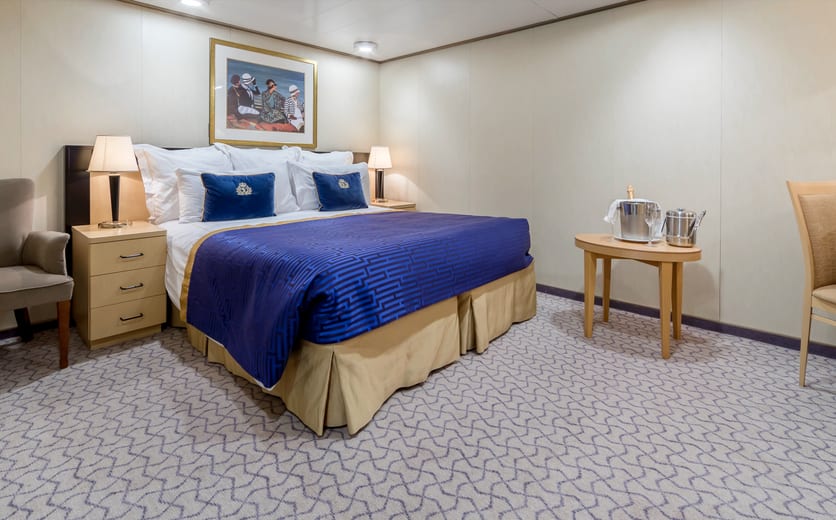
With a variety of locations to choose from on board our spacious Britannia Deluxe Inside staterooms are a haven of comfort and style to enjoy during your voyage. You’ll find thoughtful features and luxurious amenities all organised by your dedicated steward to ensure you are always attentively looked after.
Each Britannia Deluxe Inside stateroom includes:

With a variety of locations to choose from on board our well-appointed Britannia Standard Inside staterooms are a haven of comfort and style to enjoy during your voyage. You’ll find thoughtful features and luxurious amenities all organised by your dedicated steward to ensure you are always attentively looked after.
Each Britannia Standard Inside stateroom includes:
Our spacious Britannia Single Inside staterooms are a haven of comfort and style to enjoy during your voyage. You’ll find thoughtful features and luxurious amenities all organised by your dedicated steward to ensure you are always attentively looked after.
Each Britannia Single Inside stateroom includes:
from £1,781 per person
from £1,934 per person
from £4,689 per person
from £1,556 per person
Approximately 152 sq. ft.
With a variety of locations to choose from on board, our well-appointed Britannia Standard Inside staterooms are a haven of comfort and style to enjoy during your voyage. You’ll find thoughtful features and luxurious amenities, all organised by your dedicated steward to ensure you are always attentively looked after.
Each Britannia Standard Inside stateroom includes:
Approximately 157-194 sq. ft.
With a variety of locations to choose from on board, our well-appointed inside staterooms are a haven of comfort and style to enjoy during your voyage. You’ll find thoughtful features and luxurious amenities, all organised by your dedicated steward to ensure you are always attentively looked after.
Each Britannia Standard Inside stateroom includes:
Choice of Early, Late, and Open Dining in the Britannia Restaurant.
Cunarder bed configurable to king-size or two single beds.
Bathroom with a walk-in shower.
Satellite TV with movie and music channels.
Feature vanity and desk with hairdryer.
UK, USA, and European power sockets.
Penhaligon's toiletries.
Bathrobes and slippers.
Tea and coffee making facilities.
Welcome sparkling wine.
Complimentary room service menu.
Mini-bar packages available for purchase.
A dedicated steward to keep your stateroom in fine order day and night.
Approximately 159 sq. ft.
Our spacious Britannia Single Inside staterooms are a haven of comfort and style to enjoy during your voyage. You’ll find thoughtful features and luxurious amenities, all organised by your dedicated steward to ensure you are always attentively looked after.
Each Britannia Single Inside stateroom includes:
Approximately 200 sq. ft.
With a variety of locations to choose from on board, our spacious Britannia Deluxe Inside staterooms are a haven of comfort and style to enjoy during your voyage. You’ll find thoughtful features and luxurious amenities, all organised by your dedicated steward to ensure you are always attentively looked after.
Each Britannia Deluxe Inside stateroom includes:
With a variety of locations to choose from on board our spacious Britannia Deluxe Inside staterooms are a haven of comfort and style to enjoy during your voyage. You’ll find thoughtful features and luxurious amenities all organised by your dedicated steward to ensure you are always attentively looked after.
Each Britannia Deluxe Inside stateroom includes:
With a variety of locations to choose from on board our well-appointed Britannia Standard Inside staterooms are a haven of comfort and style to enjoy during your voyage. You’ll find thoughtful features and luxurious amenities all organised by your dedicated steward to ensure you are always attentively looked after.
Each Britannia Standard Inside stateroom includes:
Our spacious Britannia Single Inside staterooms are a haven of comfort and style to enjoy during your voyage. You’ll find thoughtful features and luxurious amenities all organised by your dedicated steward to ensure you are always attentively looked after.
Each Britannia Single Inside stateroom includes:
from £1,781 per person
from £1,934 per person
from £4,689 per person





 0203 930 4640