Call
Call Enquire
 Search


Menu

Manage my booking

| Sales | |
| Monday - Friday | 09:00 - 20:00 |
| Saturday | 09:00 - 16:00 |
| Sunday | 10:00 - 17:00 |
| Bank Holiday | 10:00 - 16:00 |
| Aftersales | |
| Monday - Friday | 09:00 - 17:30 |
| Bank Holiday | 10:00 - 16:00 |



17 Dec - 16 Jan 2028

30 Nights onboard Nieuw Statendam

Inclusion package upgrades available on request*

Kids Club*

Complimentary Dining*

Entertainment*
from
£5,674
per person
from
£6,374
per person
from
£6,924
per person
from
£7,904
per person
Our experts are here to help
Call us today on 0203 930 4640 or enquire online.




 May - October 2027 cruises to Europe or Alaska with Have It All Early Booking Bonus*Up to £600pp Air Credit with Caribbean Cruise Bookings*Save up to 60% on amenities when upgrading to Have It All*
*Select voyages. T's and C's apply
Day 1
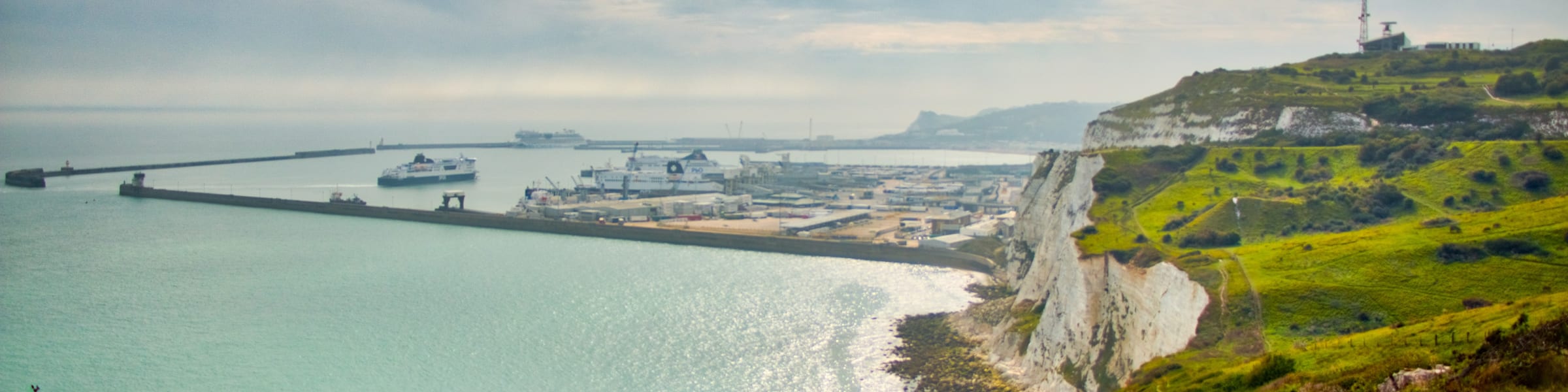
Known as the gateway of England, Dover welcomes millions of visitors from all over the globe each year in its role as the ferry capital of the world and the second busiest cruise port in the UK. The White Cliffs Country has a rich heritage. Within the walls of the town’s iconic castle, over 2,000 years of history waits to be explored, whilst the town’s museum is home to the Dover Bronze Age Boat, the world’s oldest known seagoing vessel. The town’s cliffs that are a welcome sight for today's cross-channel travellers also served as the control centre for the Dunkirk evacuation in 1940.
Day 2
Rotterdam is a city that's a long way removed from most people's stereotypical notion of the Netherlands. There are few, if any, canals to be found here nor are there any quaint windmills. There is, however, a thriving modern city which is one of the busiest ports in the entire world.
Day 3
Day 3
Hamburg is Germany’s second-largest city with a history dating back to Charlemagne. A major port, this vibrant city is home to art and culture, extensive shopping facilities, Baroque buildings and waterfront vistas. With its well-known fish market, art galleries and Museums together with several beautiful parks including a botanical garden, this is a city with something for everyone. British visitors who remember the Swinging Sixties may like to visit the streets around Grosse Freiheit, where an unknown pop group called The Beatles gave their first public performances in various local clubs before achieving worldwide fame.
Day 4
Hamburg is Germany’s second-largest city with a history dating back to Charlemagne. A major port, this vibrant city is home to art and culture, extensive shopping facilities, Baroque buildings and waterfront vistas. With its well-known fish market, art galleries and Museums together with several beautiful parks including a botanical garden, this is a city with something for everyone. British visitors who remember the Swinging Sixties may like to visit the streets around Grosse Freiheit, where an unknown pop group called The Beatles gave their first public performances in various local clubs before achieving worldwide fame.
Day 5
Day 6
Århus is Denmark's second-largest city, and, with its funky arts and college community, one of the country's most pleasant. Cutting through the center of town is a canal called the Århus Å (Århus Creek). It used to run underground, but was uncovered a few years ago. Since then, an amalgam of bars, cafés, and restaurants has sprouted along its banks. At all hours of the day and night this waterfront strip is abuzz with crowds that hang out on the outdoor terraces and steps that lead down to the creek.The VisitÅrhus tourist office has information about the Århus Passport, which includes passage on buses, free or discounted admission to the 12 most popular museums and sites in the city, and tours.
Day 7
By the 11th century, Copenhagen was already an important trading and fishing centre and today you will find an attractive city which, although the largest in Scandinavia, has managed to retain its low-level skyline. Discover some of the famous attractions including Gefion Fountain and Amalienborg Palace, perhaps cruise the city’s waterways, visit Rosenborg Castle or explore the medieval fishing village of Dragoer. Once the home of Hans Christian Andersen, Copenhagen features many reminders of its fairytale heritage and lives up to the reputation immortalised in the famous song ‘Wonderful Copenhagen’.
Day 8
By the 11th century, Copenhagen was already an important trading and fishing centre and today you will find an attractive city which, although the largest in Scandinavia, has managed to retain its low-level skyline. Discover some of the famous attractions including Gefion Fountain and Amalienborg Palace, perhaps cruise the city’s waterways, visit Rosenborg Castle or explore the medieval fishing village of Dragoer. Once the home of Hans Christian Andersen, Copenhagen features many reminders of its fairytale heritage and lives up to the reputation immortalised in the famous song ‘Wonderful Copenhagen’.
Day 9
Day 10
Oslo is the capital of Norway and is also its largest city, situated at the head of Oslo Fjord and surrounded by hills and forests. Home to some 50 museums and full of galleries, cafés, a sculpture park and the Royal Palace, this vibrant city with its handsome 19th-century buildings and wide streets has much to offer. Its history dates back 1,000 years, and includes a rich seafaring heritage that ranges from the Viking era to Thor Heyerdahl’s Kon Tiki expedition. Discover more about this exciting city on our varied selection of excursions.
Day 11
Nicknamed "Sommerbyen" ("Summer City"), Norway's fifth-largest city has 78,000 inhabitants. Norwegians come here for its sun-soaked beaches and beautiful harbor. Kristiansand has also become known internationally for the outdoor Quart Festival, which hosts local and international rock bands every July. According to legend, in 1641 King Christian IV marked the four corners of Kristiansand with his walking stick, and within that framework the grid of wide streets was laid down. The center of town, called the Kvadraturen, still retains the grid, even after numerous fires. In the northeast corner is Posebyen, one of northern Europe's largest collections of low, connected wooden house settlements, and there's a market here every Saturday in summer. Kristiansand's Fisketorvet (fish market) is near the south corner of the town's grid, right on the sea.
Day 12
Day 13
Surrounded by mountains and sparkling fjords, the waterside city of Bergen has a spectacular setting. There has been a settlement here since medieval times and the colourful waterfront buildings of the Hanseatic wharf, known as Bryggen, are testament to its fascinating history of trade. As Norway’s best known medieval settlement, the Bryggen is listed by UNESCO as a World Heritage Site. Our comprehensive selection of excursions allows you to discover the many sides of Bergen, such as the fish market and narrow cobbled streets, as well as stunning views of the city from the summit of Mt Fløyen. Alternatively, those who have visited the city previously may like to experience one of the tours that travel further afield. Just 300 yards from the main piers, you will find the Fortress Museum (Fesningsmuseum), which has an interesting collection of objects related to World War II.
Day 14
Overlooking the Atlantic Ocean, Stavanger flourished in the 19th century as a fishing port. While other towns in Norway have suffered with the decline of this industry, Stavanger has kept its economy booming by diversifying, first into shipbuilding and now into oil. These two contrasting industries have created a city of two halves – a modern area of high-rise buildings and a historic centre with cobbled streets and old wooden houses. The city centre was the birthplace of Alexander Kielland, one of the great 19th-century Norwegian novelists. Stavanger Cathedral, dating from 1125, is an impressive building and the only medieval cathedral in Norway that has not been substantially altered since it was first built. From Stavanger you can explore the attractive blue waters of Lysefjord, surrounded by cliffs and striking rock formations, and also visit Hafrsfjord where the Viking King Harald won an important battle that started the Unification of Norway. Those preferring to explore on their own may wish to visit the interesting Petroleum Museum.
Day 15
Day 16
Known as the gateway of England, Dover welcomes millions of visitors from all over the globe each year in its role as the ferry capital of the world and the second busiest cruise port in the UK. The White Cliffs Country has a rich heritage. Within the walls of the town’s iconic castle, over 2,000 years of history waits to be explored, whilst the town’s museum is home to the Dover Bronze Age Boat, the world’s oldest known seagoing vessel. The town’s cliffs that are a welcome sight for today's cross-channel travellers also served as the control centre for the Dunkirk evacuation in 1940.
Day 17
Rotterdam is a city that's a long way removed from most people's stereotypical notion of the Netherlands. There are few, if any, canals to be found here nor are there any quaint windmills. There is, however, a thriving modern city which is one of the busiest ports in the entire world.
Day 18
Day 19
Day 20
Day 21
The original settlement formed on the site of Casablanca by the Berbers became the kingdom of Anfa, and during the 15th century harboured pirates who raided the Portuguese coast. In retaliation for the attacks, the Portuguese destroyed Anfa and founded the town they called Casa Branca (white house). They remained here until an earthquake in 1755 and the town was subsequently rebuilt by Mohammed ben Abdallah, whose legacy of mosques and houses can still be seen in the old Medina. Casablanca acquired its present-day name when the Spanish obtained special port privileges in 1781. The French landed here in 1907, later establishing a protectorate and modelling the town on the port of Marseilles. Today Casablanca is Morocco’s largest city, its most significant port and the centre of commerce and industry. The city is a vibrant fusion of European, African and Arabian influences and its French colonial architecture and art deco buildings seamlessly blend in with the busy, colourful markets. Please note that vendors in the souks can be very persistent and eager to make a sale.
Day 22
Shaped by the Atlas Mountains on one side, Agadir is framed on the other by a magnificent crescent-shaped beach. While little is known of the city’s origins, the Portuguese created a fortress here at the end of the 15th century, naming it Santa Cruz de Ghir. Freed from Portugal’s occupation by the Saadians in 1540, Agadir grew into a colourful and prosperous port and became newsworthy in 1911 when a German gunboat, the Panther, sailed into the bay as a protest against the division of North Africa between the Spanish and French. Morocco gained independence from the French in 1956, an event which was closely followed in Agadir by the tragic earthquake of 1960. The city, which has been rebuilt to represent the ‘new nation’, is blessed by fine sandy beaches overlooked by luxurious hotels and a great selection of cafés and restaurants. Please note that vendors in the souks can be very persistent and eager to make a sale.
Day 23
Day 24
Perhaps the prettiest of the Canary Islands, Gran Canaria is an almost circular isle with the peak of Pozo de Las Nieves, its highest point, at the centre. With a wealth of natural beauty and all the exciting attractions of city life in the capital, the island offers the best of both worlds. You will no doubt wish to see the sights of the capital’s old quarter, which dates back to the 15th century and encompassses the Vegueta and Triana districts, and wherever you go you can enjoy the glorious subtropical climate, perfect for growing exotic palms and fruits.
Day 25
Also known as ‘La Isla Bonita’ (the beautiful island), La Palma is typified by lush forests of pine, laurel and fern which contrast with the rugged splendour of the gigantic Taburiente crater. The island is dotted with attractive villages, which are a delight to discover, and the capital Santa Cruz also makes for an interesting day of exploration. Perched on the edge of the volcanic crater of La Caldereta, Santa Cruz comfortably blends modern architecture with old colonial buildings. Perhaps visit the fascinating Natural History Museum, stroll around the historic quarters and the Plaza de Espana or travel a few miles outside the city to the exquisite Church of Our Lady. If you enjoy shopping, you can find reasonably priced silver jewellery, leather goods and beautifully embroidered clothes, tablecloths and napkins, a speciality of the Canary Islands.
Day 26
Day 27
Day 28
Believed to be the oldest town on the Iberian Peninsula, the Andalusian port of Cádiz enjoys a stunning location at the edge of a six-mile promontory. The town itself, with 3,000 years of history, is characterised by pretty white houses with balconies often adorned with colourful flowers. As you wander around be sure to take a stroll through the sizeable Plaza de Espãna, with its large monument dedicated to the first Spanish constitution, which was signed here in 1812. Cádiz has two pleasant seafront promenades which boast fine views of the Atlantic Ocean, and has a lovely park, the Parque Genoves, located close to the sea with an open-air theatre and attractive palm garden. Also notable is the neo-Classical cathedral, capped by a golden dome.
Day 29
As you sail into Malaga you will notice what an idyllic setting the city enjoys on the famous Costa del Sol. To the east of this provincial capital, the coast along the region of La Axarqua is scattered with villages, farmland and sleepy fishing hamlets - the epitome of traditional rural Spain. To the west stretches a continuous city where the razzmatazz and bustle creates a colourful contrast that is easily recognisable as the Costa del Sol. Surrounding the region, the Penibéetica Mountains provide an attractive backdrop overlooking the lower terraced slopes which yield olives and almonds. This spectacular mountain chain shelters the province from cold northerly winds, giving it a reputation as a therapeutic and exotic place in which to escape from cold northern climes. Malaga is also the gateway to many of Andalusia's enchanting historic villages, towns and cities.
Day 30
Day 31
The infinite variety of street life, the nooks and crannies of the medieval Barri Gòtic, the ceramic tile and stained glass of Art Nouveau facades, the art and music, the throb of street life, the food (ah, the food!)—one way or another, Barcelona will find a way to get your full attention. The capital of Catalonia is a banquet for the senses, with its beguiling mix of ancient and modern architecture, tempting cafés and markets, and sun-drenched Mediterranean beaches. A stroll along La Rambla and through waterfront Barceloneta, as well as a tour of Gaudí's majestic Sagrada Famíliaand his other unique creations, are part of a visit to Spain's second-largest city. Modern art museums and chic shops call for attention, too. Barcelona's vibe stays lively well into the night, when you can linger over regional wine and cuisine at buzzing tapas bars.

from £5,674 per person
Two lower beds convertible to one queen-size bed—our signature Mariner's Dream™ bed with plush Euro-Top mattresses, premium massage shower heads and a host of amenities are featured in these comfortable staterooms.
The configuration of staterooms may vary from the images shown.
Approximately 143-225 sq. ft.
These staterooms feature spa amenities such as yoga mats and an iPod® docking station and include access to spa treatments from the Greenhouse Spa & Salon. There are two lower beds convertible to one queen-size bed—our Signature Mariner's Dream™ bed with plush Euro-Top mattresses.
The configuration of staterooms may vary from the images shown.
Approximately 143-225 sq. ft.
from £6,374 per person
from £6,924 per person
from £7,904 per person
from £5,674 per person
Two lower beds convertible to one queen-size bed—our signature Mariner's Dream™ bed with plush Euro-Top mattresses, premium massage shower heads and a host of amenities are featured in these comfortable staterooms.
The configuration of staterooms may vary from the images shown.
Approximately 143-225 sq. ft.
These staterooms feature spa amenities such as yoga mats and an iPod® docking station and include access to spa treatments from the Greenhouse Spa & Salon. There are two lower beds convertible to one queen-size bed—our Signature Mariner's Dream™ bed with plush Euro-Top mattresses.
The configuration of staterooms may vary from the images shown.
Approximately 143-225 sq. ft.
from £6,374 per person
from £6,924 per person
from £7,904 per person





 0203 930 4640