Call
 Enquire
 Search



Menu

Manage my booking

| Sales | |
| Monday - Friday | 09:00 - 19:00 |
| Saturday | 09:00 - 16:00 |
| Sunday | 10:00 - 17:00 |
| Bank Holiday | 10:00 - 16:00 |
| Aftersales | |
| Monday - Friday | 09:00 - 17:30 |
| Bank Holiday | 10:00 - 16:00 |



31 Jul - 10 Aug 2027

10 Nights onboard Sylvia Earle

Overseas Transfers

Expedition Jacket (on polar itineraries only)*

Water bottle*

Full Board Drinks (with meals)*

Shore Excursions*
Not Available
Sold Out
from
£10,346
per person
from
£15,221
per person
Our experts are here to help
Call us today on 0203 930 4640 or enquire online.




 Save up to 30% off Aric Expeditions in 2026 & 2027*Enjoy up to 25% off 2027 Small Ship Cruises*Enjoy No Single Supplement on select Arctic & Beyond Voyages*
*Select voyages. T's and C's apply
Day 1
Having made your way to Reykjavik, you will be met by a representative of Aurora Expeditions and transferred to our group hotel. Upon arrival at your included hotel, please visit the Aurora Expeditions hospitality area where you can leave your luggage and enjoy refreshments if arriving prior to 4pm. Whilst here you can collect your luggage cabin tags speak with our ground operations team, who may have information to share with you about pre-embarkation or to provide you with information about where to dine, withdraw cash or purchase last minute items from a local pharmacy or supermarket.
The remainder of your time is at leisure. All meals today are at your own expense.
Accommodation: Radisson RED Reykjavik
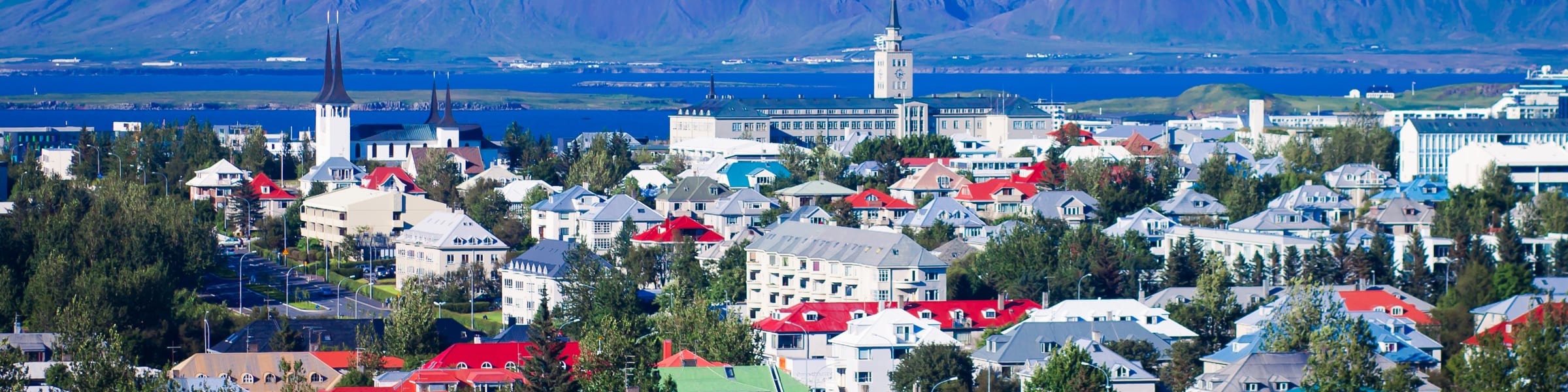
Sprawling Reykjavík, the nation's nerve center and government seat, is home to half the island's population. On a bay overlooked by proud Mt. Esja (pronounced eh-shyuh), with its ever-changing hues, Reykjavík presents a colorful sight, its concrete houses painted in light colors and topped by vibrant red, blue, and green roofs. In contrast to the almost treeless countryside, Reykjavík has many tall, native birches, rowans, and willows, as well as imported aspen, pines, and spruces.Reykjavík's name comes from the Icelandic words for smoke, reykur, and bay, vík. In AD 874, Norseman Ingólfur Arnarson saw Iceland rising out of the misty sea and came ashore at a bay eerily shrouded with plumes of steam from nearby hot springs. Today most of the houses in Reykjavík are heated by near-boiling water from the hot springs. Natural heating avoids air pollution; there's no smoke around. You may notice, however, that the hot water brings a slight sulfur smell to the bathroom.Prices are easily on a par with other major European cities. A practical option is to purchase a Reykjavík City Card at the Tourist Information Center or at the Reykjavík Youth Hostel. This card permits unlimited bus usage and admission to any of the city's seven pools, the Family Park and Zoo, and city museums. The cards are valid for one (ISK 3,300), two (ISK 4,400), or three days (ISK 4,900), and they pay for themselves after three or four uses a day. Even lacking the City Card, paying admission (ISK 500, or ISK 250 for seniors and people with disabilities) to one of the city art museums (Hafnarhús, Kjarvalsstaðir, or Ásmundarsafn) gets you free same-day admission to the other two.
Day 2
Today we follow the path of one of Reykjavik’s most popular seismic attractions – the Golden Circle. Stops along our route include Thingvellir National Park, accredited as the site of Iceland’s first parliament. A shaky start to the new nation, it is also the point where the Eurasia and North American tectonic plates meet as an open fissure. Our next stop is Gullfoss waterfall. This impressive water feature tumbles 34 meters into the Hvítá River, offering a popular photographic opportunity. Next we explore the geothermal fields and geysir’s for which Iceland is famous. The variety of hot springs and bubbling pools are mesmerising as the sheer capacity of water and steam erupting from the ground makes you ponder just how much power is beneath your feet. Late afternoon we return to Reykjavik to board the Sylvia Earle.
After boarding, there’s time to settle into your cabin before our important safety briefings before we ‘throw the lines’ to begin our Greenland adventure. This evening, meet your expedition team and crew at the Welcome Dinner.
Sprawling Reykjavík, the nation's nerve center and government seat, is home to half the island's population. On a bay overlooked by proud Mt. Esja (pronounced eh-shyuh), with its ever-changing hues, Reykjavík presents a colorful sight, its concrete houses painted in light colors and topped by vibrant red, blue, and green roofs. In contrast to the almost treeless countryside, Reykjavík has many tall, native birches, rowans, and willows, as well as imported aspen, pines, and spruces.Reykjavík's name comes from the Icelandic words for smoke, reykur, and bay, vík. In AD 874, Norseman Ingólfur Arnarson saw Iceland rising out of the misty sea and came ashore at a bay eerily shrouded with plumes of steam from nearby hot springs. Today most of the houses in Reykjavík are heated by near-boiling water from the hot springs. Natural heating avoids air pollution; there's no smoke around. You may notice, however, that the hot water brings a slight sulfur smell to the bathroom.Prices are easily on a par with other major European cities. A practical option is to purchase a Reykjavík City Card at the Tourist Information Center or at the Reykjavík Youth Hostel. This card permits unlimited bus usage and admission to any of the city's seven pools, the Family Park and Zoo, and city museums. The cards are valid for one (ISK 3,300), two (ISK 4,400), or three days (ISK 4,900), and they pay for themselves after three or four uses a day. Even lacking the City Card, paying admission (ISK 500, or ISK 250 for seniors and people with disabilities) to one of the city art museums (Hafnarhús, Kjarvalsstaðir, or Ásmundarsafn) gets you free same-day admission to the other two.
Day 3
Begin your photographic journey with a wet landing at the spectacular Dynjandi waterfall, one of the Westfjords’ most iconic natural wonders. Cascading 100 metres down a series of tiered cliffs, Dynjandi offers stunning opportunities for landscape photography; think silky long exposures of flowing water, sweeping shots of the surrounding fjord, and close-up textures of moss-covered rocks. With Iceland’s moody skies and crisp Arctic light, this location is a dream for photographers.
Iceland is well-known for its spectacular waterfalls. The iconic Dynjandi waterfall, located in the Westfjords region, is regarded as one of Iceland’s most impressive and majestic waterfalls. At the top, the cascading water is roughly 100 feet wide and tumbles down about 330 feet into the fjord. Its name Dynjandi means, “the thundering one” and its vast size, enormous sound, and sheer force is overwhelming. It has also been nicknamed, ‘The Bridal Veil’ because of the way the water sprays and spreads over the rocks.
Day 4
In the coming days, a host of choices are available to us, and depending on ice and weather conditions, the east coast of Greenland is ours to explore. Our experienced Expedition Team, who have made countless journeys to this area, will use their expertise to tailor our itinerary on a day-to-day basis. This allows us to make best use of the prevailing weather, ice conditions and encounters with wildlife. We generally attempt up to two landings or Zodiac excursions per day, including cruising along spectacular ice cliffs, following whales feeding near the surface.
East Greenland contains some of the Arctic's most impressive scenery. Deep fjords and narrow channels, flanked by sharp ice-clad peaks up to 2,000 m (6,562 ft) high. Gigantic icebergs calved from glaciers drift throughout the fjord system creating breathtaking scenery. The landscape is filled with multi-coloured tundra home to musk oxen and arctic hare. Throughout the area are ancient Thule archaeological sites, historical trappers' huts, and modern Inuit hunters' cabins.
A highlight is a visit to the Inuit village of Ittoqqortoormiit, the most isolated and northernmost permanent settlement in the region, with approximately 500 inhabitants. Here you can explore the village, the fascinating museum or sit in the beautiful Lutheran Church. The locals are friendly, and from underneath their Arctic fox-fur jackets, the shy young children are keen to say hello and practice their English. The community boasts an excellent museum, gift shop, an abundance of Greenlandic sled dogs, and the opportunity to meet Inuit people.
Each day offers new compositions: reflections on glassy waters, glacial textures, and vast tundra painted in autumn hues. Thanks to the fertile volcanic soil mountains that protects areas from the strong winds, the area is rich in wildlife. You may spot everything from muskox and arctic foxes to mountain hares and even reindeer near the fjord. Look skyward and you could catch a glimpse of birds including common eider, glaucous gull, black-legged kittiwake, northern fulmar, and arctic terns gracefully gliding or plunging into icy bays for zooplankton.
North of Scoresbysund, we hope to visit Kong Oskar and Kaiser Franz Josef fjords, two of the most significant fjord systems in Greenland, each one encompassing several smaller fjords and sounds. Thanks to the fertile volcanic soil and the surrounding mountains offering protection from strong winds, the area is rich in wildlife. You may spot everything from musk ox and arctic foxes to mountain hares, and even reindeer, near the fjord. Look skyward and you could catch a glimpse of birds, including the glaucous gull, black-legged kittiwake, northern fulmar, common raven and common eider.
There are great hiking options in the area, where flowering tundra plants, scattered bones of whales and muskox from centuries of hunting by the Inuit and fumaroles can be found. These are areas where heated groundwater boil to the surface creating bubbling pools and mineral formations as the water reacts with the atmosphere.
The area also boasts some of the most striking sedimentary sandstone, shale, and siltstone formations imaginable. The layers of sediment here are estimated to have taken about 4,000 years to be laid down, and the alternating colours and patterns in the layers of rocks are stunningly beautiful.
Golden-hour light and expert guidance from onboard photographers ensure unforgettable images and creative growth each day.
Day 5
Day 6
Day 7
Day 8
Day 9
Day 10
Day 11
During the early morning, we cruise into Reykjavik and disembark at approximately 8.00 am. Farewell your Expedition Team and fellow passengers as we all continue our onward journeys. Transfer to Keflavik airport.
Note: At the conclusion of the voyage, we recommend booking flights departing after 12.00 pm on the day of disembarkation in case there are delays.
Sprawling Reykjavík, the nation's nerve center and government seat, is home to half the island's population. On a bay overlooked by proud Mt. Esja (pronounced eh-shyuh), with its ever-changing hues, Reykjavík presents a colorful sight, its concrete houses painted in light colors and topped by vibrant red, blue, and green roofs. In contrast to the almost treeless countryside, Reykjavík has many tall, native birches, rowans, and willows, as well as imported aspen, pines, and spruces.Reykjavík's name comes from the Icelandic words for smoke, reykur, and bay, vík. In AD 874, Norseman Ingólfur Arnarson saw Iceland rising out of the misty sea and came ashore at a bay eerily shrouded with plumes of steam from nearby hot springs. Today most of the houses in Reykjavík are heated by near-boiling water from the hot springs. Natural heating avoids air pollution; there's no smoke around. You may notice, however, that the hot water brings a slight sulfur smell to the bathroom.Prices are easily on a par with other major European cities. A practical option is to purchase a Reykjavík City Card at the Tourist Information Center or at the Reykjavík Youth Hostel. This card permits unlimited bus usage and admission to any of the city's seven pools, the Family Park and Zoo, and city museums. The cards are valid for one (ISK 3,300), two (ISK 4,400), or three days (ISK 4,900), and they pay for themselves after three or four uses a day. Even lacking the City Card, paying admission (ISK 500, or ISK 250 for seniors and people with disabilities) to one of the city art museums (Hafnarhús, Kjarvalsstaðir, or Ásmundarsafn) gets you free same-day admission to the other two.
from £0 per person
Cabin Inclusion
Amenities
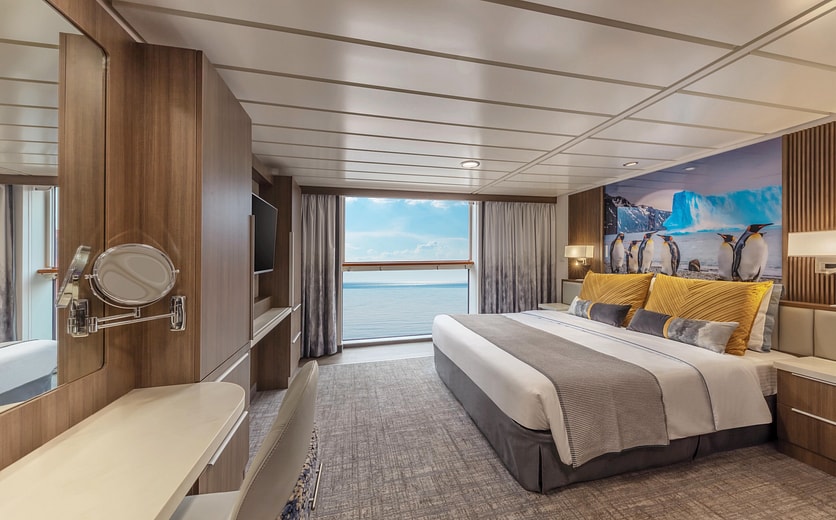
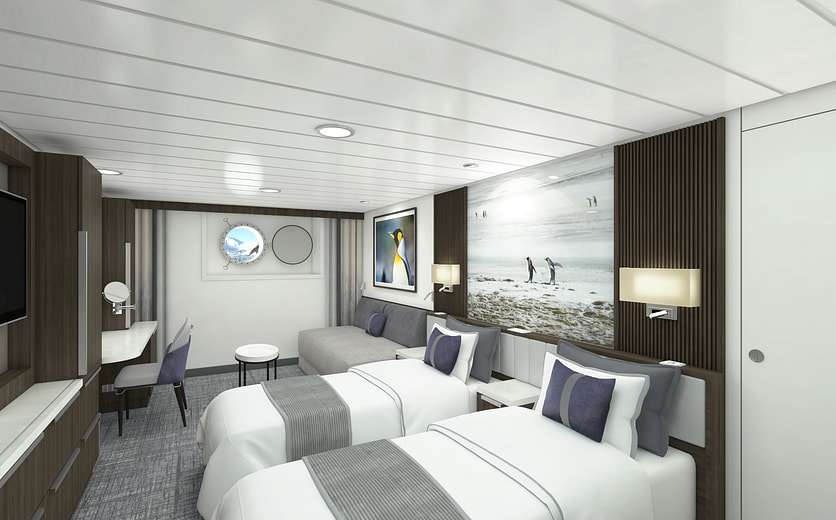
With a bit more room to stretch the legs, the Aurora Stateroom Superior are perfect for polar adventurers who travel with plenty of gear.
Located on Deck 7, the Staterooms feature french balconies, floor to ceiling windows, en-suite bathrooms and a comfortable desk area.
Cabin Inclusion
Amenities
from £10,346 per person
from £15,221 per person
from £0 per person
Cabin Inclusion
Amenities
With a bit more room to stretch the legs, the Aurora Stateroom Superior are perfect for polar adventurers who travel with plenty of gear.
Located on Deck 7, the Staterooms feature french balconies, floor to ceiling windows, en-suite bathrooms and a comfortable desk area.
Cabin Inclusion
Amenities
from £10,346 per person
from £15,221 per person





 0203 930 4640