Call
 Enquire
 Search



Menu

Manage my booking

| Sales | |
| Monday - Friday | 09:00 - 19:00 |
| Saturday | 09:00 - 16:00 |
| Sunday | 10:00 - 17:00 |
| Bank Holiday | 10:00 - 16:00 |
| Aftersales | |
| Monday - Friday | 09:00 - 17:30 |
| Bank Holiday | 10:00 - 16:00 |

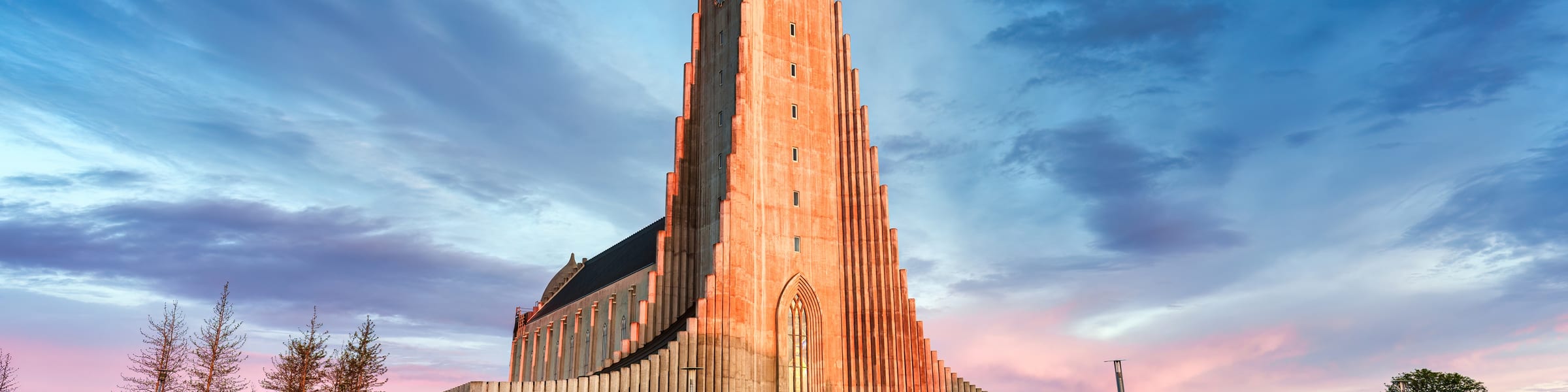


15 Jul - 27 Jul 2028

12 Nights onboard Sylvia Earle

Overseas Transfers

Expedition Jacket (on polar itineraries only)*

Water bottle*

Full Board Drinks (with meals)*

Shore Excursions*
Not Available
from
£17,719
per person
from
£18,192
per person
from
£26,778
per person
Our experts are here to help
Call us today on 0203 930 4640 or enquire online.





 Save up to 30% off Aric Expeditions in 2026 & 2027*Enjoy up to 25% off 2027 Small Ship Cruises*Enjoy No Single Supplement on select Arctic & Beyond Voyages*
*Select voyages. T's and C's apply
Day 1
Having made your way to Reykjavik, you will be met by a representative of Aurora Expeditions and transferred to our group hotel. Upon arrival at your included hotel, please visit the Aurora Expeditions desk where you can collect your luggage cabin tags speak with our ground operations team, who may have information to share with you about pre-embarkation or to provide you with information about where to dine, withdraw cash or purchase last minute items from a local pharmacy or supermarket.
The remainder of your time is at leisure. All meals today are at your own expense.
Accommodation: Reykjavik Hotel (to be advised)
Sprawling Reykjavík, the nation's nerve center and government seat, is home to half the island's population. On a bay overlooked by proud Mt. Esja (pronounced eh-shyuh), with its ever-changing hues, Reykjavík presents a colorful sight, its concrete houses painted in light colors and topped by vibrant red, blue, and green roofs. In contrast to the almost treeless countryside, Reykjavík has many tall, native birches, rowans, and willows, as well as imported aspen, pines, and spruces.Reykjavík's name comes from the Icelandic words for smoke, reykur, and bay, vík. In AD 874, Norseman Ingólfur Arnarson saw Iceland rising out of the misty sea and came ashore at a bay eerily shrouded with plumes of steam from nearby hot springs. Today most of the houses in Reykjavík are heated by near-boiling water from the hot springs. Natural heating avoids air pollution; there's no smoke around. You may notice, however, that the hot water brings a slight sulfur smell to the bathroom.Prices are easily on a par with other major European cities. A practical option is to purchase a Reykjavík City Card at the Tourist Information Center or at the Reykjavík Youth Hostel. This card permits unlimited bus usage and admission to any of the city's seven pools, the Family Park and Zoo, and city museums. The cards are valid for one (ISK 3,300), two (ISK 4,400), or three days (ISK 4,900), and they pay for themselves after three or four uses a day. Even lacking the City Card, paying admission (ISK 500, or ISK 250 for seniors and people with disabilities) to one of the city art museums (Hafnarhús, Kjarvalsstaðir, or Ásmundarsafn) gets you free same-day admission to the other two.
Day 2
After a leisurely breakfast, check-out and bring your luggage to our Embarkation Suite. Please place any items required today in your hand luggage as your main bag will be transferred to the ship. Access to our Embarkation Suite includes luggage storage, Aurora Expeditions staff for voyage and city information and cabin check-in, WIFI, tea, coffee and light refreshments. Alternatively, explore Reykjavik at your leisure before returning to our Embarkation Suite at the designated times for the group transfer to Sylvia Earle.
After boarding, there’s time to settle into your cabin before our important safety briefings before we ‘throw the lines’ to begin our Greenland adventure. This evening, meet your expedition team and crew at the Welcome Dinner.
Sprawling Reykjavík, the nation's nerve center and government seat, is home to half the island's population. On a bay overlooked by proud Mt. Esja (pronounced eh-shyuh), with its ever-changing hues, Reykjavík presents a colorful sight, its concrete houses painted in light colors and topped by vibrant red, blue, and green roofs. In contrast to the almost treeless countryside, Reykjavík has many tall, native birches, rowans, and willows, as well as imported aspen, pines, and spruces.Reykjavík's name comes from the Icelandic words for smoke, reykur, and bay, vík. In AD 874, Norseman Ingólfur Arnarson saw Iceland rising out of the misty sea and came ashore at a bay eerily shrouded with plumes of steam from nearby hot springs. Today most of the houses in Reykjavík are heated by near-boiling water from the hot springs. Natural heating avoids air pollution; there's no smoke around. You may notice, however, that the hot water brings a slight sulfur smell to the bathroom.Prices are easily on a par with other major European cities. A practical option is to purchase a Reykjavík City Card at the Tourist Information Center or at the Reykjavík Youth Hostel. This card permits unlimited bus usage and admission to any of the city's seven pools, the Family Park and Zoo, and city museums. The cards are valid for one (ISK 3,300), two (ISK 4,400), or three days (ISK 4,900), and they pay for themselves after three or four uses a day. Even lacking the City Card, paying admission (ISK 500, or ISK 250 for seniors and people with disabilities) to one of the city art museums (Hafnarhús, Kjarvalsstaðir, or Ásmundarsafn) gets you free same-day admission to the other two.
Day 3
In the Denmark Strait, we cruise towards Greenland. We will be on the lookout for whale blows and the many seabirds that trail our ship, riding in the constant winds. In our lecture theatre, enjoy informative and entertaining presentations from our experts on topics such as seabirds, wildlife and ice, or catch up on some rest after long days of travel.
Day 4
Early-season exploration in East Greenland is governed by sea ice. Rather than following a fixed list of sites, our Expedition Team will study satellite imagery, local information and the conditions encountered to build the best route day by day. Landings, Zodiac cruises and ship-based exploration remain subject to weather, ice, permits, quotas and local access arrangements.
At this time of year, the ship may spend more time among the southern fjords around Tasiilaq, where steep mountains, glaciers and ice-choked waterways create a powerful setting for exploration. If the coast opens, opportunities may extend north through Scoresbysund and towards Kong Oscar Fjord.
Wherever the ice leads us, the scale is extraordinary. Vast bergs drift from glacier-fed fjords, brash ice gathers beneath rock walls and the changing light reveals bands of ancient geology. Zodiacs allow us to move quietly through sheltered water, while suitable shores may offer walks across tundra and viewpoints over the fjords.
Wildlife encounters are never predictable, but we will remain alert for whale blows, seals, seabirds, arctic hare and musk oxen where their range and conditions coincide. The pack itself can be a habitat, so time spent navigating its edge may bring some of the voyage’s most memorable observations.
East Greenland is also a homeland shaped by generations of Inuit knowledge and resilience. Archaeological traces, hunting traditions and contemporary life place the landscape in a human context. Any community visit depends on invitation, local agreements and the operational circumstances of the voyage.
This is expedition travel at its most authentic: the precise route may span possibilities from Tasiilaq in the south to Kong Oscar Fjord in the north, but the ice decides what is possible. Flexibility gives us the freedom to turn changing conditions into discovery.
Day 5
Day 6
Day 7
As we sail away from the coast of East Greenland, we may encounter whales feeding in the rich waters of the north. Be prepared to encounter more pack ice and perhaps spot seals and a variety of seabirds, including the northern fulmar and Brünnich’s guillemot.
The strong, icy currents have isolated East Greenland from the Polar Basin, attracting large numbers of fish, seals and whales. Climatic conditions and the concentration of ice in the vicinity often create thick morning fog that only vanishes in presence of the midday sun. Our experts will inform and entertain us with fascinating discussions on plants, animals, ice and heroic tales of exploration.
Day 8
Day 9
Early-season Svalbard is defined by light, snow and ice. Our experienced Expedition Team will shape each day around weather, sea ice, wildlife and the latest local information. Rather than follow a fixed sequence of landings, we remain free to spend time where conditions are strongest—whether that means exploring a glacier-filled fjord, approaching the pack-ice edge or changing course for an unexpected wildlife encounter.
On shore, snow-fringed beaches and newly exposed tundra reveal reindeer tracks, fox trails, fossils and the first hardy plants of the season. Migratory birds return in vast numbers, filling cliffs and scree slopes with guillemots, kittiwakes, puffins and little auks. At sea, we watch for walrus and seals around ice and coastal haul-outs, and for whales feeding in productive waters. Polar bears may be encountered anywhere in Svalbard and are observed only from a safe distance without changing their behaviour.
The human story is equally compelling. Weathered huts, whaling remains and scientific outposts speak to centuries of survival, ambition and research in the High Arctic. Our guides will bring these places into context while ensuring fragile cultural remains are left exactly as found.
If you have selected an optional activity such as kayaking, we will aim to offer it whenever conditions allow. Zodiac cruising, guided walks and the possibility of a polar plunge add different perspectives to a voyage driven by discovery rather than a timetable.
A flexible itinerary allows us to take advantage of favorable ice and weather conditions to travel through the northern stretches of Svalbard to points visited by famous polar explorers such as Andrée, Amundsen and Nobile. Destinations might include the narrow waterways and striking mountains of Krossfjord and Raudfjord. The ship may visit the historic settings of Ny Alesund, Ny London or Amsterdamoya. And of course, we hope to see distinctly Arctic wildlife from walrus hauled out in noisy groups on remote shorelines, to reindeer grazing alpine slopes, and from ptarmigan in their camouflaged hiding places, to mighty polar bears striding the shores in search of their next meal.
Day 10
A flexible itinerary allows us to take advantage of favorable ice and weather conditions to travel through the northern stretches of Svalbard to points visited by famous polar explorers such as Andrée, Amundsen and Nobile. Destinations might include the narrow waterways and striking mountains of Krossfjord and Raudfjord. The ship may visit the historic settings of Ny Alesund, Ny London or Amsterdamoya. And of course, we hope to see distinctly Arctic wildlife from walrus hauled out in noisy groups on remote shorelines, to reindeer grazing alpine slopes, and from ptarmigan in their camouflaged hiding places, to mighty polar bears striding the shores in search of their next meal.
Day 11
A flexible itinerary allows us to take advantage of favorable ice and weather conditions to travel through the northern stretches of Svalbard to points visited by famous polar explorers such as Andrée, Amundsen and Nobile. Destinations might include the narrow waterways and striking mountains of Krossfjord and Raudfjord. The ship may visit the historic settings of Ny Alesund, Ny London or Amsterdamoya. And of course, we hope to see distinctly Arctic wildlife from walrus hauled out in noisy groups on remote shorelines, to reindeer grazing alpine slopes, and from ptarmigan in their camouflaged hiding places, to mighty polar bears striding the shores in search of their next meal.
Day 12
A flexible itinerary allows us to take advantage of favorable ice and weather conditions to travel through the northern stretches of Svalbard to points visited by famous polar explorers such as Andrée, Amundsen and Nobile. Destinations might include the narrow waterways and striking mountains of Krossfjord and Raudfjord. The ship may visit the historic settings of Ny Alesund, Ny London or Amsterdamoya. And of course, we hope to see distinctly Arctic wildlife from walrus hauled out in noisy groups on remote shorelines, to reindeer grazing alpine slopes, and from ptarmigan in their camouflaged hiding places, to mighty polar bears striding the shores in search of their next meal.
Day 13
During the early morning, we cruise back into Longyearbyen. Farewell your Expedition Team upon disembarkation and enjoy some free time before transferring to the airport for our charter flight back to Oslo.
Note: the arrival time in Oslo is contingent on the approved allocated slot for our charter flight to and from Longyearbyen, which we expect to receive in March 2028. We recommend allowing flexibility when arranging onward travel.
Longyearbyen is the biggest settlement in Svalbard. Seat of the Norwegian administration, it also has the best services and infrastructure in the archipelago. Located deep in the Adventfjord, a sidearm of the Isfjorden (Icefjord), Longyearbyen’s airport can be used all-year round, but its harbor is blocked by ice in winter. Most shops, hotels, restaurants and a hospital are within easy walking distance of the port. One of the most prominent buildings in town is the UNIS center, where several Norwegian universities have joined forces to operate and offer the northernmost higher education to both Norwegian and international students. Adjacent to UNIS, and well worth a visit, is the Svalbard Museum, covering the natural history and exploitation of Svalbard. Remnants of the former mining activity can be seen all around Longyearbyen and even in town.
Day 13
Oslo is the capital of Norway and is also its largest city, situated at the head of Oslo Fjord and surrounded by hills and forests. Home to some 50 museums and full of galleries, cafés, a sculpture park and the Royal Palace, this vibrant city with its handsome 19th-century buildings and wide streets has much to offer. Its history dates back 1,000 years, and includes a rich seafaring heritage that ranges from the Viking era to Thor Heyerdahl’s Kon Tiki expedition. Discover more about this exciting city on our varied selection of excursions.

from £17,719 per person
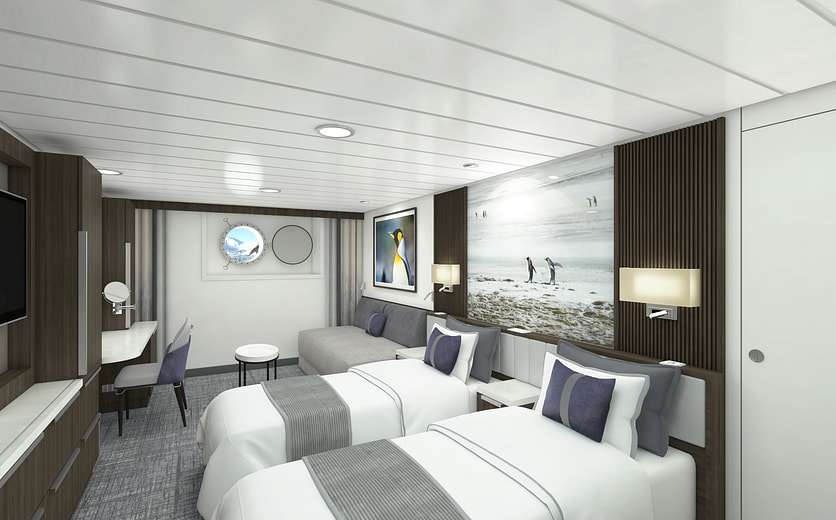
Cabin Inclusion
Amenities
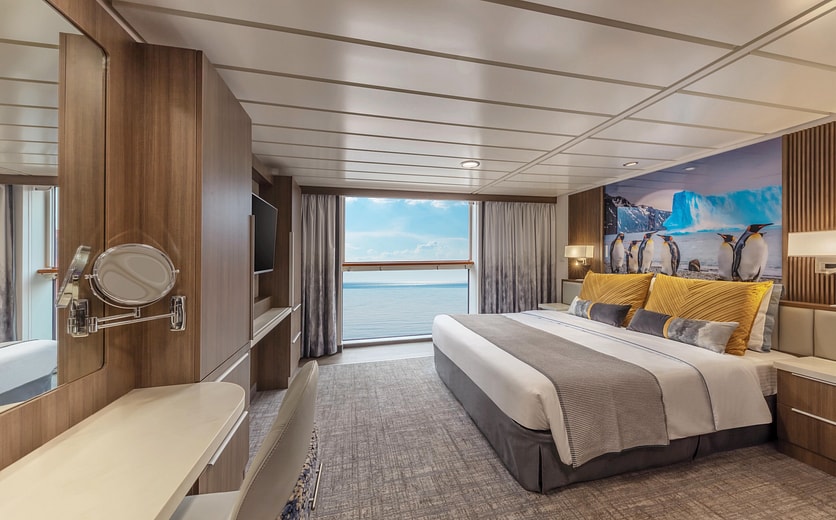
With a bit more room to stretch the legs, the Aurora Stateroom Superior are perfect for polar adventurers who travel with plenty of gear.
Located on Deck 7, the Staterooms feature french balconies, floor to ceiling windows, en-suite bathrooms and a comfortable desk area.
Cabin Inclusion
Amenities
from £18,192 per person
from £26,778 per person
from £17,719 per person
Cabin Inclusion
Amenities
With a bit more room to stretch the legs, the Aurora Stateroom Superior are perfect for polar adventurers who travel with plenty of gear.
Located on Deck 7, the Staterooms feature french balconies, floor to ceiling windows, en-suite bathrooms and a comfortable desk area.
Cabin Inclusion
Amenities
from £18,192 per person
from £26,778 per person





 0203 930 4640