Call
Call Enquire
 Search


Menu

Manage my booking

| Sales | |
| Monday - Friday | 09:00 - 20:00 |
| Saturday | 09:00 - 16:00 |
| Sunday | 10:00 - 17:00 |
| Bank Holiday | 10:00 - 16:00 |
| Aftersales | |
| Monday - Friday | 09:00 - 17:30 |
| Bank Holiday | 10:00 - 16:00 |

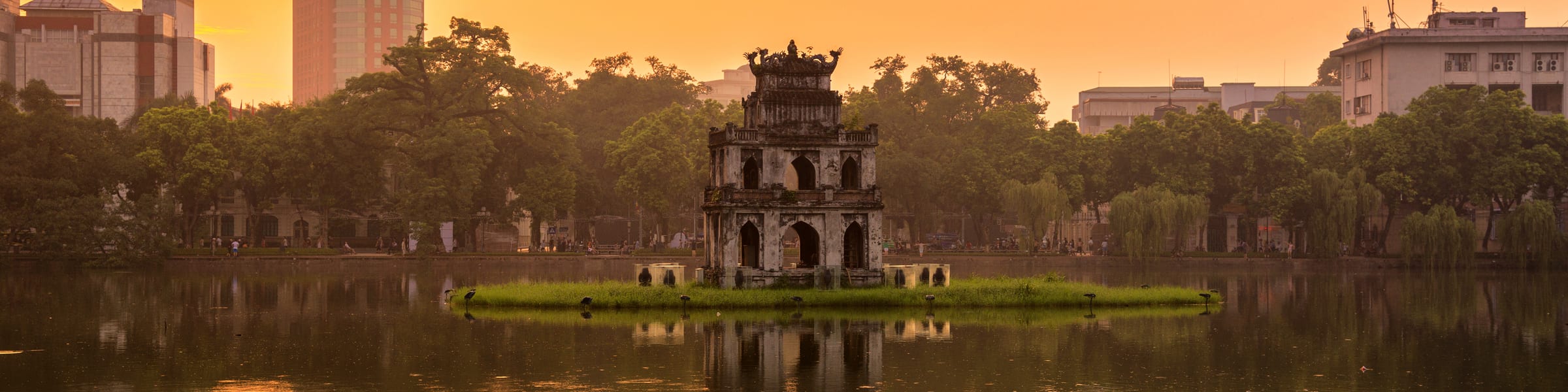

 06 Feb 2028 from £12,085
05 Jan - 23 Jan 2028

Return flights from the UK

18 Nights onboard Scenic Spirit

All Inclusive Drinks*

Overseas Transfers

Butler*

Complimentary Dining*

Gratuities*

Shore Excursions*

Wi-Fi*
Not Available
Not Available
Not Available
from
£12,395
per person
Our experts are here to help
Call us today on 0203 930 4640 or enquire online.




 Save up to 30% on select South East Asia River Cruises
*Select voyages. T's and C's apply
Day 1
Welcome to vibrant Vietnam, a world of colour, culture and extraordinary food. Today is yours to settle in at your leisure, adjusting to the rhythms of this compelling city before your journey begins in earnest.
Check in to your two-night Scenic Special Stay at the iconic Sofitel Legend Metropole, Hanoi’s most celebrated address. This beautifully preserved colonial grand dame has welcomed dignitaries and travellers since 1901, and its refined amenities and attentive service set the tone for the days ahead.
Day 2
A full day to explore this nostalgic city, beginning with your first Scenic Freechoice.
Scenic Freechoice:
Visit the Imperial Citadel of Thang Long and Hoa Lo Prison, a journey through the nation’s past across two very different chapters of history.
Alternatively, spend the morning at Ho Chi Minh’s Mausoleum and the Temple of Literature, founded in 1070, then discover the charm of the Old Quarter over a celebrated egg coffee.
Those wanting a deeper cultural immersion can head to the ancient village of Bat Trang, a community devoted to traditional porcelain and pottery, where a local elder shares the spiritual beliefs of his community before a hands-on lunch of Bánh Cuon rice pancakes.
Scenic Enrich
This evening, a green electric car winds through the Old Quarter to your Scenic Enrich: a VIP performance of Hanoi’s world-famous water puppet theatre, with a special backstage pass to follow.
Day 3
After breakfast and checkout, the journey heads northeast through the fertile farmlands of the Red River Delta toward Halong Bay. Board the luxury Bhaya Soul for a two-night cruise among the iconic limestone karsts of this World Heritage-listed seascape, reaching areas of the bay that remain well beyond the reach of day cruises.
Day 4
A Tai Chi lesson on the Sun Deck opens the morning as the ship sails deeper into the national park. Take to a kayak and paddle through a limestone cave system before a bike ride on Cat Ba Island, a landscape of dense jungle and quiet shoreline largely untouched by development.
In the afternoon, gather on deck for an exclusive Scenic Sundowners wine tasting at anchor, set against the silhouette of the karst islands at sunset. After dinner, round out the evening with the local tradition of squid fishing from the deck.
Day 5
A leisurely morning cruise back to harbour before returning to Hanoi and a second night at the Sofitel Legend Metropole. Take part in a fascinating historical bunker tour beneath the hotel, a rarely seen chapter in the story of a city with more than 1,000 years of history.
Scenic Freechoice Dining: This evening, Scenic Freechoice dining offers a French-inspired dinner at the Metropole’s own Angelina Restaurant, a home-cooked meal shared with a local Hanoian family, or a Vespa foodie tour through the lantern-lit streets of the Old Quarter with complimentary drinks throughout.
A visit to the north is not complete without a trip to Halong Bay, where placid waters give way to more than 3,000 limestone karsts and wind-sculpted limestone formations that jut from foggy lagoons. Dotting the bay are tiny islands bordered by white sandy coves and hidden caves, adding to the majestic landscape of this UNESCO World Heritage Site. Adding to this naturalist’s dream is the biodiversity of islets, grottos, and Cat Ba Island National Park. The bay, however, shows tourism’s impact: the clearing of mangrove forests to make way for jetties and piers, marine life threatened by game fishing, and garbage from passenger boats and fishing villages washed up on the shores.Beyond its geological uniqueness are activities like hiking, kayaking, rock climbing, or exploring one of the many floating villages where fishermen bring in their daily catch. The downside to all this allure is the large number of unlicensed boats it draws to the bay each day.Boat trips out onto the bay are the main tourism stock in trade farther north, but a more multifaceted side of the area can be experienced at Cat Ba Island. The largest island in Halong Bay, Cat Ba is very much its own entity. Its national park offers incredible biodiversity, with more than a thousand species of plants having been recorded here. Animal life is slightly thinner on the ground, but alert visitors may spy inhabitants such as the endangered golden-headed langur, wild boar, deer, civets, and several species of squirrel. Trekking through the wilderness is a highlight with a number of fascinating trails to follow.Cat Ba Island has also become a firm favorite with the adventure sports set. Indeed, along with Railay Beach in Thailand, it is recognized as one of the top spots in the region for rock climbing. Other outdoor pursuits include sailing and kayaking around the karsts. Although Halong Bay has arguably been tainted by over-exposure, Bai Tu Long Bay farther east toward China, retains all the majesty of Vietnam’s premier bucket-list natural attraction but sees a fraction of the traffic of its immediate neighbor to the west. Here, visitors will find islands of substantial size with deserted beaches and untamed jungle. Halong Bay's 3,000 islands of dolomite and limestone cover a 1,500-square-km (580-square-mile) area, extending across the Gulf of Tonkin nearly to the Chinese border. According to legend, this breathtaking land- and seascape was formed by a giant dragon that came barreling out of the mountains toward the ocean—hence the name (Halong translates into "descent of the dragon"). Geologists are more likely to attribute the formations to sedimentary limestone that formed here between 300 and 500 million years ago, in the Paleozoic Era. Over millions of years water receded and exposed the limestone to wind, rain, and tidal erosion.Today the limestone formations are exposed to hordes of tourists—but don't let that discourage you. Hundreds of fishing trawlers and tour boats share space on these crystal waters, yet there seems to be room for everyone. Most people use the main population center, Halong City, as a base from which to venture into the bay. Although it's now officially one municipality, Halong City was, until 1996, two separate towns: Bai Chay is now Halong City West, where Halong Road winds its way around the coast and past the lifeless central beach; Hon Gai is the grimier Halong City East, where a coal transportation depot dominates the center of town and covers nearby roads and buildings with a sooty film. Locals still refer to the towns by their old names, but they are now inexorably lassoed together by a bridge. Boat trips through Halong Bay are the main attraction. Little of the majesty of this region can be found in the city, so head out onto the water and start exploring. Countless 10- and 30-foot fishing boats have been converted into Halong Bay's formidable tourist-boat fleet. Hotels or travel agencies in Halong City or Hanoi can arrange boat trips for you (often they are part of organized tours from Hanoi). It is still possible to go down to the wharf and bargain yourself onto a boat for the day, but you are likely to be charged (sometimes significantly) more than you would pay for a prebooked tour, so this is not advised. Self-sufficient travelers have fallen victim to the old bait-and-switch: they've arranged a next-day boat tour with local fishermen, only to be told in no uncertain terms the following morning that they could not board their chosen boat, but they could take a different one for quite a bit more money. You may have no choice in the end. Usually travel agencies, however, have their tried-and-true favorites.
Day 6
Fly south to Ho Chi Minh City. The Caravelle Hotel Saigon in the heart of District One is home for two nights.
The evening is best spent on foot – Notre Dame Cathedral, the ornate Central Post Office and the Opera House are all within easy reach, and the city comes fully alive after dark.
Day 7
The morning is spent at the Cu Chi Tunnels, where more than 250 kilometres of underground passages dug by hand during the war reveal themselves with staggering ingenuity. Return to the city for a Pho lunch, with the afternoon at leisure.
Scenic Freechoice Dining:
This evening, Scenic Freechoice dining offers a Vespa night tour stopping at the city’s finest street food haunts with complimentary drinks; a refined dinner at Mandarine Restaurant styled on the imperial courts of Hue; a table at Noir Dining in the Dark, dedicated to supporting the visually impaired community; a vintage jeep street food experience; or Buffet 19 at the hotel.
Romantically referred to by the French as the Pearl of the Orient, Ho Chi Minh City today is a super-charged city of sensory overload. Motorbikes zoom day and night along the wide boulevards, through the narrow back alleys and past vendors pushing handcarts hawking goods of all descriptions. Still called Saigon by most residents, this is Vietnam's largest city and the engine driving the country's current economic resurgence, but despite its frenetic pace, it's a friendlier place than Hanoi and locals will tell you the food—simple, tasty, and incorporating many fresh herbs—is infinitely better than in the capital.This is a city full of surprises. The madness of the city's traffic—witness the oddball things that are transported on the back of motorcycles—is countered by tranquil pagodas, peaceful parks, quirky coffee shops, and whole neighborhoods hidden down tiny alleyways, although some of these quiet spots can be difficult to track down. Life in Ho Chi Minh City is lived in public: on the back of motorcycles, on the sidewalks, and in the parks. Even when its residents are at home, they're still on display. With many living rooms opening onto the street, grandmothers napping, babies being rocked, and food being prepared, are all in full view of passersby.Icons of the past endure in the midst of the city’s headlong rush into capitalism. The Hotel Continental, immortalized in Graham Greene's The Quiet American, continues to stand on the corner of old Indochina's most famous thoroughfare, the rue Catinat, known to American G.I.s during the Vietnam War as Tu Do (Freedom) Street and renamed Dong Khoi (Uprising) Street by the Communists. The city still has its ornate opera house and its old French city hall, the Hôtel de Ville. The broad colonial boulevards leading to the Saigon River and the gracious stucco villas are other remnants of the French colonial presence. Grisly reminders of the more recent past can be seen at the city's war-related museums. Residents, however, prefer to look forward rather than back and are often perplexed by tourists' fascination with a war that ended 40 years ago.The Chinese influence on the country is still very much in evidence in the Cholon district, the city's Chinatown, but the modern office towers and international hotels that mark the skyline symbolize Vietnam's fixation on the future.
Day 8
After breakfast, visit the War Museum and the Reunification Palace, whose gates were famously breached by tanks in April 1975.
Then transfer to Saigon Port where the Scenic Spirit awaits. Lunch is on board as the ship departs down the Saigon River, the city giving way to the delta. By evening, anchored at the entrance to the Cho Gao Canal, the quiet rhythm of the Mekong has already begun to settle. Your dedicated personal butler is on hand at any hour.
Romantically referred to by the French as the Pearl of the Orient, Ho Chi Minh City today is a super-charged city of sensory overload. Motorbikes zoom day and night along the wide boulevards, through the narrow back alleys and past vendors pushing handcarts hawking goods of all descriptions. Still called Saigon by most residents, this is Vietnam's largest city and the engine driving the country's current economic resurgence, but despite its frenetic pace, it's a friendlier place than Hanoi and locals will tell you the food—simple, tasty, and incorporating many fresh herbs—is infinitely better than in the capital.This is a city full of surprises. The madness of the city's traffic—witness the oddball things that are transported on the back of motorcycles—is countered by tranquil pagodas, peaceful parks, quirky coffee shops, and whole neighborhoods hidden down tiny alleyways, although some of these quiet spots can be difficult to track down. Life in Ho Chi Minh City is lived in public: on the back of motorcycles, on the sidewalks, and in the parks. Even when its residents are at home, they're still on display. With many living rooms opening onto the street, grandmothers napping, babies being rocked, and food being prepared, are all in full view of passersby.Icons of the past endure in the midst of the city’s headlong rush into capitalism. The Hotel Continental, immortalized in Graham Greene's The Quiet American, continues to stand on the corner of old Indochina's most famous thoroughfare, the rue Catinat, known to American G.I.s during the Vietnam War as Tu Do (Freedom) Street and renamed Dong Khoi (Uprising) Street by the Communists. The city still has its ornate opera house and its old French city hall, the Hôtel de Ville. The broad colonial boulevards leading to the Saigon River and the gracious stucco villas are other remnants of the French colonial presence. Grisly reminders of the more recent past can be seen at the city's war-related museums. Residents, however, prefer to look forward rather than back and are often perplexed by tourists' fascination with a war that ended 40 years ago.The Chinese influence on the country is still very much in evidence in the Cholon district, the city's Chinatown, but the modern office towers and international hotels that mark the skyline symbolize Vietnam's fixation on the future.
Day 9
The day opens with a champagne breakfast as the Scenic Spirit transits the Cho Gao Canal, one of the Mekong Delta’s great arterial waterways, with upwards of 1,800 vessels navigating it every day.
Scenic Freechoice:
Once on the Mekong itself, Scenic Freechoice in Cai Be: a sampan journey to Tan Phong Island through fruit orchards and cottage industries producing rice paper and coconut sweets; afternoon tea at the colonial Le Longanier restaurant with live traditional music; or a cocktail and mocktail masterclass on board using fresh local ingredients.
Day 10
A sampan into Sa Dec’s lively wet market reveals two hours of local trade — live fish, frogs, produce and the grand home of Mr Huynh Thuy Le, whose love affair with a young French woman inspired Marguerite Duras’ celebrated novel L’Amant.
Return to the Scenic Spirit for an afternoon at leisure as the ship sails the six-hour journey toward Tan Chau. After anchoring before dinner, a festive themed evening on the Sun Deck with a lion dance performed by local artists brings the day to a memorable close.
Day 11
Start the morning with a yoga class, the gym or the sauna before heading ashore for Scenic Freechoice around Tan Chau.
Scenic Freechoice:
A sampan through the 850-hectare Tra Su Bird Sanctuary drifts through protected wetland home to more than 100 species of waterbirds. On Evergreen Island, join local farmers for a morning of discovery before a xe loi rickshaw ride to the Cao Dai temple, a remarkable fusion of Buddhist, Christian, Taoist and Confucian belief. A third option takes a speedboat to Chau Doc and the elaborate Tay An Temple at the foot of Sam Mountain.
After lunch on board, the Scenic Spirit clears the Vietnamese-Cambodian border and sails onward overnight, Vietnam slipping quietly behind.
Day 12
The Cambodian capital comes into view as the Scenic Spirit approaches in the early morning.
Scenic Freechoice:
After breakfast, Scenic Freechoice offers a sombre but essential visit to the Killing Fields and Tuol Sleng Genocide Museum; a hands-on Cambodian cooking class starting at the local market; or a remork tour through the French colonial quarter and the Art Deco Central Market.
Return to the Scenic Spirit for lunch, with the afternoon at leisure. This evening, a city lights tour leads to an exclusive Scenic Sundowners experience at a local rum distillery, with a private tasting.
Phnom Penh, Cambodia’s busy capital, sits at the junction of the Mekong and Tonlé Sap rivers. It was a hub for both the Khmer Empire and French colonialists. On its walkable riverfront, lined with parks, restaurants and bars, are the ornate Royal Palace, Silver Pagoda and the National Museum, displaying artifacts from around the country. At the city’s heart is the massive, art deco Central Market.
Day 13
A morning drive to Oudong, Cambodia’s ancient capital, to experience the rhythms of a working monastery — resident monks, peaceful courtyards and, if timing allows, a traditional festival. Back in Phnom Penh, the Royal Palace and Silver Pagoda command the afternoon, before a cultural performance by the Cambodian Student and Children’s Organisation on board and a Sundowner cocktail reception on the Sun Deck as the Scenic Spirit sets sail toward Silk Island.
Phnom Penh, Cambodia’s busy capital, sits at the junction of the Mekong and Tonlé Sap rivers. It was a hub for both the Khmer Empire and French colonialists. On its walkable riverfront, lined with parks, restaurants and bars, are the ornate Royal Palace, Silver Pagoda and the National Museum, displaying artifacts from around the country. At the city’s heart is the massive, art deco Central Market.
Day 14
A tuk tuk ride to the silk weaving farm on Oknha Tey reveals every stage of a craft that has defined this community for generations. After lunch, the ship calls at Angkor Ban, a small riverside settlement of century-old wooden houses that somehow survived the Khmer Rouge intact. On board as the ship sails toward Kampong Cham, guests are invited to learn the many ways of wearing a krama, the traditional Cambodian scarf.
Day 15
Step ashore at Wat Hanchey, an ancient hilltop pagoda offering some of the finest elevated river views of the entire journey.
Scenic Enrich
Receive a traditional blessing from a resident monk, learn to pray within the pagoda, and participate in the alms ceremony – a contribution to the daily sustenance of the monks and a quietly profound experience.
Scenic Freechoice:
The afternoon brings Scenic Freechoice around Kampong Cham: the mountaintop pagoda of Phnom Pros with its blend of legend and difficult history; the layered temples of Wat Nokor Bachey; a drive through colonial shop houses, a French-established rubber plantation and a betel nut village; or a crossing to the remote Kho Penh Village on Pen Island by bamboo bridge. The farewell dinner with the Scenic Spirit crew closes the evening.
Day 16
After disembarkation this morning your journey moves to Siem Reap via Kampong Thom and the ancient Angkorian bridge at Kampong Kdei, with a stop at a traditional stone cutters’ village along the way. Check in to the Raffles Grand Hotel d’Angkor for three nights, a legendary colonial address with French-inspired architecture and service that feels entirely of another era.
This evening, VIP seats await at the Phare Circus, where Cambodian performers weave storytelling, music, dance and acrobatics into a show of genuine artistry.
Day 17
The second day of your Siem Reap exploration starts with a delicious champagne buffet breakfast at the hotel.
Scenic Freechoice:
Your Scenic Freechoice takes the morning in any direction: the rose-pink sandstone of Banteay Srei temple and the Landmine Museum; artisan workshops at Senteurs d’Angkor; a village walk through Ta Brak; life on the Tonle Sap floating villages (July to February); a behind-the-scenes tour of the Angkor Wildlife Aquarium; or a tethered balloon flight over the temple complex with Angkor Wat visible below.
The afternoon belongs to Angkor Wat itself, best seen as the afternoon light plays across its galleries and towers. After the day of adventure, tonight is free to shop away at the night markets of Siem Reap or venture to Pub Street, both in walking distance or a short tuk tuk ride from your hotel.
Day 18
Scenic Enrich
An early departure brings its own reward as the sunrise shifts across Angkor Wat’s moat, followed by a champagne breakfast prepared by a Scenic-supported NGO bakery school near the temples.
The morning continues through the jungle-enveloped Ta Prohm and the many-faced Bayon at Angkor Thom.
Scenic Enrich
The afternoon is free before the final Scenic Enrich brings the Siem Reap chapter to a close: a private gala dinner within the grounds of the 10th-century Prasat Kravan temple, Apsara dancers performing by candlelight among the ruins with complimentary drinks throughout.
Day 19
It is time to bid farewell to your fellow travellers and Scenic team as you get ready to depart Cambodia for your homeland or extended travels. Transfer to the airport and leave with a full camera and stunning memories to treasure.
Rivers and waterways are subject to variations in water levels. While every effort is made to adhere to the planned itinerary, changes in river conditions, ad hoc local government regulations or local festivities may require journey modifications. These will be made based on the advice of local authorities or for safety reasons. Hotels are indicative and are subject to change.
Please note: Preview itinerary subject to change.

from £12,395 per person
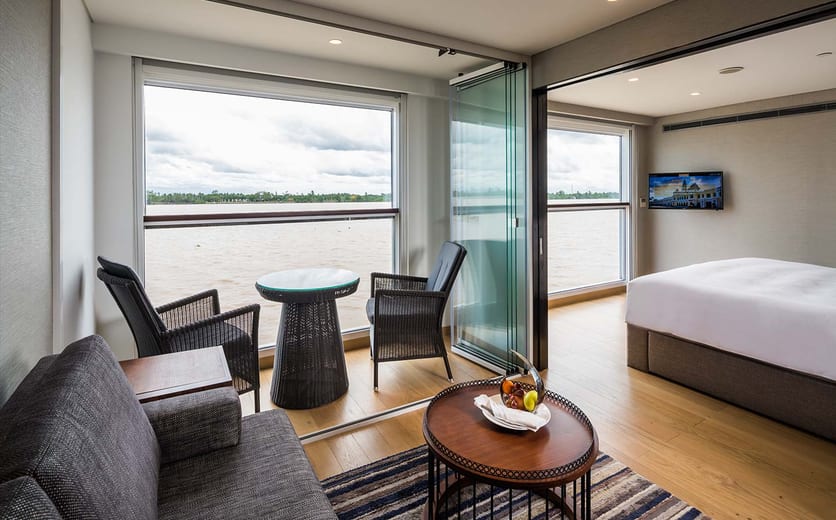
Our Deluxe Suites are the most spacious lead-in suites on the Mekong and Tonle Rivers, featuring a separate bedroom and lounge area, offering modern and elegant furnishings, HDTV and individual room climate control, each with its own control panel.
Our expansive Grand Deluxe Suites, at a generous 40 sqm, feature stylish lounge areas, spacious bathrooms, queen-size Scenic Slumber beds, a full walk through wardrobe, HDTV and individual room climate control, each with its own control panel.
As well as all the inclusions entitled to Diamond Deck guests of complimentary pressing of two pieces of clothing per day and breakfast in their suite, you will have fresh fruit delivered to your suite in the afternoon, canapes before dinner and petit fours for after. Also enjoy Club floor privileges at Caravelle Saigon and historic Landmark rooms at Raffles Grand hotel d’Angkor in Siem Reap.
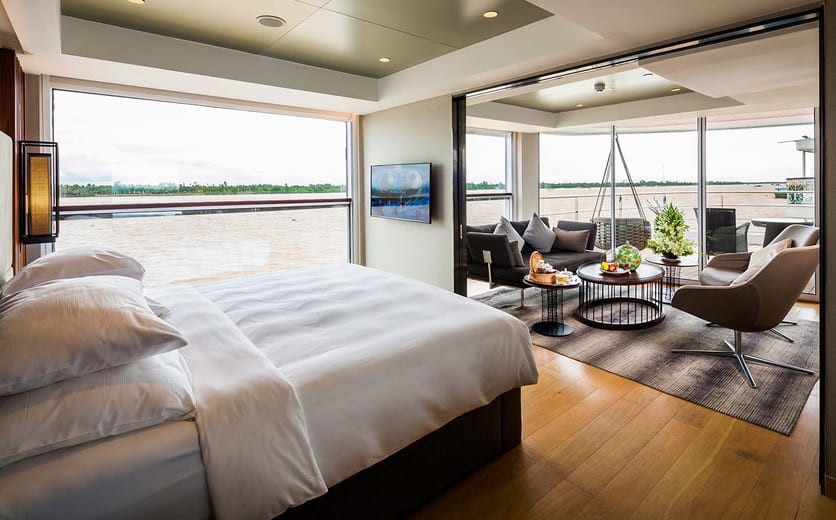
Our expansive Royal Panorama Suites, at a generous 861 sqft, redefine the industry standard. The suites feature elegant lounge areas, oversized bathrooms, with a bath and a private terrace featuring an outdoor Jacuzzi and day bed. You will be welcomed on board with a bottle of French champagne and you won’t even have to unpack or run yourself a scented bath, your butler will do it for you. Enjoy unlimited complimentary laundry services and a US$100 per couple on board Wellness Centre credit. Also enjoy Club floor privileges at Caravelle Saigon and historic Landmark rooms at Raffles Grand hotel d’Angkor in Siem Reap.
from £12,395 per person
Our Deluxe Suites are the most spacious lead-in suites on the Mekong and Tonle Rivers, featuring a separate bedroom and lounge area, offering modern and elegant furnishings, HDTV and individual room climate control, each with its own control panel.
Our expansive Grand Deluxe Suites, at a generous 40 sqm, feature stylish lounge areas, spacious bathrooms, queen-size Scenic Slumber beds, a full walk through wardrobe, HDTV and individual room climate control, each with its own control panel.
As well as all the inclusions entitled to Diamond Deck guests of complimentary pressing of two pieces of clothing per day and breakfast in their suite, you will have fresh fruit delivered to your suite in the afternoon, canapes before dinner and petit fours for after. Also enjoy Club floor privileges at Caravelle Saigon and historic Landmark rooms at Raffles Grand hotel d’Angkor in Siem Reap.
Our expansive Royal Panorama Suites, at a generous 861 sqft, redefine the industry standard. The suites feature elegant lounge areas, oversized bathrooms, with a bath and a private terrace featuring an outdoor Jacuzzi and day bed. You will be welcomed on board with a bottle of French champagne and you won’t even have to unpack or run yourself a scented bath, your butler will do it for you. Enjoy unlimited complimentary laundry services and a US$100 per couple on board Wellness Centre credit. Also enjoy Club floor privileges at Caravelle Saigon and historic Landmark rooms at Raffles Grand hotel d’Angkor in Siem Reap.





 0203 930 4640