Call
 Enquire
 Search



Menu

Manage my booking

| Sales | |
| Monday - Friday | 09:00 - 19:00 |
| Saturday | 09:00 - 16:00 |
| Sunday | 10:00 - 17:00 |
| Bank Holiday | 10:00 - 16:00 |
| Aftersales | |
| Monday - Friday | 09:00 - 17:30 |
| Bank Holiday | 10:00 - 16:00 |



26 Oct - 12 Nov 2027

17 Nights onboard MS Fridtjof Nansen

All Inclusive Drinks*
Expedition Jacket (on polar itineraries only)*

Water bottle*

Trekking Equipment*

Digital photo album*

Complimentary Dining*

Gratuities*

Shore Excursions*

Wi-Fi*
Not Available
from
£9,277
per person
from
£11,262
per person
from
£13,679
per person
Our experts are here to help
Call us today on 0203 930 4640 or enquire online.




 Save up to 25% with our 130th Anniversary Offers*Free Suite Upgrade*Solo cruise deals*
*Select voyages. T's and C's apply
Day 1
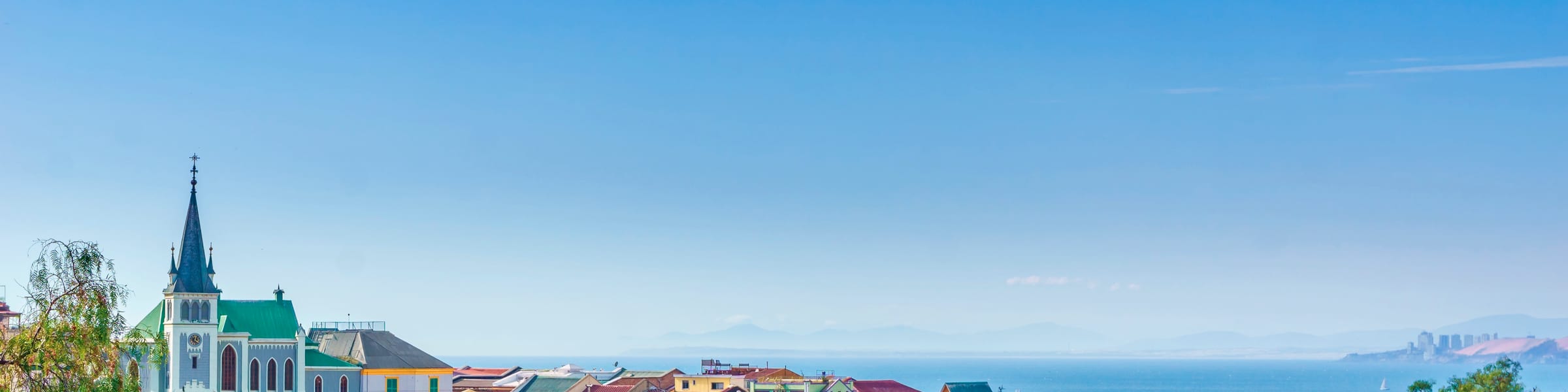
Your Antarctica and Patagonia expedition cruise begins in vibrant Valparaíso. Known as the 'Jewel of the Pacific', it’s built on steep hillsides overlooking the ocean and you'll love discovering this friendly UNESCO-listed city.
Filled with enticing scents and sounds, it’s an exhilarating maze of alleyways, colourful houses and mercados packed with local produce – take it all in on a funicular ride up to Cerro Alegre and Concepción.
You can explore more of the region on one of our optional Pre-Programmes.
Valparaíso's dramatic topography—45 cerros, or hills, overlooking the ocean—requires the use of winding pathways and wooden ascensores (funiculars) to get up many of the grades. The slopes are covered by candy-color houses—there are almost no apartments in the city—most of which have exteriors of corrugated metal peeled from shipping containers decades ago. Valparaíso has served as Santiago's port for centuries. Before the Panama Canal opened, Valparaíso was the busiest port in South America. Harsh realities—changing trade routes, industrial decline—have diminished its importance, but it remains Chile's principal port. Most shops, banks, restaurants, bars, and other businesses cluster along the handful of streets called El Plan (the flat area) that are closest to the shoreline. Porteños (which means "the residents of the port") live in the surrounding hills in an undulating array of colorful abodes. At the top of any of the dozens of stairways, the paseos (promenades) have spectacular views; many are named after prominent Yugoslavian, Basque, and German immigrants. Neighborhoods are named for the hills they cover. With the jumble of power lines overhead and the hundreds of buses that slow down—but never completely stop—to pick up agile riders, it's hard to forget you're in a city. Still, walking is the best way to experience Valparaíso. Be careful where you step, though—locals aren't very conscientious about curbing their dogs.
Day 2
Get into expedition mode
Over the next two days at sea, you'll learn more about the wonders we'll encounter during our trip.
Members of the Expedition Team will be experts in anything from oceanography and geology to ornithology and history. Drop in on their fascinating lectures, as well as hands-on presentations in the Science Center.
Grab your binoculars and scan for rare wandering albatrosses and petrels. Make the most of your onboard facilities, and spoil yourself with a spa treatment in the wellness area, or enjoy the infinity pool, hot tubs, running track, sauna and gym.
Day 3
Day 4
See stilt houses and historic churches
Set among the lush vegetation of Chiloé Island, Castro is Chile’s third oldest city. It’s home to two UNESCO World Heritage Sites, namely Iglesia San Francisco and Iglesia Nuestra Señora de Gracia de Nercón.
From various vantage points you can get great views of the city’s colourful palafitos, which are stilt houses situated along the waterfront. For some culture, head to the Regional Museum and the Museum of Modern Art.
Bring your binoculars as Chiloé is an important habitat for bird species such as Green-backed Firecrowns and Chilean Flamingos, along with penguins, Black-necked Swans, Ringed Kingfishers and Silvery Grebes.
Bright, wooden huts teeter on stilts over Castro's estuary waterfront, inviting you into a patchwork of colour that’s sure to brighten any day. These traditional palafitos give the warmest of welcomes, as you prepare to experience Chile at its most vibrant. Castro has faced something of a tumultuous past, having been hit by a by a succession of earthquakes and fires - the most recent a devastating earthquake in 1960. But this city is incredibly resilient, and today the capital of Chiloe Island makes for a fantastic base for exploring the archipelago that surrounds it.
Day 5
Witness unforgettable seascapes
Your expedition cruise continues south through the waters of Patagonia. The seas here are captivating, with a whole palette of shades of blue, from the brightest aquamarine to the deepest midnight hues.
As we sail, there's a good chance you’ll see whales, seabirds, seals and more. Take in the scenery from the panoramic sauna or on-deck hot tubs and infinity pool, or just enjoy the onboard cuisine, before relaxing in the Explorer Lounge & Bar.
Your Expedition Team will be on hand with fascinating lectures on a range of topics, and our onboard photographer can help with tips on expedition photography.
Day 6
Receive a warm welcome in Caleta Tortel
We continue off the well-trodden path to visit isolated Caleta Tortel. Lying at the mouth of Río Baker, Chile's largest river, this charming village is home to around 500 inhabitants.
Instead of streets, a maze of boardwalks connects the close-knit community, spreading over the water and around the mountain base. If conditions permit, you'll be able to investigate the milky blue waters here by kayak.
While exploring the village, you'll come across locals selling handicrafts and you may even be treated to a performance by folk dancers.
Tortel is a commune located in Southern Patagonia, a spectacular wilderness region of rugged mountains, glaciers, rivers and forests of infinite beauty. The uneven geography of Tortel shapes a unique landscape, characterized by an archipelagic area with numerous islands and channels. Tortel is known as the “footbridge city” for the unique beauty of its wooden walkways that connect the piers and houses of this quaint place through bridges and stairs, built from cypress wood, that run for four and a half miles around the cove and that respect the rich vegetation that grows under them. Even though it is the sixth largest commune in Chile, it has the lowest population of all with roughly 531 people. The history of the town dates back to 1520 when it was inhabited by nomadic Kawesqar, now extinct. Its definitive foundation was in 1955, after numerous attempts to populate the area. In 2001, it was declared by the Chilean government as a Picturesque Zone of National Heritage.
Day 7
Wild Patagonia: Fjords, Culture and Glaciers
We continue our adventure deep into the Chilean fjords with fantastic opportunities for scenic cruising aboard the ship and in our small expedition boats too. Adventure awaits in this wild and stunning landscape!
As we sail through the maze of the Patagonian waterways, depending on tidal conditions, we hope to visit Puerto Edén, an enchanting village only accessible by sea. The 250-strong community here are some of the last remaining members of the Indigenous Kawésqar people, offering a fascinating insight into Patagonian culture.
Continuing further south, we will cruise the majestic fjords, taking in the incredible scenery along the way. Enjoy the fresh sea air as we glide past untouched isles, glaciers and green mountains, looking out for marine wildlife who often swim alongside the ship.
Our exploration continues within Alberto de Agostini National Park, all the way up to glaciers such as Garibaldi or Pia. Here, the Andes tumble into the Pacific and great glaciers calve ice into the beautiful fjords. If conditions allow, we'll reach the glacier at the head of the fjord for some of the most breathtaking glacial scenery.
Day 8
Alberto de Agostini National Park was created in 1965 and takes its name from an Italian explorer, photographer, writer and missionary of the Salesians of Don Bosco order that lived and explored Patagonia as a missionary around 1930. De Agostini was known for his discoveries, photographs and maps of the region. The park is located in the Region of Magallanes and Chilean Antarctica, the southernmost, largest, and second least populated region of Chile. The park covers 5,637 square miles and touches Magallanes, Tierra del Fuego and Antarctica provinces. It is the third largest protected area of the country. The park was declared a World Biosphere Reserve by UNESCO in 2005 and protects many species of animals and sea birds. Its rich fauna includes species like the Andean fox, the South American grey fox (also known as the Patagonian fox), the southern elephant seal, the leopard seal, the Chilean dolphin (also known as the black dolphin or tonina), and the humpback whale.
Day 9
Day 10
Get set for Antarctica
Over the next two days, we'll navigate the legendary Drake Passage towards Antarctica. En route, you'll find out what lies ahead and how to make your visit as safe and as sustainable as possible.
In the Science Centre, the Expedition Team will give lectures about Antarctica’s fauna, history and geology, as well as the impact of climate change and plastic pollution. You can also get involved in our Citizen Science projects.
Day 11
Day 12
Experience Antarctica in all its natural majesty
Nothing prepares you for your first sight of Antarctica’s immense, frozen beauty. Surrounded by looming glaciers, and icebergs the size of floating cathedrals, Antarctica will fill you with wonder. Perhaps the most surprising part of Antarctica is the silence. It's a stillness that's broken every so often by the locals – the wildlife.
Here, nature is king, and we are mere observers. Our experienced Captain will continually monitor conditions to create the best possible itinerary for your adventure. Rest assured, each day will offer something different and thrilling.
You'll join the Expedition Team on landings and ice-cruises and may even get a chance to go kayaking among the icebergs.
Back on board, the Expedition Team will continue their lectures, helping you grow in your insights of the frozen continent. Over five magical days, you'll experience this amazing world in a way that will stay with you for a lifetime.
Day 13
The Antarctic Sound is a stretch of water named after the first ship to have passed through this body of water from the Bransfield Strait to the Weddell Sea in 1902. The Antarctic eventually sank and crew and scientists had to spend quite some time in this area before they could be rescued. Sites that have to do with this story - like Hope Bay or Paulet Island - are sometimes visited. At Paulet, Hope Bay and Brown Bluff Adelie and Gentoo Penguins breed, as do Kelp Gulls and Cape Petrels, Snow Petrels and Skuas. The Sound’s main attractions are the spectacular tabular icebergs that come from the Larsen Ice Shelf further south.
Day 14
The Antarctic Sound is a stretch of water named after the first ship to have passed through this body of water from the Bransfield Strait to the Weddell Sea in 1902. The Antarctic eventually sank and crew and scientists had to spend quite some time in this area before they could be rescued. Sites that have to do with this story - like Hope Bay or Paulet Island - are sometimes visited. At Paulet, Hope Bay and Brown Bluff Adelie and Gentoo Penguins breed, as do Kelp Gulls and Cape Petrels, Snow Petrels and Skuas. The Sound’s main attractions are the spectacular tabular icebergs that come from the Larsen Ice Shelf further south.
Day 15
Some 770 kilometers (478 miles) south of Cape Horn, the South Shetland Islands are usually the first land seen in Antarctica. Separated from the Antarctic Peninsula by the Bransfield Strait, nine major islands make up the group. The region was the first to be exploited by sealers in the early 19th century, and because of its proximity to South America, it still is the most visited by scientists and tourists. Chinstrap, Adelie, Gentoo and Macaroni Penguins all breed here. In addition, because it is the warmest part of the continent, large moss beds as well as orange, black, grey and green lichens grow –even hair grass and pearlwort manage to survive. Leopard seals, Weddell seals, crabeater seals, Southern elephant seals and Antarctic fur seals can be seen in the water and on the beaches.
Day 16
Relax and learn as we cruise to Argentina
After incredible days in Antarctica, we sail back across the Drake Passage towards warmer weather in Argentina, giving you an opportunity to enjoy the onboard facilities.
You can take part in art workshops, or perhaps enjoy a treatment in the spa. Get active in the gym or admire the views from the panoramic sauna. Relax in the outdoor pool or soak in the on-deck hot tubs.
Visit the Science Centre and find out more about the things you've seen or use the time to sort through your photos. Enlist the help of the Expedition Team to help identify species captured in your photos.
Day 17
Day 18
From Ushuaia to Buenos Aires
Your expedition cruise ends in Ushuaia, the main city in Tierra del Fuego, Argentina’s southernmost province. From here, you’ll take a flight back to Buenos Aires, but it doesn’t have to be the end of your adventure.
Why not join one of our optional Post-Programmes before heading home.
At 55 degrees latitude south, Ushuaia (pronounced oo-swy-ah) is closer to the South Pole than to Argentina's northern border with Bolivia. It is the capital and tourism base for Tierra del Fuego, the island at the southernmost tip of Argentina.Although its stark physical beauty is striking, Tierra del Fuego's historical allure is based more on its mythical past than on rugged reality. The island was inhabited for 6,000 years by Yámana, Haush, Selk'nam, and Alakaluf Indians. But in 1902 Argentina, eager to populate Patagonia to bolster its territorial claims, moved to initiate an Ushuaian penal colony, establishing the permanent settlement of its most southern territories and, by implication, everything in between.When the prison closed in 1947, Ushuaia had a population of about 3,000, made up mainly of former inmates and prison staff. Today the Indians of Darwin's "missing link" theory are long gone—wiped out by diseases brought by settlers and by indifference to their plight—and the 60,000 residents of Ushuaia are hitching their star to tourism.The city rightly (if perhaps too loudly) promotes itself as the southernmost city in the world (Puerto Williams, a few miles south on the Chilean side of the Beagle Channel, is a small town). You can make your way to the tourism office to get your clichéd, but oh-so-necessary, "Southernmost City in the World" passport stamp. Ushuaia feels like a frontier boomtown, at heart still a rugged, weather-beaten fishing village, but exhibiting the frayed edges of a city that quadrupled in size in the '70s and '80s and just keeps growing. Unpaved portions of Ruta 3, the last stretch of the Pan-American Highway, which connects Alaska to Tierra del Fuego, are finally being paved. The summer months (December through March) draw more than 120,000 visitors, and dozens of cruise ships. The city is trying to extend those visits with events like March's Marathon at the End of the World and by increasing the gamut of winter activities buoyed by the excellent snow conditions.A terrific trail winds through the town up to the Martial Glacier, where a ski lift can help cut down a steep kilometer of your journey. The chaotic and contradictory urban landscape includes a handful of luxury hotels amid the concrete of public housing projects. Scores of "sled houses" (wooden shacks) sit precariously on upright piers, ready for speedy displacement to a different site. But there are also many small, picturesque homes with tiny, carefully tended gardens. Many of the newer homes are built in a Swiss-chalet style, reinforcing the idea that this is a town into which tourism has breathed new life. At the same time, the weather-worn pastel colors that dominate the town's landscape remind you that Ushuaia was once just a tiny fishing village, snuggled at the end of the Earth.As you stand on the banks of the Canal Beagle (Beagle Channel) near Ushuaia, the spirit of the farthest corner of the world takes hold. What stands out is the light: at sundown the landscape is cast in a subdued, sensual tone; everything feels closer, softer, and more human in dimension despite the vastness of the setting. The snowcapped mountains reflect the setting sun back onto a stream rolling into the channel, as nearby peaks echo their image—on a windless day—in the still waters.Above the city rise the last mountains of the Andean Cordillera, and just south and west of Ushuaia they finally vanish into the often-stormy sea. Snow whitens the peaks well into summer. Nature is the principal attraction here, with trekking, fishing, horseback riding, wildlife spotting, and sailing among the most rewarding activities, especially in the Parque Nacional Tierra del Fuego (Tierra del Fuego National Park).

from £9,277 per person
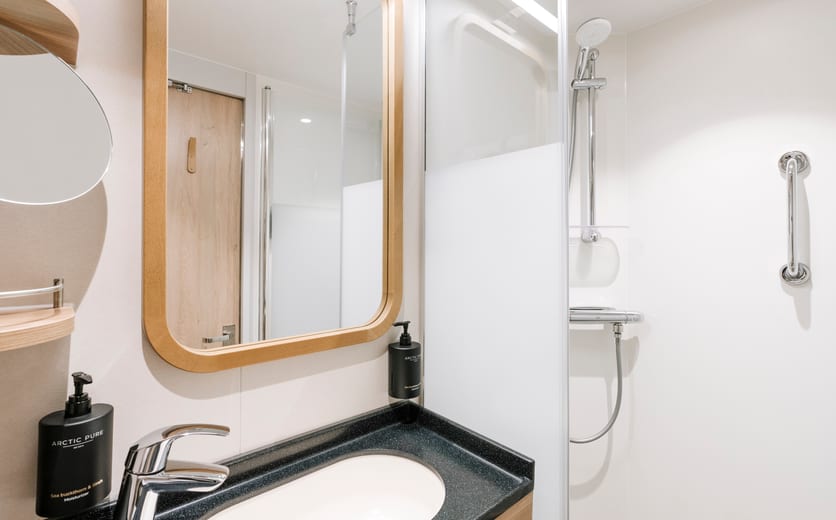
Cabins on lower/middle decks. Double bed, TV.
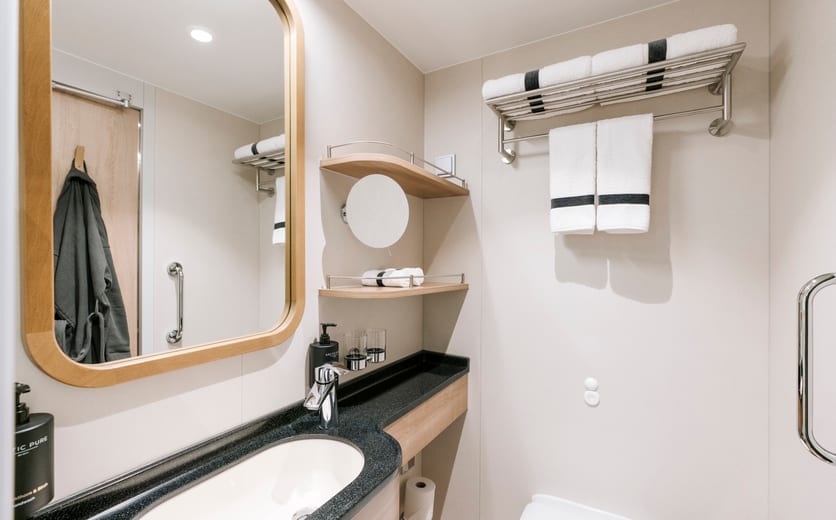
Larger cabins on middle decks. Most 20 square meters, flexible sleeping arrangements, some with sofabed, TV.
Please note: This cabin is automatically made with a double bed. To order twin beds, please notify us at time of booking.
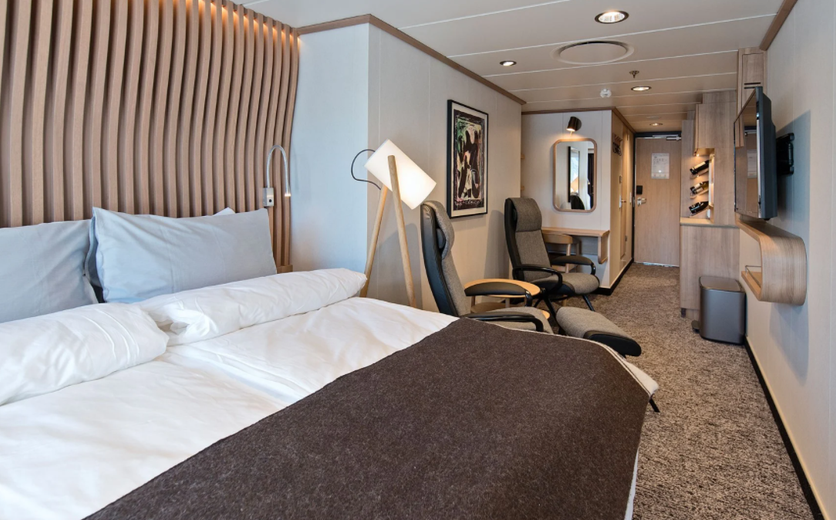
High deck cabins with balcony. Spacious cabins, different sizes, flexible sleeping arrangements with double bed that can be divided into two single beds, some with sofabed, TV, kettle, tea and coffee. With limited view.

Large cabins without balcony. Lower/middle decks, flexible sleeping arrangements, sofabed, TV, kettle, tea and coffee.
Please note: This cabin is automatically made with a double bed. To order twin beds, please notify us at time of booking.
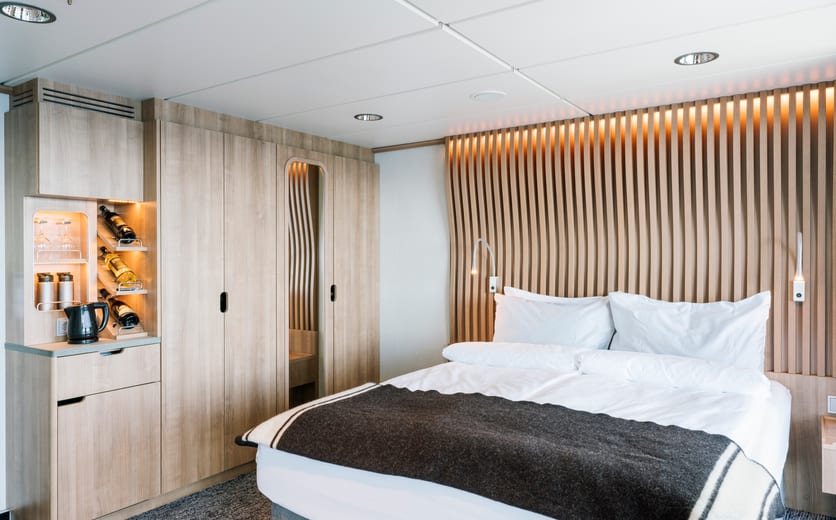
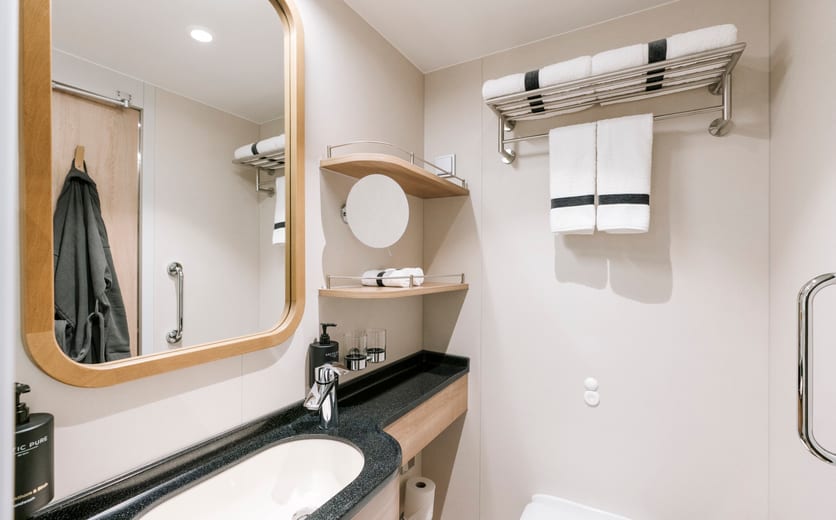
High deck cabins with balcony. Spacious cabins, different sizes, double bed, some with sofabed, TV, kettle, tea and coffee.
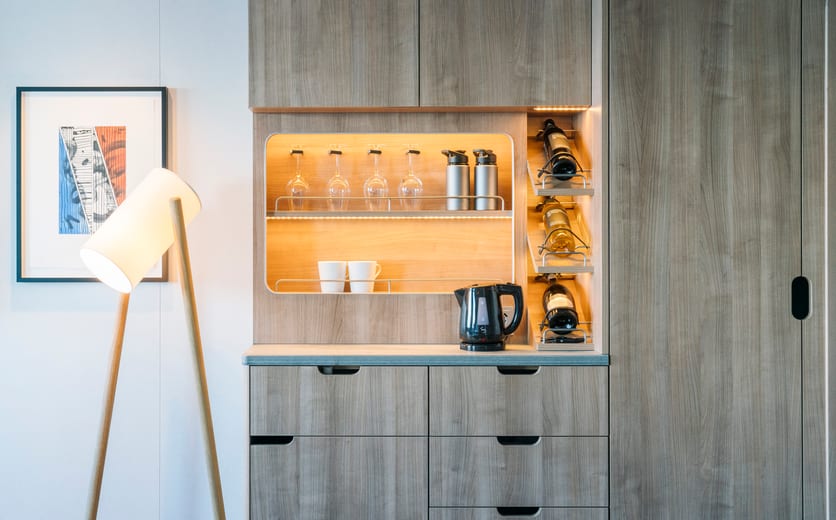
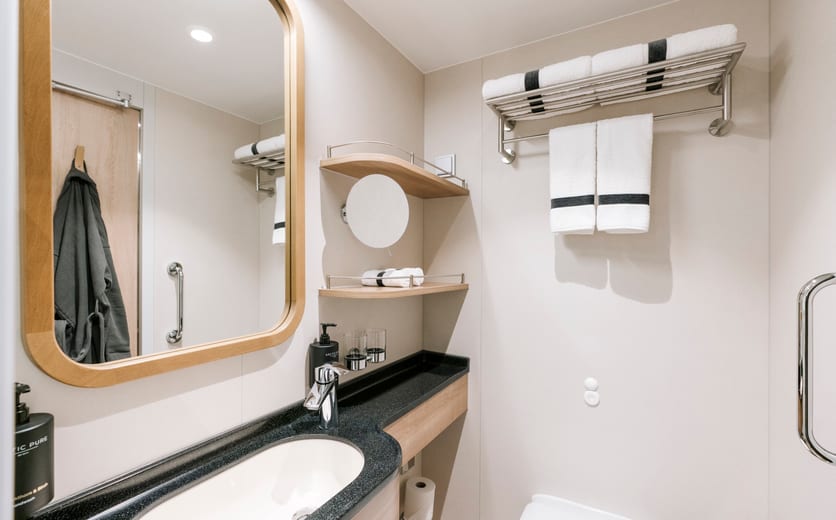
High deck cabins with balcony. Spacious cabins, different sizes, flexible sleeping arrangements, some with sofabed, TV, kettle, tea and coffee.
Please note: This cabin is automatically made with a double bed. To order twin beds, please notify us at time of booking.
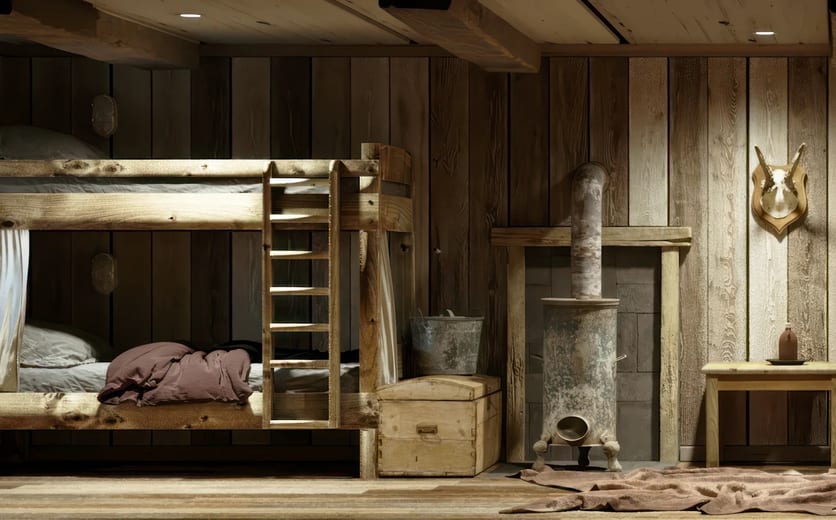
130 years ago, at the dawn of expedition cruising, we set out from Hammerfest to Svalbard on a pioneering voyage – one that sparked the spirit of exploration that still carries us forward today.
To mark this anniversary, we invite guests travelling aboard MS Fridtjof Nansen to step back in time and live as the pioneers did, for one night only.
from £13,679 per person
from £9,277 per person
Cabins on lower/middle decks. Double bed, TV.
Larger cabins on middle decks. Most 20 square meters, flexible sleeping arrangements, some with sofabed, TV.
Please note: This cabin is automatically made with a double bed. To order twin beds, please notify us at time of booking.
High deck cabins with balcony. Spacious cabins, different sizes, flexible sleeping arrangements with double bed that can be divided into two single beds, some with sofabed, TV, kettle, tea and coffee. With limited view.
Large cabins without balcony. Lower/middle decks, flexible sleeping arrangements, sofabed, TV, kettle, tea and coffee.
Please note: This cabin is automatically made with a double bed. To order twin beds, please notify us at time of booking.
High deck cabins with balcony. Spacious cabins, different sizes, double bed, some with sofabed, TV, kettle, tea and coffee.
High deck cabins with balcony. Spacious cabins, different sizes, flexible sleeping arrangements, some with sofabed, TV, kettle, tea and coffee.
Please note: This cabin is automatically made with a double bed. To order twin beds, please notify us at time of booking.
130 years ago, at the dawn of expedition cruising, we set out from Hammerfest to Svalbard on a pioneering voyage – one that sparked the spirit of exploration that still carries us forward today.
To mark this anniversary, we invite guests travelling aboard MS Fridtjof Nansen to step back in time and live as the pioneers did, for one night only.
from £13,679 per person





 0203 930 4640