Call
 Enquire
 Search



Menu

Manage my booking

| Sales | |
| Monday - Friday | 09:00 - 19:00 |
| Saturday | 09:00 - 16:00 |
| Sunday | 10:00 - 17:00 |
| Bank Holiday | 10:00 - 16:00 |
| Aftersales | |
| Monday - Friday | 09:00 - 17:30 |
| Bank Holiday | 10:00 - 16:00 |


 29 Dec 2026 from £8,713

19 Nov - 30 Nov 2026

11 Nights onboard MS Fridtjof Nansen

All Inclusive Drinks*

Expedition Jacket (on polar itineraries only)*

Water bottle*

Trekking Equipment*

Digital photo album*

Complimentary Dining*

Gratuities*

Shore Excursions*

Wi-Fi*
Not Available
from
£9,984
per person
from
£11,140
per person
from
£12,834
per person
Our experts are here to help
Call us today on 0203 930 4640 or enquire online.





 Save up to 25% with our 130th Anniversary Offers*Free Suite Upgrade*Solo cruise deals*
*Select voyages. T's and C's apply
Day 1
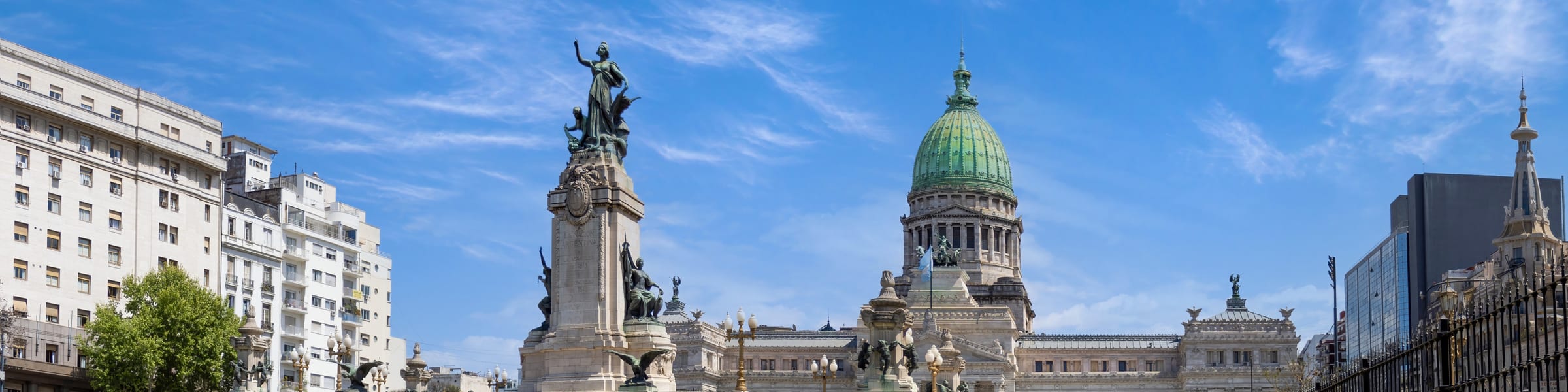
Feel the rhythm of bustling Buenos Aires
An overnight stay in Buenos Aires is the ideal way to start your Antarctic adventure.
Home to a proud and diverse community of porteños, or ‘people of the port’, this city is a sensuous fusion of faded European splendour and Latin American panache.
There are plenty of places to explore, including many parrillas serving authentic Argentine steak. Or maybe you’d like to practise your dance moves in the famous hometown of the tango.
Why not consider arriving a few days early to see all this vibrant city has to offer with our optional Pre-Programme.
Glamorous and gritty, Buenos Aires is two cities in one. What makes Argentina's capital so fascinating is its dual heritage—part European, part Latin American. Plaza de Mayo resembles a grand square in Madrid, and the ornate Teatro Colón would not be out of place in Vienna. But you’ll know you’re in South America by the leather shoes for sale on cobbled streets and impromptu parades of triumphant soccer fans. Limited-production wines, juicy steaks, and ice cream in countless flavors are among the old-world imports the city has perfected.
Day 2
Setting off at the bottom of the world
Your adventure begins with an early morning flight to Ushuaia, where you’ll meet our hybrid-powered expedition ship, specially designed for sustainable cruising in polar waters.
This bustling port is the capital of Argentina’s Tierra del Fuego Province. Set against the magnificent backdrop of the Martial Glacier, Ushuaia vies for the title of the world’s southernmost city.
After a briefing from your Expedition Team, you’ll have time to locate your cabin and explore the comforts and amenities on board.
At 55 degrees latitude south, Ushuaia (pronounced oo-swy-ah) is closer to the South Pole than to Argentina's northern border with Bolivia. It is the capital and tourism base for Tierra del Fuego, the island at the southernmost tip of Argentina.Although its stark physical beauty is striking, Tierra del Fuego's historical allure is based more on its mythical past than on rugged reality. The island was inhabited for 6,000 years by Yámana, Haush, Selk'nam, and Alakaluf Indians. But in 1902 Argentina, eager to populate Patagonia to bolster its territorial claims, moved to initiate an Ushuaian penal colony, establishing the permanent settlement of its most southern territories and, by implication, everything in between.When the prison closed in 1947, Ushuaia had a population of about 3,000, made up mainly of former inmates and prison staff. Today the Indians of Darwin's "missing link" theory are long gone—wiped out by diseases brought by settlers and by indifference to their plight—and the 60,000 residents of Ushuaia are hitching their star to tourism.The city rightly (if perhaps too loudly) promotes itself as the southernmost city in the world (Puerto Williams, a few miles south on the Chilean side of the Beagle Channel, is a small town). You can make your way to the tourism office to get your clichéd, but oh-so-necessary, "Southernmost City in the World" passport stamp. Ushuaia feels like a frontier boomtown, at heart still a rugged, weather-beaten fishing village, but exhibiting the frayed edges of a city that quadrupled in size in the '70s and '80s and just keeps growing. Unpaved portions of Ruta 3, the last stretch of the Pan-American Highway, which connects Alaska to Tierra del Fuego, are finally being paved. The summer months (December through March) draw more than 120,000 visitors, and dozens of cruise ships. The city is trying to extend those visits with events like March's Marathon at the End of the World and by increasing the gamut of winter activities buoyed by the excellent snow conditions.A terrific trail winds through the town up to the Martial Glacier, where a ski lift can help cut down a steep kilometer of your journey. The chaotic and contradictory urban landscape includes a handful of luxury hotels amid the concrete of public housing projects. Scores of "sled houses" (wooden shacks) sit precariously on upright piers, ready for speedy displacement to a different site. But there are also many small, picturesque homes with tiny, carefully tended gardens. Many of the newer homes are built in a Swiss-chalet style, reinforcing the idea that this is a town into which tourism has breathed new life. At the same time, the weather-worn pastel colors that dominate the town's landscape remind you that Ushuaia was once just a tiny fishing village, snuggled at the end of the Earth.As you stand on the banks of the Canal Beagle (Beagle Channel) near Ushuaia, the spirit of the farthest corner of the world takes hold. What stands out is the light: at sundown the landscape is cast in a subdued, sensual tone; everything feels closer, softer, and more human in dimension despite the vastness of the setting. The snowcapped mountains reflect the setting sun back onto a stream rolling into the channel, as nearby peaks echo their image—on a windless day—in the still waters.Above the city rise the last mountains of the Andean Cordillera, and just south and west of Ushuaia they finally vanish into the often-stormy sea. Snow whitens the peaks well into summer. Nature is the principal attraction here, with trekking, fishing, horseback riding, wildlife spotting, and sailing among the most rewarding activities, especially in the Parque Nacional Tierra del Fuego (Tierra del Fuego National Park).
Day 3
Cross the Drake Passage
On the two-day crossing through the Drake Passage, the Expedition Team will equip you with all you need to make the most of your polar expedition.
Visit the onboard Science Centre and find out what lies ahead. Listen to experts talk passionately about Antarctica’s history, the science beneath the ice, and the impact of climate change and plastic pollution. You'll learn how to make your visit as safe and as low-impact as possible, and about the Citizen Science projects you can join.
There's plenty of time to relax, so unwind in the spa and wellness area, enjoy some delicious cuisine and meet fellow travellers in the Explorer Lounge & Bar.
Day 4
Day 5
Experience Antarctica in all its natural majesty
Nothing prepares you for your first sight of Antarctica’s immense, frozen beauty. Surrounded by looming glaciers, and icebergs the size of floating cathedrals, Antarctica will fill you with wonder. Perhaps the most surprising part of Antarctica is the silence. It's a stillness that's broken every so often by the locals – the wildlife.
Whales begin to arrive in greater numbers by December and January. This is also when the first penguin chicks hatch and seeing the clumsy clumps of feathers run around is always a charming sight. February and March offer peak whale-watching opportunities, when large amounts of krill lure them to the area.
Here, nature is king, and we are mere observers. Our experienced Captain will continually monitor conditions to create the best possible itinerary for your adventure. Rest assured, each day will offer something different and thrilling.
You'll join the Expedition Team on landings and ice-cruises via Zodiacs, and may even get a chance to go kayaking among the icebergs.
Back on board, the Expedition Team will continue their lectures, helping you grow in your insights of the frozen continent. Over five magical days, you'll experience this amazing world in a way that will stay with you for a lifetime.
Some 770 kilometers (478 miles) south of Cape Horn, the South Shetland Islands are usually the first land seen in Antarctica. Separated from the Antarctic Peninsula by the Bransfield Strait, nine major islands make up the group. The region was the first to be exploited by sealers in the early 19th century, and because of its proximity to South America, it still is the most visited by scientists and tourists. Chinstrap, Adelie, Gentoo and Macaroni Penguins all breed here. In addition, because it is the warmest part of the continent, large moss beds as well as orange, black, grey and green lichens grow –even hair grass and pearlwort manage to survive. Leopard seals, Weddell seals, crabeater seals, Southern elephant seals and Antarctic fur seals can be seen in the water and on the beaches.
Day 6
Day 7
Day 8
Day 9
Day 10
Heading back north across the Drake Passage
After five incredible days, you’ll have experienced so much in Antarctica. Your head will likely be filled with a swirling kaleidoscope of special memories and impressions. The next couple of days will be a chance to reflect on your adventure to the seventh continent.
As your mind tries to conjure up the magical Antarctic scenery, now could be a good time to sift through your photos and videos to recapture a sense of its magnitude. Why not take the chance to unwind in the sauna, or enjoy a few relaxing spa treatments in the wellness area.
Day 11
Day 12
From Ushuaia to Buenos Aires
Your expedition cruise ends in Ushuaia, the main city in Tierra del Fuego, Argentina’s southernmost province. From here, you’ll take a flight back to Buenos Aires, but it doesn’t have to be the end of your adventure.
Why not join our optional Post-Programme before heading home.
At 55 degrees latitude south, Ushuaia (pronounced oo-swy-ah) is closer to the South Pole than to Argentina's northern border with Bolivia. It is the capital and tourism base for Tierra del Fuego, the island at the southernmost tip of Argentina.Although its stark physical beauty is striking, Tierra del Fuego's historical allure is based more on its mythical past than on rugged reality. The island was inhabited for 6,000 years by Yámana, Haush, Selk'nam, and Alakaluf Indians. But in 1902 Argentina, eager to populate Patagonia to bolster its territorial claims, moved to initiate an Ushuaian penal colony, establishing the permanent settlement of its most southern territories and, by implication, everything in between.When the prison closed in 1947, Ushuaia had a population of about 3,000, made up mainly of former inmates and prison staff. Today the Indians of Darwin's "missing link" theory are long gone—wiped out by diseases brought by settlers and by indifference to their plight—and the 60,000 residents of Ushuaia are hitching their star to tourism.The city rightly (if perhaps too loudly) promotes itself as the southernmost city in the world (Puerto Williams, a few miles south on the Chilean side of the Beagle Channel, is a small town). You can make your way to the tourism office to get your clichéd, but oh-so-necessary, "Southernmost City in the World" passport stamp. Ushuaia feels like a frontier boomtown, at heart still a rugged, weather-beaten fishing village, but exhibiting the frayed edges of a city that quadrupled in size in the '70s and '80s and just keeps growing. Unpaved portions of Ruta 3, the last stretch of the Pan-American Highway, which connects Alaska to Tierra del Fuego, are finally being paved. The summer months (December through March) draw more than 120,000 visitors, and dozens of cruise ships. The city is trying to extend those visits with events like March's Marathon at the End of the World and by increasing the gamut of winter activities buoyed by the excellent snow conditions.A terrific trail winds through the town up to the Martial Glacier, where a ski lift can help cut down a steep kilometer of your journey. The chaotic and contradictory urban landscape includes a handful of luxury hotels amid the concrete of public housing projects. Scores of "sled houses" (wooden shacks) sit precariously on upright piers, ready for speedy displacement to a different site. But there are also many small, picturesque homes with tiny, carefully tended gardens. Many of the newer homes are built in a Swiss-chalet style, reinforcing the idea that this is a town into which tourism has breathed new life. At the same time, the weather-worn pastel colors that dominate the town's landscape remind you that Ushuaia was once just a tiny fishing village, snuggled at the end of the Earth.As you stand on the banks of the Canal Beagle (Beagle Channel) near Ushuaia, the spirit of the farthest corner of the world takes hold. What stands out is the light: at sundown the landscape is cast in a subdued, sensual tone; everything feels closer, softer, and more human in dimension despite the vastness of the setting. The snowcapped mountains reflect the setting sun back onto a stream rolling into the channel, as nearby peaks echo their image—on a windless day—in the still waters.Above the city rise the last mountains of the Andean Cordillera, and just south and west of Ushuaia they finally vanish into the often-stormy sea. Snow whitens the peaks well into summer. Nature is the principal attraction here, with trekking, fishing, horseback riding, wildlife spotting, and sailing among the most rewarding activities, especially in the Parque Nacional Tierra del Fuego (Tierra del Fuego National Park).

from £9,330 per person
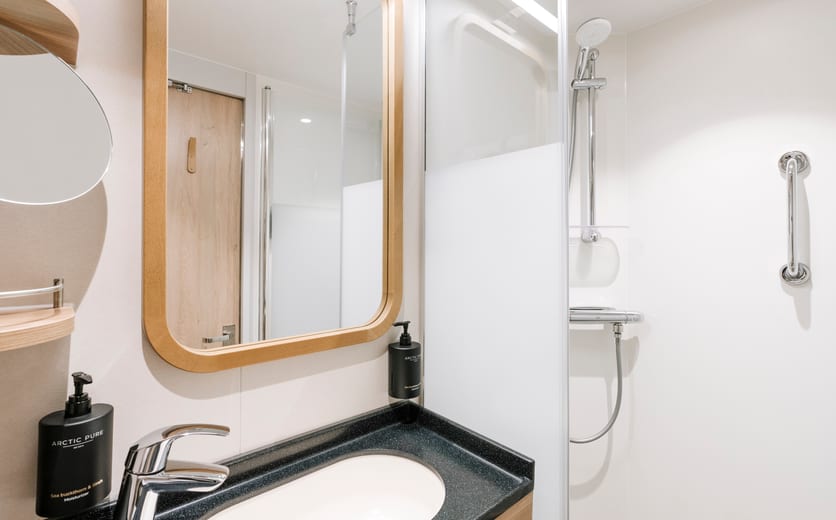
Cabins on lower/middle decks. Double bed, TV.
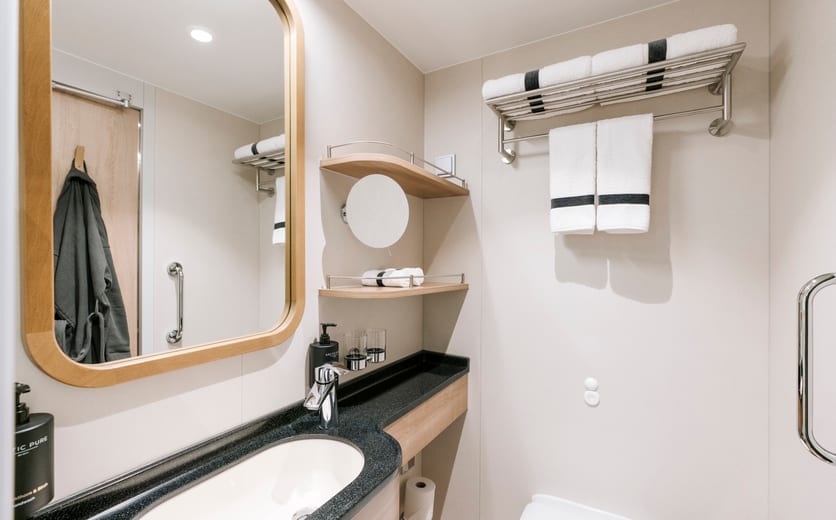
Larger cabins on middle decks. Most 20 square meters, flexible sleeping arrangements, some with sofabed, TV.
Please note: This cabin is automatically made with a double bed. To order twin beds, please notify us at time of booking.
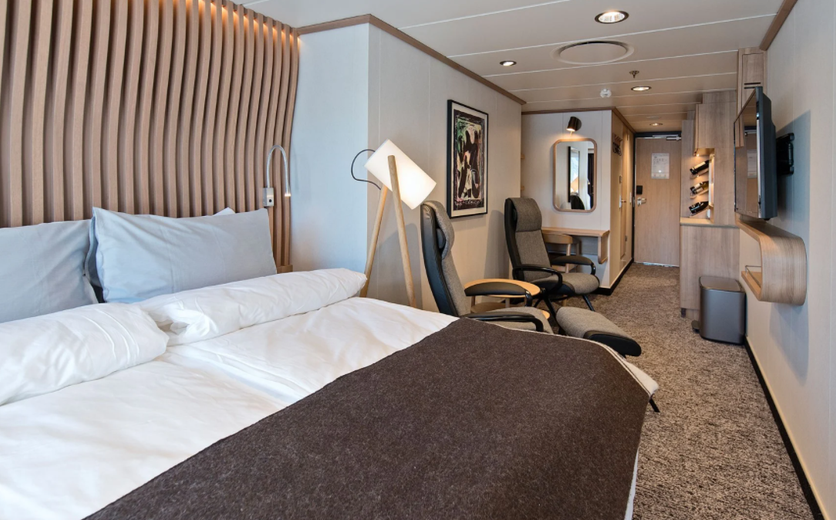
High deck cabins with balcony. Spacious cabins, different sizes, flexible sleeping arrangements with double bed that can be divided into two single beds, some with sofabed, TV, kettle, tea and coffee. With limited view.

Large cabins without balcony. Lower/middle decks, flexible sleeping arrangements, sofabed, TV, kettle, tea and coffee.
Please note: This cabin is automatically made with a double bed. To order twin beds, please notify us at time of booking.
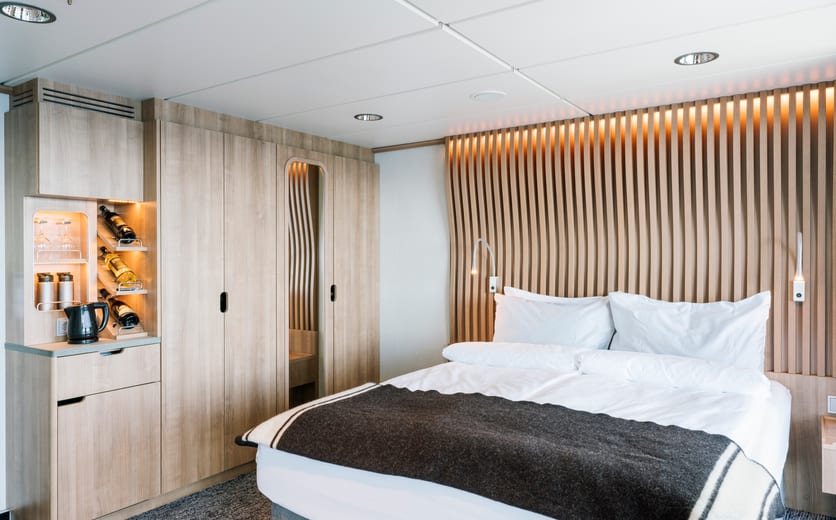
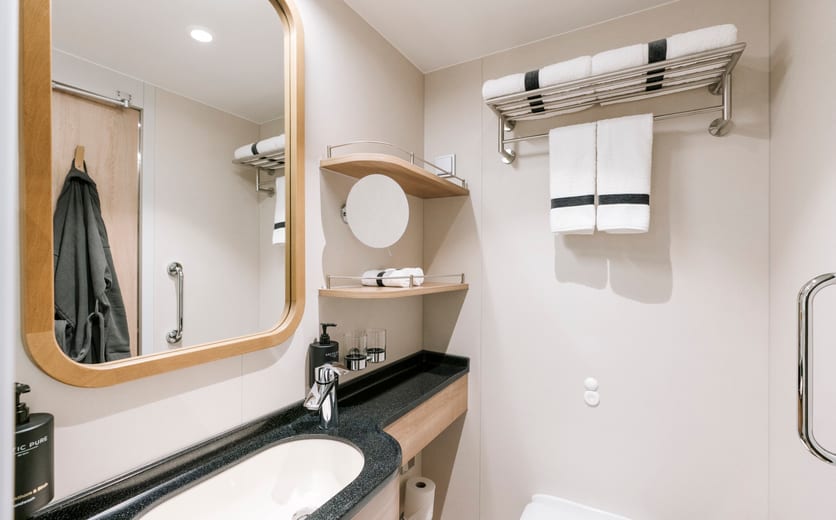
High deck cabins with balcony. Spacious cabins, different sizes, double bed, some with sofabed, TV, kettle, tea and coffee.

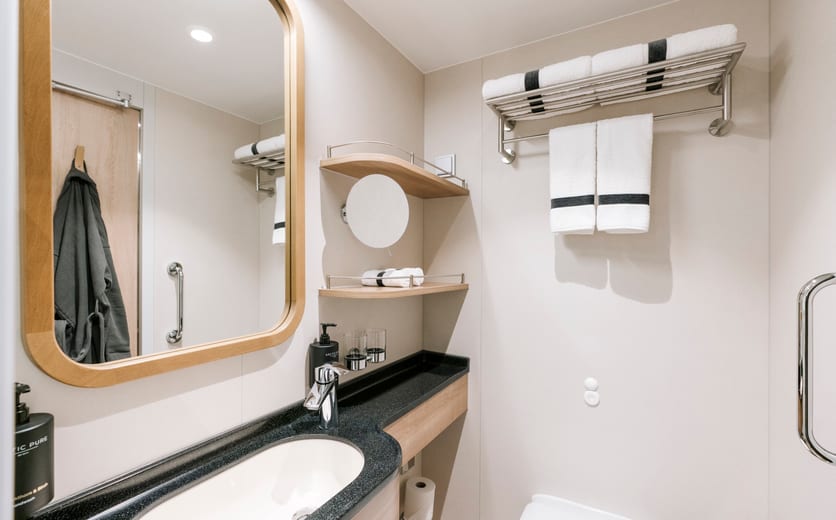
High deck cabins with balcony. Spacious cabins, different sizes, flexible sleeping arrangements, some with sofabed, TV, kettle, tea and coffee.
Please note: This cabin is automatically made with a double bed. To order twin beds, please notify us at time of booking.
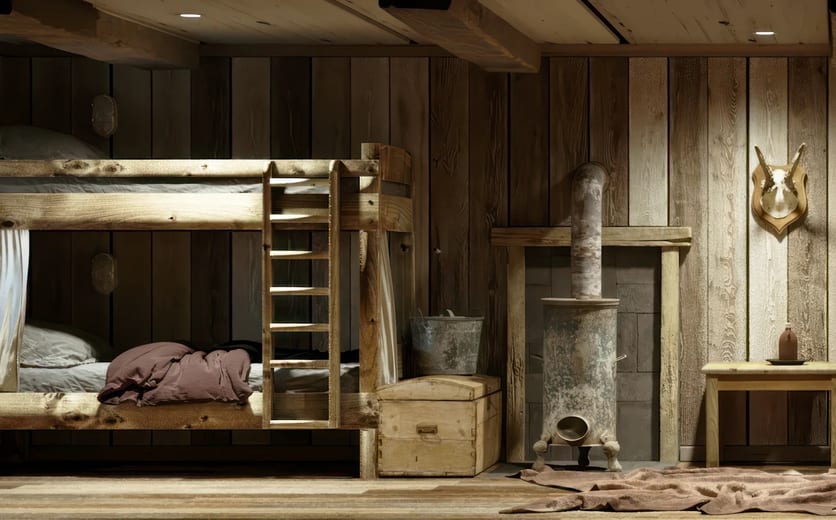
130 years ago, at the dawn of expedition cruising, we set out from Hammerfest to Svalbard on a pioneering voyage – one that sparked the spirit of exploration that still carries us forward today.
To mark this anniversary, we invite guests travelling aboard MS Fridtjof Nansen to step back in time and live as the pioneers did, for one night only.
from £12,633 per person
from £9,330 per person
Cabins on lower/middle decks. Double bed, TV.
Larger cabins on middle decks. Most 20 square meters, flexible sleeping arrangements, some with sofabed, TV.
Please note: This cabin is automatically made with a double bed. To order twin beds, please notify us at time of booking.
High deck cabins with balcony. Spacious cabins, different sizes, flexible sleeping arrangements with double bed that can be divided into two single beds, some with sofabed, TV, kettle, tea and coffee. With limited view.
Large cabins without balcony. Lower/middle decks, flexible sleeping arrangements, sofabed, TV, kettle, tea and coffee.
Please note: This cabin is automatically made with a double bed. To order twin beds, please notify us at time of booking.
High deck cabins with balcony. Spacious cabins, different sizes, double bed, some with sofabed, TV, kettle, tea and coffee.
High deck cabins with balcony. Spacious cabins, different sizes, flexible sleeping arrangements, some with sofabed, TV, kettle, tea and coffee.
Please note: This cabin is automatically made with a double bed. To order twin beds, please notify us at time of booking.
130 years ago, at the dawn of expedition cruising, we set out from Hammerfest to Svalbard on a pioneering voyage – one that sparked the spirit of exploration that still carries us forward today.
To mark this anniversary, we invite guests travelling aboard MS Fridtjof Nansen to step back in time and live as the pioneers did, for one night only.
from £12,633 per person





 0203 930 4640