Call
 Enquire
 Search



Menu

Manage my booking

| Sales | |
| Monday - Friday | 09:00 - 19:00 |
| Saturday | 09:00 - 16:00 |
| Sunday | 10:00 - 17:00 |
| Bank Holiday | 10:00 - 16:00 |
| Aftersales | |
| Monday - Friday | 09:00 - 17:30 |
| Bank Holiday | 10:00 - 16:00 |



12 Mar - 29 Mar 2027

17 Nights onboard MS Fram

All Inclusive Drinks*

Expedition Jacket (on polar itineraries only)*

Water bottle*

Trekking Equipment*

Digital photo album*

Complimentary Dining*

Gratuities*

Shore Excursions*

Wi-Fi*
Sold Out
from
£8,685
per person
Not Available
from
£11,452
per person
Our experts are here to help
Call us today on 0203 930 4640 or enquire online.




 Save up to 25% with our 130th Anniversary Offers*Free Suite Upgrade*Solo cruise deals*
*Select voyages. T's and C's apply
Day 1
The sights of Santiago de Chile
Welcome to Santiago, Chile’s bustling capital. With its colonial-era architecture, award-winning restaurants and fascinating museums, it’s the perfect place to start your expedition cruise. There’s a lot to see, from the Mercado Central to the Plaza de Armas and the Presidential Palace. Check out the Sky Costanera, which offers panoramic views of the city from 1,000 feet up.
Here, you’ll enjoy an overnight hotel stay.
Day 2
Begin your expedition cruise in Punta Arenas
You'll have an early start today as we depart Santiago and fly to Punta Arenas, Chile’s southernmost port, where your expedition ship awaits. Once you’ve boarded the ship, get settled in, explore, and meet your Expedition Team.
As well as being your guides, hosts and local experts, they’re also your travel companions for the next three weeks. Friendly and welcoming, they’ll answer any questions you may have during your adventure in to the Falkland Islands and South Georgia.
Impenetrable forests, impassable mountains, and endless fields of ice define Chilean Patagonia, and meant that the region went largely unexplored until the beginning of the 20th century. Located in the southernmost part of the country, this area is still sparsely inhabited, though you will find a few populated places—like the colorful provincial city of Punta Arenas, which looks like it's about to be swept into the Strait of Magellan. Some unique wildlife, particularly colonies of elephant seals and penguins, call this breathtaking topography home. To the north is Parque Nacional Torres del Paine, the country's most magnificent natural wonder, and whose snow-covered peaks seem to rise vertically from the plains below. The vistas, such as the fantastic Avenue of the Glaciers, are breathtaking; along this stretch of the Beagle Channel, you can pass six tremendous glaciers all within a stone's throw of each other.Cruise SightsPunta Arenas. Founded a little more than 150 years ago, Punta Arenas (Sandy Point) was Chile's first permanent settlement in Patagonia. Plaza Muñoz Gamero, the central square, is surrounded by evidence of that early prosperity: buildings whose then-opulent brick exteriors recall a time when this was one of Chile's wealthiest cities. The newer houses here have colorful tin roofs, best appreciated when seen from a high vantage point such as the Mirador Cerro la Cruz. Although the city as a whole may not be particularly attractive, look for details: the pink-and-white house on a corner, the bay window full of potted plants, parking attendants wearing the regional blue and yellow colors, and schoolchildren in identical naval pea coats that remind you that the city's fate is tied to the sea.The Museo Naval y Marítimo extols Chile's high-seas prowess, particularly concerning Antarctica. Its exhibits are worth a visit for anyone with an interest in ships and sailing, merchant and military alike. Part of the second floor is designed like the interior of a ship, including a map and radio room. Pedro Montt 989. Admission charged.Housed in what was once the mansion of the powerful Braun-Menéndez family, the Museo Regional de Magallanes is an intriguing glimpse into the daily life of a wealthy provincial family at the beginning of the 20th century. Lavish Carrara marble hearths, English bath fixtures, and cordovan leather walls are among the original accoutrements. The museum also has an excellent group of displays depicting Punta Arenas's past, from the first European contact to the town's decline after the opening of the Panama Canal. The museum is half a block north of the main square. Magallanes 949. Admission charged.The resplendent 1895 Palacio Sara Braun is a national landmark and an architectural showpiece of southern Patagonia. Designed by a French architect, the house was built from materials and by craftsmen imported from Europe during the four years of construction. The city's central plaza and surrounding buildings soon followed, ushering in the region's golden era. Noteworthy are the lavish bedrooms, magnificent parquet floors, marble fireplaces, and hand-painted ceilings. Don't miss the portraits of Braun and her husband José Nogueira in the music room. Afterwards, head to the cellar for a drink or snack in the warm public tavern (a good portion of the mansion is leased to a hotel). Plaza Muñoz Gamero 716. Admission charged.Commonly referred to simply as "El Salesiano," the Museo Salesiano de Maggiorino Borgatello is operated by Italian missionaries whose order arrived in Punta Arenas in the 19th century. The Salesians, most of whom spoke no Spanish, proved to be daring explorers. Traveling throughout the region, they collected the artifacts made by indigenous tribes that are currently on display. Av. Bulnes 398. Admission charged.Isla Magdalena. Punta Arenas is the launching point for a boat trip to the Isla Magdalena to see the more than 100,000 Magellanic penguins at the Monumento Natural Los Pingúinos. A single trail, marked off by rope, is accessible to humans. The boat trip to the island, in the middle of the Estrecho de Magallanes, takes about two hours. Make sure to bring along warm clothing, even in summer; the island can be chilly, particularly if a breeze is blowing across the water.Parque Nacional Torres del Paine. Some 12 million years ago, lava flows pushed up through the thick sedimentary crust that covered the southwestern coast of South America, cooling to form a granite mass. Glaciers then swept through the region, grinding away all but the ash-gray spires that rise over the landscape of one of the world's most beautiful natural phenomena, now the Parque Nacional Torres del Paine (established in 1959). Snow formations dazzle along every turn of road, and the sunset views are spectacular.Among the 2,420-square-km (934-square-mi) park's most beautiful attractions are its lakes of turquoise, aquamarine, and emerald green waters. Another draw is its unusual wildlife. Creatures like the guanaco (a woollier version of the llama) and the ñandú (resembling a small ostrich) abound. They are used to visitors and don't seem to be bothered by the proximity of automobile traffic and the snapping of cameras. Predators, like the gray fox, make less frequent appearances. You may also spot the dramatic aerobatics of a falcon and the graceful soaring of the endangered condor. The beautiful puma is especially elusive, but sightings have become more common. Admission charged.Pingúinera de Seno Otway. The road to this penguin sanctuary begins 30 km (18 mi) north of Punta Arenas. Magellanic penguins, which live up to 20 years in the wild, return to their birthplace here every year to mate with the same partner. For about 2,000 penguin couples—no single penguins make the trip—home is this desolate and windswept land off the Otway Sound. In late September, the penguins begin to arrive from the southern coast of Brazil and the Falkland Islands. They mate and lay their eggs in early October, and brood their eggs in November. Offspring hatch between mid-November and early December. If you're lucky, you may catch sight of one of the downy gray chicks that stick their heads out of the burrows when their parents return to feed them. Otherwise you might see scores of the ungainly adult penguins waddling to the ocean from their nesting burrows. They swim for food every eight hours and dive up to 100 feet deep. The penguins depart from the sound in late March. Note that the sanctuary is a 1-km (1/2-mi) walk from the parking lot. It gets chilly, so bring a windbreaker. Admission charged.Reserva Nacional Laguna Parillar. This 47,000-acre reserve lies west of Puerto Hambre, a tranquil fishing village, and is centered around a shimmering lake in a valley flanked by hills. It's a great place for a picnic, and there are a number of well-marked paths that offer sweeping vistas over the Estrecho de Magallanes. About 2 km (1 mi) west of Puerto Hambre is a small white monolith that marks the geographical center of Chile, the midway point between Chile's northern port Arica and the South Pole.Cruise ShoppingWool may no longer be king of the economy, but vast flocks of sheep still yield a high-quality product that is woven into the clothing here. Leather products are also common, but the prices are not necessarily low. About 3 km (2 mi) north of Punta Arenas is the Zona Franca (Av. Bulnes). This duty-free zone is where people from all around the region come for low-priced electronics and other consumer items.
Day 3
Centre on science before your adventure
On the day crossing to the Falkland Islands, the Expedition Team will equip you with all you need to make the most of your expedition cruise.
Visit the onboard Science Centre and find out what lies ahead. Listen to experts talk passionately about Antarctica’s history, the science beneath the ice, and the impact of climate change and plastic pollution. You'll learn how to make your visit as safe and as low-impact as possible, and about the Citizen Science projects you can join.
There's plenty of time to relax, so unwind in the hot tub and sauna, enjoy some delicious cuisine and meet fellow travellers in the Explorer Lounge & Bar.
Day 4
Southeast coast of East Falkland
Bleaker Island was first known as Long Island. It subsequently became Bleaker Island after the large waves that crash against it, but since at least 1857 it has been called Bleaker Island. Forty different breeding birds have been recorded including Magellanic, southern rockhopper, macaroni, and gentoo penguins, and a very large colony of imperial cormorants. Peale’s dolphins reside in the bays south of the settlements year-round.
Bleaker Island is privately owned, with sheep and Hereford cattle grazing on its extensive greens, yet it is also an excellent site for birding. The Bleaker Island Group is recognized as an Important Bird Area and its northern part is a National Nature Reserve.
Day 5
Relax and prepare for more adventures ahead
As you savour your sailing, prepare for more adventures ahead as we cruise towards the South Georgia. Your Expedition Team will brief you about the history and biology of the islands. In the Science Centre, you can look through the microscope at the tiny krill and phytoplankton that sustains so much of the region's wildlife.
Enjoy all the amenities on the ship and get tips on how to improve your skills from our professional photographer, or join workshops on topics such as wildlife painting and nautical knot tying.
Day 6
Day 7
Visit a wildlife watcher’s paradise
South Georgia’s abundant wildlife has earned it the nickname ‘Serengeti of the Southern Ocean’. Its unique position free from sea ice makes the island a breeding site for large colonies of penguins, other seabirds and seals. By mid-March, the breeding season is beginning to wind down, but the island remains full of life, with penguin chicks forming crèches, fur seal pups active along the beaches, and seabirds still busy feeding and fledging. In fact, it’s an Important Bird Area, home to albatrosses, petrels, shags, skuas, and terns.
You'll spend four days exploring this remarkable area. We’ll also try to reach Grytviken, the final resting place of Antarctic explorer Sir Ernest Shackleton. As always, our plans are guided by nature, responding to daily conditions and wildlife activity, to ensure we explore safely and bring you the best possible experience.
Day 8
Day 8
Day 9
Day 9
Day 10
Day 10
Day 11
Cruising the South Atlantic
Sailing from South Georgia, we’ll spend two days cruising towards the beautiful Falkland Islands. Look forward to seeing an archipelago filled with diverse wildlife.
The Expedition Team will prepare you for what lies ahead with lectures on the area’s wildlife, history, geology, glaciology, and stories of battles.
You’ll also learn how to make your visit as safe and low-impact as possible, and you can join our Citizen Science programmes to help collect data for global research projects.
Day 12
Day 13
Enjoy birding and hiking in these green islands
The Falkland archipelago is filled with vast horizons and white sands teeming with birdlife. Only the occasional farm dots the landscape of grassy hills and wildflowers.
In Stanley, you can stroll at your own pace and explore the charming town.
Our landings, hikes, and excursions are always guided by the conditions. We hope to visit albatross and penguin colonies, often sharing space with seals, and get as close as we can without disturbing them.
Tiny Stanley, capital of the Falklands, seems in many ways like a British village fallen out of the sky. Many homes are painted in bright colours, adding visual appeal to this distant outpost. Not far offshore, the wreck of the Lady Elizabeth, is one of the many vessels remaining as a silent testimonial to the region's frequent harsh weather conditions.The islands, also known by their Spanish name of Islas Malvinas, are home to arguably more tuxedo-clad inhabitants of the penguin variety than human residents. Various species, such as Gentoo, Magellanic and the more elusive King penguins, either live here permanently or use the Falklands as a stopover on their migration route. Darwin found the islands' flora and fauna fascinating - no doubt you will, too.
Day 14
Saunders Island is the fourth-largest of the Falkland Islands in the western portion of the archipelago. The island’s topography is unusual, being made up of three peninsulas linked by narrow necks, and three big upland areas. Today the island is run as a sheep farm, but has historical importance as the location of the first British settlement in the Falklands. Saunders’ wildlife is also impressively varied. It is possible to see Gentoo and King Penguins in the open dune and sand-flat area, while Rockhopper Penguins (with the odd pair of Macaroni Penguins in between them), Imperial Shags and Black-browed Albatrosses frequent Mount Richards, the highest point on the island at 457 m (1500 feet). Other key bird species are the Black–throated Finch, Ruddy-headed Goose and Falkland Steamer Duck.
Day 14
Day 15
Time at sea to rest and reflect
On our sea days between the Falklands and Montevideo, our ship becomes a moving wildlife observatory. As we head north at the end of the season, we’ll be sailing alongside nature’s great migration– whales beginning their journey from Antarctic feeding grounds toward warmer waters, and seabirds tracking the same invisible ocean highways.
From the decks (and often right from the ship’s side), keep watch for blows on the horizon, breaching moments, and the effortless glide of albatrosses and other pelagic birds riding the wind.
With the Expedition Team on hand to help spot and identify species, these days at sea turn into a shared 'migration watch', combining real-time observations with talks and briefings that bring the journey – and the ocean’s wildlife corridors – to life.
This is the perfect time to go through your pictures and relive your experiences in Falklands and South Georgia. Enjoy the onboard comforts one last time. Relax in the hot tubs or sauna or unwind in our Explorer Lounge & Bar.
Plus, you can join the Expedition Team in the Science Centre for further investigations and contribute to Citizen Science projects.
Day 16
Day 17
Day 18
Disembark the ship and explore the vibrant city
Disembark the ship in the morning and enjoy time to explore Uruguay’s interesting capital at your leisure.
You might stroll along the Rambla of Montevideo, a picturesque waterfront promenade stretching over 13 miles, or wander through Ciudad Vieja, the historic centre lined with colonial architecture, art galleries, and bustling markets. Don’t miss the colourful Mercado del Puerto, a lively spot selling traditional Uruguayan cuisine.
This is your chance to soak in Montevideo’s culture, history, and waterfront at your own pace.
Uruguay’s capital city hugs the eastern bank of the Río de la Plata. A massive coastal promenade (malecón) that passes fine beaches, restaurants, and numerous parks recalls the sunny sophistications of the Mediterranean and is always dotted with Montevideans strolling, exercising, and lounging along the water. Montevideo has its share of glitzy shopping avenues and modern office buildings, balanced with its historic old city and sumptuous colonial architecture, as well as numerous leafy plazas and parks. It is hard not to draw comparisons to its sister city Buenos Aires across the river, and indeed Montevideo strikes many as a calmer, more manageable incarnation of Argentina's capital.When the weather's good, La Rambla, a 22-km (14-mile) waterfront avenue that links the Old City with the eastern suburbs and changes names about a dozen times, gets packed with fishermen, ice-cream vendors, and joggers. Around sunset, volleyball and soccer games wind down as couples begin to appear for evening strolls. Polls consistently rate Montevideo as having the highest quality of life of any city in Latin America. After one visit here, especially on a lovely summer evening, you probably will agree.

from £0 per person
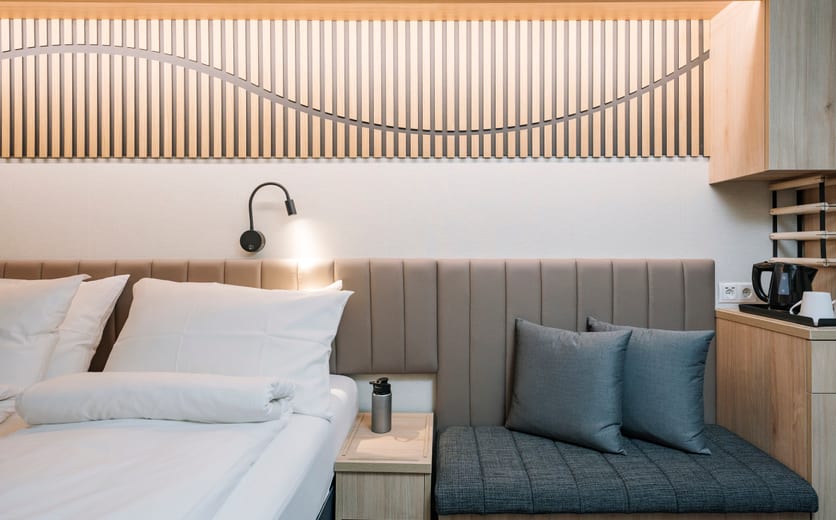
Relax in these comfortable, standard inside cabins on middle or upper decks with flexible sleeping arrangement.
Please note: This cabin is automatically made with a double bed. To order twin beds, please notify us at time of booking.
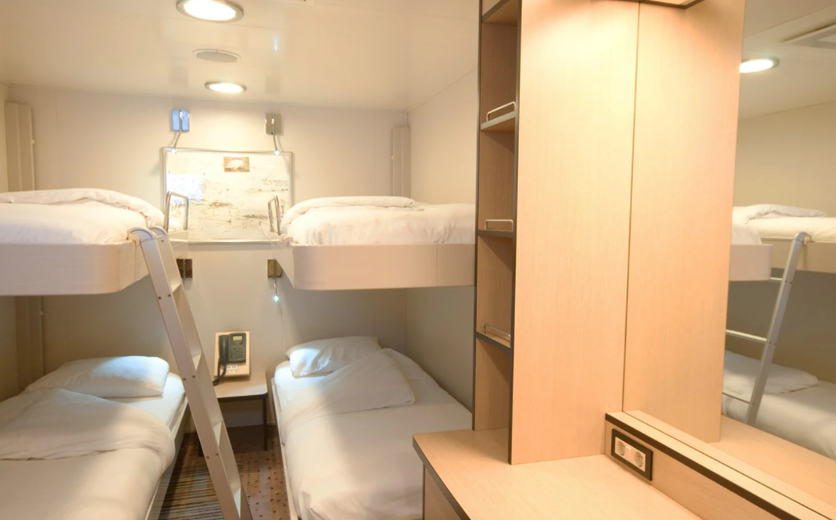
Relax in these comfortable, standard inside cabins with separate beds where one can be turned into a sofa. This cabin can fit up to four people.
from £8,685 per person
from £11,452 per person
from £0 per person
Relax in these comfortable, standard inside cabins on middle or upper decks with flexible sleeping arrangement.
Please note: This cabin is automatically made with a double bed. To order twin beds, please notify us at time of booking.
Relax in these comfortable, standard inside cabins with separate beds where one can be turned into a sofa. This cabin can fit up to four people.
from £8,685 per person
from £11,452 per person





 0203 930 4640