Call
 Enquire
 Search



Menu

Manage my booking

| Sales | |
| Monday - Friday | 09:00 - 19:00 |
| Saturday | 09:00 - 16:00 |
| Sunday | 10:00 - 17:00 |
| Bank Holiday | 10:00 - 16:00 |
| Aftersales | |
| Monday - Friday | 09:00 - 17:30 |
| Bank Holiday | 10:00 - 16:00 |



03 Aug - 18 Aug 2028

15 Nights onboard MS Fram

All Inclusive Drinks*

Expedition Jacket (on polar itineraries only)*

Water bottle*

Trekking Equipment*

Digital photo album*

Complimentary Dining*

Gratuities*

Shore Excursions*

Wi-Fi*
Sold Out
from
£9,381
per person
Not Available
from
£11,531
per person
Our experts are here to help
Call us today on 0203 930 4640 or enquire online.




 Save up to 25% with our 130th Anniversary Offers*Free Suite Upgrade*Solo cruise deals*
*Select voyages. T's and C's apply
Day 1
Enjoy time in Oslo before flying to Svalbard
Your expedition begins in Oslo, Norway's fjord-side capital, a city rich in history with a thriving art scene. Wander the Ekebergparken sculpture park, admire the striking Opera House and Munch Museum, relax in a floating sauna on the harbour, or head to Sørenga for urban beach life and New Nordic cuisine, before settling in for the night in an airport hotel.
Oslo is the capital of Norway and is also its largest city, situated at the head of Oslo Fjord and surrounded by hills and forests. Home to some 50 museums and full of galleries, cafés, a sculpture park and the Royal Palace, this vibrant city with its handsome 19th-century buildings and wide streets has much to offer. Its history dates back 1,000 years, and includes a rich seafaring heritage that ranges from the Viking era to Thor Heyerdahl’s Kon Tiki expedition. Discover more about this exciting city on our varied selection of excursions.
Day 2
The town at the top of the world
After a morning flight from Oslo, your adventure begins with two nights in Longyearbyen, a colourful frontier town at the edge of the Arctic wilderness, where snowmobiles outnumber people.
Beyond exploring the town at your own pace, join our curated two-day programme of excursions designed to reveal Longyearbyen's history, nature and resilient spirit. Discover how a settlement once built on coal mining has reinvented itself around science, tourism and a deep connection to the Arctic wilderness, while retaining the traditions that unite those who call this remote frontier home.
Longyearbyen is the biggest settlement in Svalbard. Seat of the Norwegian administration, it also has the best services and infrastructure in the archipelago. Located deep in the Adventfjord, a sidearm of the Isfjorden (Icefjord), Longyearbyen’s airport can be used all-year round, but its harbor is blocked by ice in winter. Most shops, hotels, restaurants and a hospital are within easy walking distance of the port. One of the most prominent buildings in town is the UNIS center, where several Norwegian universities have joined forces to operate and offer the northernmost higher education to both Norwegian and international students. Adjacent to UNIS, and well worth a visit, is the Svalbard Museum, covering the natural history and exploitation of Svalbard. Remnants of the former mining activity can be seen all around Longyearbyen and even in town.
Day 3
Longyearbyen is the biggest settlement in Svalbard. Seat of the Norwegian administration, it also has the best services and infrastructure in the archipelago. Located deep in the Adventfjord, a sidearm of the Isfjorden (Icefjord), Longyearbyen’s airport can be used all-year round, but its harbor is blocked by ice in winter. Most shops, hotels, restaurants and a hospital are within easy walking distance of the port. One of the most prominent buildings in town is the UNIS center, where several Norwegian universities have joined forces to operate and offer the northernmost higher education to both Norwegian and international students. Adjacent to UNIS, and well worth a visit, is the Svalbard Museum, covering the natural history and exploitation of Svalbard. Remnants of the former mining activity can be seen all around Longyearbyen and even in town.
Day 4
Welcome to your expedition home
After two days exploring Longyearbyen, it’s time to board your expedition ship. The Expedition Team and crew will be waiting to welcome you aboard. Once you've settled into your cabin, we'll cast off and set course for the remote wilderness and extraordinary wildlife of the High Arctic.
Longyearbyen is the biggest settlement in Svalbard. Seat of the Norwegian administration, it also has the best services and infrastructure in the archipelago. Located deep in the Adventfjord, a sidearm of the Isfjorden (Icefjord), Longyearbyen’s airport can be used all-year round, but its harbor is blocked by ice in winter. Most shops, hotels, restaurants and a hospital are within easy walking distance of the port. One of the most prominent buildings in town is the UNIS center, where several Norwegian universities have joined forces to operate and offer the northernmost higher education to both Norwegian and international students. Adjacent to UNIS, and well worth a visit, is the Svalbard Museum, covering the natural history and exploitation of Svalbard. Remnants of the former mining activity can be seen all around Longyearbyen and even in town.
Day 5
A land of spectacular beauty
Spitsbergen, Svalbard's largest island, is a wilderness of steep mountains, glaciers, and scattered offshore islands.
Over the next few days, we'll explore dramatic fjords where glaciers creak and calve icebergs into the sea, push north towards Northwest Spitsbergen National Park where sea ice may shape our route, and scan for the wildlife that thrives here: polar bears, walruses, Arctic foxes, reindeer, and colonies of seabirds nesting on the cliffs.
Each day will be different. Landings, Zodiac cruises, kayaking, hikes: be ready for anything as your Captain and Expedition Team read the conditions and seize every opportunity the Arctic offers.
Day 6
Day 7
Day 8
Enjoy a restorative day at sea
Take advantage of a day sailing through Arctic waters to relax. on board the ship. Watch the Arctic waters slip by from the Explorer Lounge & Bar, soak in a hot tub on deck while scanning for seabirds, or simply take in the panoramic views with fellow explorers.
The Expedition Team will bring the journey to life with lectures on local history, geology, and Arctic wildlife. Visit the Science Center for deeper insight into the places ahead, or join a Citizen Science project and contribute to real, ongoing research.
Day 9
Visit an active volcano that's a haven for birdlife
Today we reach Jan Mayen, a volcanic island suspended 500 km offshore with no permanent residents and almost no visitors. The only inhabitants are temporarily stationed Norwegian military personnel, meaning we join a very select group given the chance to set foot here.
Dominated by Beerenberg, the world's northernmost active volcano, the landscape feels almost alien: volcanic rock, moss, and lichen stretching to the horizon. Conditions permitting, we'll go ashore to explore. While there are no land mammals, Jan Mayen is a designated Important Bird Area, home to large colonies of northern fulmars, Brünnich's guillemots, and little auks. Keep watch for whales and seals in the surrounding waters too. This is one of the true highlights of any Arctic expedition.
Described as one of the most remote islands in the world, Jan Mayen liesbetween Norway to the east and Greenland to the west. It is a rugged volcanicisland 34 miles long and is made up of two parts – the larger section to thenorth (Beerenbeg Volcano) and the longer but narrower section to the south. Amile-wide isthmus links these two parts. Geologically, the island was formed bya ‘hotspot’ where molten magma pushes up through the earth’s crust to createvolcanoes in the middle of nowhere. Politically, Jan Mayen is an integral partof Norway. The eighteen people living on the island work for either the NorwegianArmed Forces or the Norwegian Meteorological Institute. Their main purpose isto operate the Loran-C radio navigation system. From 1615 to 1638, the Dutchran a whaling station here. Today, the island is a nature reserve underNorwegian jurisdiction aimed at preserving the pristine Arctic island and themarine life, including the ocean floor.
Day 10
Unwind and prepare for more adventures
On this day at sea sailing west towards Greenland, time is yours to enjoy at your own pace. Relax on deck with a book, share memories of the past few days with fellow travellers in the Explorer Lounge, or join the Expedition Team to find out what awaits in eastern Greenland and northern Iceland. Before you know, you'll spot the first icy peaks rising on the horizon before the day is done.
Day 11
The largest fjord system on Earth
With stunning white and blue icebergs, mirror-like waters, and looming mountains, the scenery in Scoresby Sund is spectacular and the scale almost incomprehensible.
Over these few days, we'll make the most of conditions, packing in as many shore landings, nature walks, kayaking tours, and wildlife encounters as possible. In summer, the open waters draw remarkable wildlife: musk oxen, Arctic foxes, mountain hares, whales, and seals. Birdlife thrives here too, including little auks, Atlantic puffins, fulmars, snowy owls, Greenlandic gyrfalcons, and great black-backed gulls.
Beyond the small Inuit community of Ittoqqortoormiit that calls it home, these carved glacier walls remain a mystery to most. These days are your chance to explore it in all its sublimity.
Day 12
Day 13
Scoresbysund is the ultimate fjord system; likely the longest, largest and deepest of any in the world. The massive fjord is tucked into the eastern coast of Greenland and on the icy western edges of the Greenland Sea. Scoresbysund’s scale deserves several days to explore, especially while plying the waters between castle-sized icebergs as they gently drift under the persuasion of the Arctic waters in the mighty fjord. Scattered in the remote bays and smaller fjords are places to discover old Inuit settlements, slowly growing over with Arctic willow and dwarf birch. The lower slopes of many mountains are draped in the herbs and grasses favoured by muskox, Arctic fox, lemmings, Ptarmigan, Barnacle Geese, and Snowy Owls. Tundra walks give impressive views of landscape, flora and fauna. Not to be neglected, the waters of Scoresbysund warrant a vigilant eye for sightings of whales, seals, narwhals, beluga whales and walrus.
Day 14
Relax at sea
After the adventures of East Greenland, a day at sea might feel like a welcome rest.
MS Fram glides through the North Atlantic towards our final destination: northwest Iceland. Whether you work up a sweat in the gym, take a little R&R in your cabin, or join the Science & Education Programme, this time is yours to enjoy.
Day 15
Visit Iceland in miniature
Snæfellsnes is a peninsula of dramatic coastlines, volcanic peaks, lava fields, black sand beaches, and traditional fishing villages, all set beneath the glacier-capped Snæfellsjökull volcano. It inspired Jules Verne's book, Journey to the Centre of the Earth, and it's often called Iceland in miniature because almost every landscape the country is known for can be found here in one compact stretch of coast.
From our port in Grundarfjörður, overlooked by the iconic Kirkjufell mountain, you can join excursions around the peninsula or explore the surroundings on foot.
Day 16
Disembark in Reykjavík
Your expedition ends in Reykjavík, a city that rewards a longer look. Stroll Laugavegur for independent shops and coffee, take in the striking Hallgrímskirkja church, or lose an afternoon in the city's galleries and museums. If you can, we highly recommend staying an extra night.
This marks the end of your time with us for now, but we hope it won't be the last. It's often said that travelling to the Arctic leaves people with "the Arctic bug," and with so many wonderful memories behind you, we hope this ending is only the beginning of your next adventure.
Sprawling Reykjavík, the nation's nerve center and government seat, is home to half the island's population. On a bay overlooked by proud Mt. Esja (pronounced eh-shyuh), with its ever-changing hues, Reykjavík presents a colorful sight, its concrete houses painted in light colors and topped by vibrant red, blue, and green roofs. In contrast to the almost treeless countryside, Reykjavík has many tall, native birches, rowans, and willows, as well as imported aspen, pines, and spruces.Reykjavík's name comes from the Icelandic words for smoke, reykur, and bay, vík. In AD 874, Norseman Ingólfur Arnarson saw Iceland rising out of the misty sea and came ashore at a bay eerily shrouded with plumes of steam from nearby hot springs. Today most of the houses in Reykjavík are heated by near-boiling water from the hot springs. Natural heating avoids air pollution; there's no smoke around. You may notice, however, that the hot water brings a slight sulfur smell to the bathroom.Prices are easily on a par with other major European cities. A practical option is to purchase a Reykjavík City Card at the Tourist Information Center or at the Reykjavík Youth Hostel. This card permits unlimited bus usage and admission to any of the city's seven pools, the Family Park and Zoo, and city museums. The cards are valid for one (ISK 3,300), two (ISK 4,400), or three days (ISK 4,900), and they pay for themselves after three or four uses a day. Even lacking the City Card, paying admission (ISK 500, or ISK 250 for seniors and people with disabilities) to one of the city art museums (Hafnarhús, Kjarvalsstaðir, or Ásmundarsafn) gets you free same-day admission to the other two.

from £0 per person
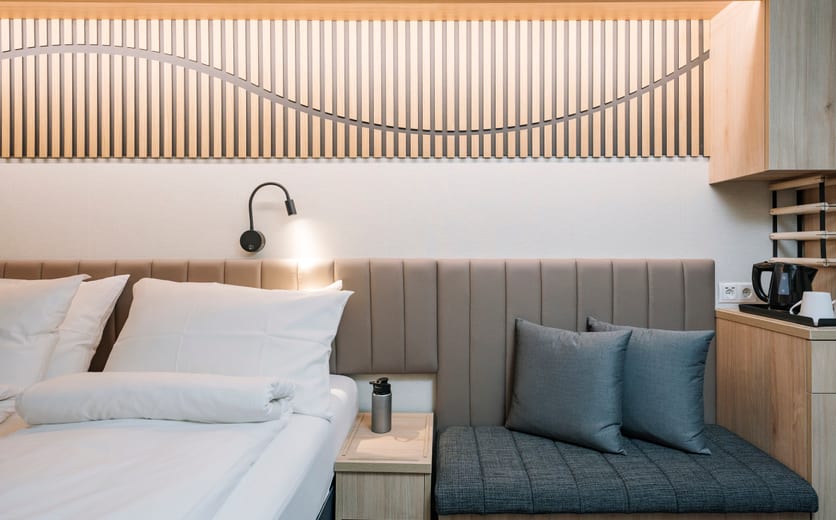
Relax in these comfortable, standard inside cabins on middle or upper decks with flexible sleeping arrangement.
Please note: This cabin is automatically made with a double bed. To order twin beds, please notify us at time of booking.
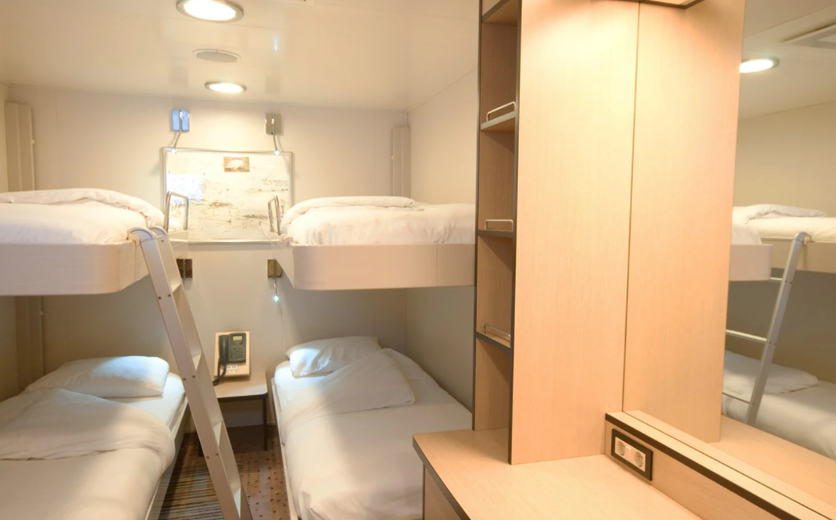
Relax in these comfortable, standard inside cabins with separate beds where one can be turned into a sofa. This cabin can fit up to four people.
from £9,381 per person
from £11,531 per person
from £0 per person
Relax in these comfortable, standard inside cabins on middle or upper decks with flexible sleeping arrangement.
Please note: This cabin is automatically made with a double bed. To order twin beds, please notify us at time of booking.
Relax in these comfortable, standard inside cabins with separate beds where one can be turned into a sofa. This cabin can fit up to four people.
from £9,381 per person
from £11,531 per person





 0203 930 4640